
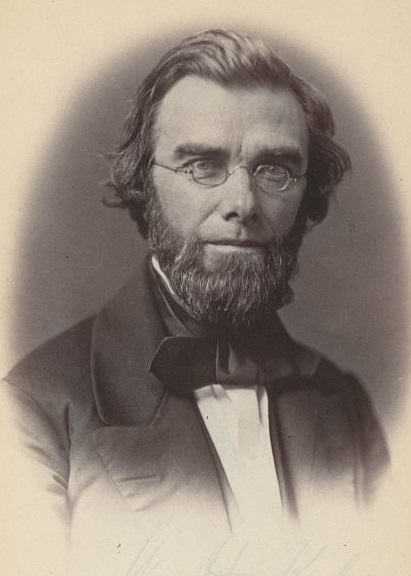
Historical · U.S. House · New York · District 27
John Parker
Former U.S. Representative · New York District 27 · 1855–1859 · Republican
John Parker represented New York's District 27 in the United States House of Representatives (1855–1859) for the Republican party. The page below collects sourced biographical facts, term history, committee roles, and provenance for Parker.
Bioguide ID: P000064
Key facts
- Full name
- John Parker
- State
- New York
- District
- District 27
- Party
- Republican
- House service
- 1855–1859
- First House term
- 1855
- Status
- Left office
- Current term ends
- —
- Born
- 1805
- Bioguide ID
- P000064
- Committee assignments
- —
- Dataset version
- 1.20260606
Biographical narrative
953 words · sourced from the Wikipedia REST extract
John Parker was an American politician who served as a U.S. Representative for New York's 27th congressional district during the mid-19th century. A member of the Republican Party, Parker's congressional career spanned from 1855 to 1859. Following his time in the House of Representatives, he transitioned to a judicial career, serving as a justice of the New York Supreme Court until his death in 1873. His legal and political contributions were significant within the context of New York's evolving political landscape during a tumultuous period in American history.
Early life and career
John Parker was born on June 14, 1805, in Granville, New York. He was the son of John C. Parker, who held the position of justice on the New York Supreme Court, which likely influenced Parker's own aspirations in law and public service. His early education took place at Granville Academy and Castleton Seminary, institutions that provided him with a solid foundation in academics. He furthered his education at Middlebury College, graduating in 1828. This collegiate experience would have equipped him with critical thinking skills and a broader understanding of societal issues, preparing him for a career in law and politics.
After completing his education, Parker began studying law in the office of John P. Cushman in Troy, New York. He was admitted to the bar in 1833, marking the official start of his legal career. Following his admission, Parker established his law practice in Owego, New York, where he would become a prominent figure in the community. His legal career laid the groundwork for his entry into politics, as he gained recognition and respect within the local and state legal circles.
Parker's political career began in earnest when he was elected to Congress in 1854 as a member of the Whig Party, representing New York's 27th congressional district. This election occurred during a period of significant political realignment in the United States, as the Whig Party was beginning to dissolve. Parker's tenure in Congress began on March 4, 1855, and he was subsequently reelected in 1856 as a Republican, reflecting the shifting political landscape of the time. His congressional service lasted until March 3, 1859, during which he participated in the legislative processes of a nation grappling with issues that would eventually lead to the Civil War.
House tenure
During his time in the House of Representatives, Parker was part of a Congress that faced numerous challenges, including debates over slavery, states' rights, and the expansion of the United States. Although specific details regarding his legislative contributions are not extensively documented, Parker's role as a congressman would have involved engaging in discussions and votes on critical issues of the day. His alignment with the Republican Party, which was founded in the 1850s on anti-slavery principles, suggests that he was likely involved in the emerging debates surrounding this contentious issue.
Parker's decision not to seek renomination in 1858 marked the end of his congressional career. This choice could have been influenced by various factors, including personal considerations or a desire to pursue other opportunities. Following his departure from Congress, Parker continued to be active in public service, transitioning to a judicial role that would define the latter part of his career.
Legislative focus and committees
After concluding his congressional tenure, Parker was elected as a justice of the New York Supreme Court on November 8, 1859, beginning an eight-year term that would see him engage with the legal system at a high level. His election to the judiciary represented a significant shift in his career, allowing him to apply his legal expertise in a different capacity. In 1867, Parker was re-elected to a 14-year term, demonstrating the trust and confidence that the electorate had in his abilities as a jurist. His appointment to a general term by Governor John T. Hoffman in December 1870 further solidified his position within the New York judicial system.
Throughout his time on the bench, Parker was involved in various legal matters that would have had lasting implications for New York law and governance. His appointment as a sitting judge on the New York Court of Appeals in January 1867 further underscored his prominence within the state's judicial hierarchy. This role would have placed him at the forefront of significant legal decisions and interpretations of law during a period of considerable change in the United States.
In addition to his judicial responsibilities, Parker was also a charter trustee of Cornell University from 1865 to 1870. This position reflected his commitment to education and the development of higher learning institutions in New York. His involvement with Cornell University indicates a broader interest in the advancement of education and public service beyond his legal and political careers.
Parker's personal life was marked by his marriage to Catherine Ann Pumpelly in September 1835, with whom he had four children. Following her death in 1845, he married Stella A. Pumpelly, another daughter of Charles Pumpelly, in 1854. His family life, intertwined with his professional endeavors, contributed to his standing in the community of Owego, where he was a member of St. Paul's Church.
John Parker passed away at his home in Owego on December 16, 1873, leaving behind a legacy as both a politician and a jurist. His contributions to New York's legal and political landscape during a critical period in American history are remembered as part of the broader narrative of the state's development. Parker was also honored with an honorary Doctor of Laws degree from Middlebury College in 1865, recognizing his contributions to the field of law and public service. He was interred in Evergreen Cemetery in Owego, New York, where his life and work continue to be acknowledged as part of the region's history.
Notable legislation
Sponsored and co-sponsored legislation for John Parker is pending operator curation. The biographical narrative above carries the same provenance trail until per-bill rows are written.
Sources
- [1]https://en.wikipedia.org/wiki/John_M._Parker_(New_York_politician)Wikipedia · retrieved 2026-06-06
Notable quotes
Sourced quotes for John Parker are pending operator curation. Narrative-scope provenance remains attached below.
Sources
- [1]https://en.wikipedia.org/wiki/John_M._Parker_(New_York_politician)Wikipedia · retrieved 2026-06-06
Key positions
Curated policy positions for John Parker are pending operator review. The biographical narrative above carries the same provenance trail until per-topic positions are written.
Sources
- [1]https://en.wikipedia.org/wiki/John_M._Parker_(New_York_politician)Wikipedia · retrieved 2026-06-06
Terms served
- 1855–1857U.S. House · Term 1 · Ind. Republican-Democrat
- 1857–1859U.S. House · Term 2 · Republican
Sources & provenance
Every attributable claim above carries a per-section [N] marker that resolves to the corresponding URL below. Each entry records the upstream provider, the canonical URL, and the timestamp at which the source was retrieved by the ingest pipeline.
Key facts
- https://bioguide.congress.gov/search/bio/P000064bioguide · retrieved 2026-06-06
- https://www.govtrack.us/congress/members/408474govtrack · retrieved 2026-06-06
Biographical narrative
- https://en.wikipedia.org/wiki/John_M._Parker_(New_York_politician)wikipedia · retrieved 2026-06-06
Find your representative
Every U.S. state elects representatives by district. Browse New York’s delegation, the full former-representative roster, or explore the role and term length.
Related on The Candidate
- Preceded by John TaylorEarlier holder of the New York District 27 House seat · Democratic.Open
- Succeeded by Alfred WellsLater holder of the New York District 27 House seat · Republican.Open
- Abel HuntingtonFormer U.S. Representative · New York District 1 · JacksonOpen
- Alfred ChapinFormer U.S. Representative · New York District 1 · DemocraticOpen
- Cadwallader ColdenFormer U.S. Representative · New York District 1 · FederalistOpen
- Charles FloydFormer U.S. Representative · New York District 1 · DemocraticOpen