
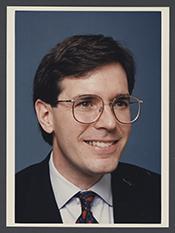
Historical · U.S. House · New York · District 27
L. Paxon
Former U.S. Representative · New York District 27 · 1989–1999 · Republican
L. Paxon represented New York's District 27 in the United States House of Representatives (1989–1999) for the Republican party. The page below collects sourced biographical facts, term history, committee roles, and provenance for Paxon.
Bioguide ID: P000148
Key facts
- Full name
- L. Paxon
- State
- New York
- District
- District 27
- Party
- Republican
- House service
- 1989–1999
- First House term
- 1989
- Status
- Left office
- Current term ends
- —
- Born
- 1954
- Bioguide ID
- P000148
- Committee assignments
- —
- Dataset version
- 1.20260605
Biographical narrative
901 words · sourced from the Wikipedia REST extract
Leon William Paxon, born on April 29, 1954, is a former American politician and lobbyist who served as a U.S. Representative for New York's 27th congressional district from 1989 until 1999. A member of the Republican Party, Paxon completed five terms in Congress, during which he held various leadership roles and was involved in significant legislative activities. Following his congressional career, he transitioned into lobbying, where he continued to influence policy and political discourse.
Early life and career
Bill Paxon was born in Akron, New York, a small town located near Buffalo. His early interest in politics was evident when, at the age of 15, he volunteered for the congressional campaign of Jack Kemp, a former quarterback for the Buffalo Bills. Kemp would later become the Republican vice presidential nominee in 1996, showcasing the political connections that Paxon would cultivate throughout his career.
Paxon completed his secondary education at St. Joseph's Collegiate Institute, graduating in 1972. He then attended Canisius College, where he earned his degree. His political career began at a young age when he was elected to the Erie County Legislature in November 1977 at the age of 23, making him the youngest member ever elected to that body. This early experience in local government laid the groundwork for his future political endeavors. Additionally, Paxon has received honorary doctorates from Daemen College, Roberts Wesleyan College, and Canisius College, reflecting his contributions to public service and education.
Before his election to Congress, Paxon served in the New York State Assembly from 1983 to 1988. During his time in the Assembly, he was involved in the legislative process across three different sessions, specifically the 185th, 186th, and 187th New York State Legislatures. His experience in state politics provided him with a strong foundation in governance and legislative affairs, which would prove beneficial during his tenure in the U.S. House of Representatives.
House tenure
Paxon's congressional career began when he was elected to the 101st United States Congress, and he subsequently served in the 102nd, 103rd, 104th, and 105th Congresses. His time in office spanned from January 3, 1989, to January 3, 1999. Throughout these five terms, Paxon was active in various legislative initiatives and played a role in shaping policy at the national level.
During the 105th Congress, Paxon held the position of chair of the Republican House Leadership committee, a role that placed him in a significant position within the party's hierarchy. His leadership capabilities were further recognized when he was elected to chair the National Republican Congressional Committee in 1992. This role involved overseeing the party's efforts to gain and maintain seats in the House of Representatives, highlighting his influence within the Republican Party during a pivotal time in American politics.
Paxon's tenure was not without challenges. In the summer of 1997, he was involved in a leadership challenge against then-Speaker Newt Gingrich. A faction of House Republicans, concerned about Gingrich's public image, sought to replace him. Paxon, along with other Republican leaders, devised a plan to present Gingrich with an ultimatum regarding his leadership. However, the plan ultimately faltered, leading to internal tensions within the party. Paxon later offered his resignation from his leadership position, acknowledging the difficulties of the situation and the need for a different direction. Following this episode, he decided not to seek re-election in 1998, concluding his congressional career after five terms.
Legislative focus and committees
Throughout his time in Congress, Paxon was involved in various legislative issues and committees that reflected his political priorities and the interests of his constituents. His work often aligned with the broader goals of the Republican Party during the 1990s, which included a focus on fiscal responsibility, economic growth, and reducing the size of government.
Paxon's leadership roles, particularly as chair of the National Republican Congressional Committee, allowed him to influence the party's legislative agenda and strategy. He was engaged in efforts to promote Republican candidates and policies, contributing to the party's overall success in the House during his tenure. His experience in the New York State Assembly and Erie County Legislature provided him with insights into local governance, which he applied to his work at the federal level.
After leaving Congress, Paxon transitioned into a career in lobbying, where he continued to leverage his political experience and connections. He joined the law firm Akin Gump Strauss Hauer & Feld LLP, where he has advised a diverse range of public and private sector clients on policy issues. His reputation as a lobbyist has been well-established, and he has been recognized as one of Washington's top lobbyists. In this capacity, Paxon has worked with various organizations, including Boeing, to influence legislative outcomes and advocate for specific interests.
Paxon's personal life reflects his commitment to both his career and family. He married Susan Molinari, a fellow Republican and former U.S. Representative, in 1994. The couple resides in Alexandria, Virginia, and they have two daughters. Their partnership has continued to intertwine their professional and personal lives, as both have remained active in political and lobbying circles.
In summary, Bill Paxon's career has spanned several decades in public service and lobbying. His early involvement in local politics, followed by a significant tenure in the U.S. House of Representatives, has shaped his understanding of governance and policy-making. After leaving Congress, he has remained influential in political circles, advising clients on various issues while continuing to engage with the political landscape.
Notable legislation
Sponsored and co-sponsored legislation for L. Paxon is pending operator curation. The biographical narrative above carries the same provenance trail until per-bill rows are written.
Sources
- [1]https://en.wikipedia.org/wiki/Bill_PaxonWikipedia · retrieved 2026-06-05
Notable quotes
Sourced quotes for L. Paxon are pending operator curation. Narrative-scope provenance remains attached below.
Sources
- [1]https://en.wikipedia.org/wiki/Bill_PaxonWikipedia · retrieved 2026-06-05
Key positions
Curated policy positions for L. Paxon are pending operator review. The biographical narrative above carries the same provenance trail until per-topic positions are written.
Sources
- [1]https://en.wikipedia.org/wiki/Bill_PaxonWikipedia · retrieved 2026-06-05
Terms served
- 1989–1991U.S. House · Term 1 · Republican
- 1991–1993U.S. House · Term 2 · Republican
- 1993–1995U.S. House · Term 3 · Republican
- 1995–1997U.S. House · Term 4 · Republican
- 1997–1999U.S. House · Term 5 · Republican
Sources & provenance
Every attributable claim above carries a per-section [N] marker that resolves to the corresponding URL below. Each entry records the upstream provider, the canonical URL, and the timestamp at which the source was retrieved by the ingest pipeline.
Key facts
- https://bioguide.congress.gov/search/bio/P000148bioguide · retrieved 2026-06-05
- https://www.govtrack.us/congress/members/408553govtrack · retrieved 2026-06-05
Biographical narrative
- https://en.wikipedia.org/wiki/Bill_Paxonwikipedia · retrieved 2026-06-05
Find your representative
Every U.S. state elects representatives by district. Browse New York’s delegation, the full former-representative roster, or explore the role and term length.
Related on The Candidate
- Preceded by George WortleyEarlier holder of the New York District 27 House seat · Republican.Open
- Succeeded by Chris CollinsLater holder of the New York District 27 House seat · Republican.Open
- Abel HuntingtonFormer U.S. Representative · New York District 1 · JacksonOpen
- Alfred ChapinFormer U.S. Representative · New York District 1 · DemocraticOpen
- Cadwallader ColdenFormer U.S. Representative · New York District 1 · FederalistOpen
- Charles FloydFormer U.S. Representative · New York District 1 · DemocraticOpen