
Historical · U.S. House · New York · District 27
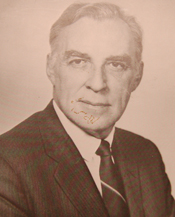
Martin McKneally
Former U.S. Representative · New York District 27 · 1969–1971 · Republican
Martin McKneally represented New York's District 27 in the United States House of Representatives (1969–1971) for the Republican party. The page below collects sourced biographical facts, term history, committee roles, and provenance for McKneally.
Bioguide ID: M000530
Key facts
- Full name
- Martin McKneally
- State
- New York
- District
- District 27
- Party
- Republican
- House service
- 1969–1971
- First House term
- 1969
- Status
- Left office
- Current term ends
- —
- Born
- 1914
- Bioguide ID
- M000530
- Committee assignments
- —
- Dataset version
- 1.20260605
Biographical narrative
983 words · sourced from the Wikipedia REST extract
Martin McKneally was a Republican politician who served as a U.S. Representative for New York's 27th congressional district from 1969 to 1971. Born on December 31, 1914, in Newburgh, New York, he had a diverse career that included military service, legal practice, and leadership roles within veterans' organizations. His tenure in Congress was marked by a narrow electoral defeat in his bid for re-election, which was complicated by personal legal issues that emerged during the campaign.
Early life and career
Martin Boswell McKneally was born to George F. and Ellen (née Lahey) McKneally in Newburgh, a city located in the Hudson Valley region of New York. He received his early education in the local public school system and graduated from Newburgh Free Academy. His academic pursuits continued at the College of the Holy Cross, where he earned a degree in 1936, followed by a law degree from Fordham University School of Law in 1940. After being admitted to the bar, McKneally began his legal career, practicing law in both Newburgh and New York City.
In 1941, as the United States was on the brink of entering World War II, McKneally was drafted into the military. He attended The Judge Advocate General's School, which was then located at the University of Michigan, and subsequently received a commission as a second lieutenant in the U.S. Army Judge Advocate General's Corps. His military service included teaching military law at Grinnell College before he was deployed to the Pacific theater. During his time in the Pacific, he served on the staff of Lieutenant General Robert C. Richardson, who commanded the Central Pacific Area. McKneally was released from active duty in 1946, having attained the rank of major.
Following his military service, McKneally became involved in veterans' affairs. He served as the state commander of the American Legion for New York from 1957 to 1958 and was later elected as the national commander of the organization from 1959 to 1960. His leadership in the American Legion was notable for his efforts to address issues of discrimination within the organization, particularly his decision to disaffiliate the 40 and 8 Society due to its racially discriminatory membership practices.
In addition to his work with the American Legion, McKneally was active in local governance. He held the position of president of the Newburgh school board and served as special counsel to Lieutenant Governor Malcolm Wilson from 1960 to 1968. His legal expertise was also utilized in connection with the 1964 World's Fair, where he served as counsel from 1961 to 1965. These roles helped to establish his reputation in both legal and political circles in New York.
House tenure
In 1968, McKneally entered the political arena by running for a seat in the U.S. House of Representatives. He successfully defeated the incumbent Democratic representative, John G. Dow, in a competitive election. McKneally was sworn into office on January 3, 1969, marking the beginning of his term in the 91st Congress. During his time in the House, he participated in various legislative activities and contributed to discussions on issues pertinent to his constituents and the nation.
McKneally's congressional career was relatively brief, lasting until January 3, 1971. He served a single term in the House, during which he engaged with the legislative process and represented the interests of his district. However, his time in office was overshadowed by challenges that arose during his re-election campaign in 1970. As he sought a second term, allegations surfaced regarding his failure to pay federal income taxes for several years. McKneally claimed that he had been over-withheld by the Internal Revenue Service, but this assertion did not resonate with voters.
The controversy surrounding his tax issues became a significant factor in the 1970 election. Ultimately, McKneally was defeated by Dow, who reclaimed the seat with a narrow margin. This electoral loss marked the end of McKneally's congressional career, as he did not return to public office following his defeat.
Legislative focus and committees
During his time in the House of Representatives, McKneally's legislative focus reflected the interests and concerns of his constituents in New York's 27th district. While specific details regarding the bills he sponsored or supported are not available, it can be inferred that as a Republican member of Congress during a time of significant national change, he likely engaged with issues related to domestic policy, economic development, and veterans' affairs, given his background and previous leadership roles in the American Legion.
McKneally's involvement in committees would have provided him with platforms to influence legislation and advocate for the needs of his district. However, the specifics of his committee assignments during his congressional tenure are not documented in the available information. His legal background may have informed his contributions to discussions on legal and regulatory matters, as well as issues affecting veterans and military personnel.
Despite the challenges he faced during his re-election campaign, McKneally's tenure in Congress was a culmination of his earlier experiences in law, military service, and veteran advocacy. His legislative work, although brief, was situated within a broader context of political and social change occurring in the United States during the late 1960s and early 1970s.
After leaving Congress, McKneally faced legal repercussions related to the tax evasion charges that had emerged during his campaign. He was found guilty of tax evasion and subsequently sentenced to one year of probation and fined. This legal issue marked a significant chapter in his post-congressional life.
Martin McKneally passed away on June 14, 1992, at a Veterans Administration facility in Castle Point, New York. He was buried at Cedar Hill Cemetery and Mausoleum in Newburgh. Throughout his life, he remained connected to his community and the veteran organizations that had been central to his career. McKneally's legacy is intertwined with his service to both his constituents and the broader veteran community, reflecting a commitment to public service that spanned several decades.
Notable legislation
Sponsored and co-sponsored legislation for Martin McKneally is pending operator curation. The biographical narrative above carries the same provenance trail until per-bill rows are written.
Sources
- [1]https://en.wikipedia.org/wiki/Martin_B._McKneallyWikipedia · retrieved 2026-06-05
Notable quotes
Sourced quotes for Martin McKneally are pending operator curation. Narrative-scope provenance remains attached below.
Sources
- [1]https://en.wikipedia.org/wiki/Martin_B._McKneallyWikipedia · retrieved 2026-06-05
Key positions
Curated policy positions for Martin McKneally are pending operator review. The biographical narrative above carries the same provenance trail until per-topic positions are written.
Sources
- [1]https://en.wikipedia.org/wiki/Martin_B._McKneallyWikipedia · retrieved 2026-06-05
Terms served
- 1969–1971U.S. House · Term 1 · Republican
Sources & provenance
Every attributable claim above carries a per-section [N] marker that resolves to the corresponding URL below. Each entry records the upstream provider, the canonical URL, and the timestamp at which the source was retrieved by the ingest pipeline.
Key facts
- https://bioguide.congress.gov/search/bio/M000530bioguide · retrieved 2026-06-05
- https://www.govtrack.us/congress/members/407522govtrack · retrieved 2026-06-05
Biographical narrative
- https://en.wikipedia.org/wiki/Martin_B._McKneallywikipedia · retrieved 2026-06-05
Find your representative
Every U.S. state elects representatives by district. Browse New York’s delegation, the full former-representative roster, or explore the role and term length.
Related on The Candidate
- Preceded by Katharine St. GeorgeEarlier holder of the New York District 27 House seat · Republican.Open
- Succeeded by George WortleyLater holder of the New York District 27 House seat · Republican.Open
- Abel HuntingtonFormer U.S. Representative · New York District 1 · JacksonOpen
- Alfred ChapinFormer U.S. Representative · New York District 1 · DemocraticOpen
- Cadwallader ColdenFormer U.S. Representative · New York District 1 · FederalistOpen
- Charles FloydFormer U.S. Representative · New York District 1 · DemocraticOpen