
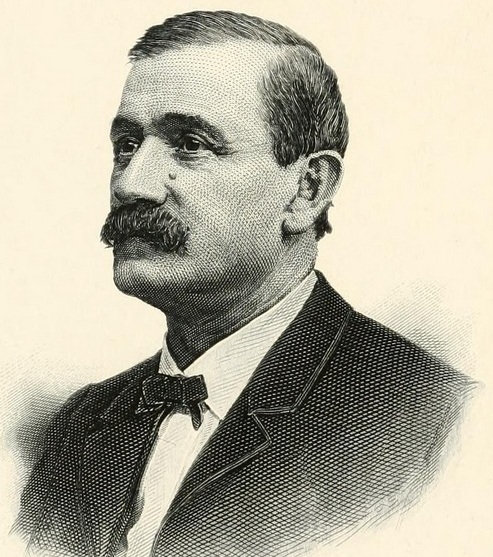
Historical · U.S. House · New York · District 28
John Arnot Jr.
Former U.S. Representative · New York District 28 · 1883–1887 · Democratic
John Arnot Jr. represented New York's District 28 in the United States House of Representatives (1883–1887) for the Democratic party. The page below collects sourced biographical facts, term history, committee roles, and provenance for Jr..
Bioguide ID: A000301
Key facts
- Full name
- John Arnot Jr.
- State
- New York
- District
- District 28
- Party
- Democratic
- House service
- 1883–1887
- First House term
- 1883
- Status
- Left office
- Current term ends
- —
- Born
- 1831
- Bioguide ID
- A000301
- Committee assignments
- —
- Dataset version
- 1.20260606
Biographical narrative
994 words · sourced from the Wikipedia REST extract
John Arnot Jr. was a prominent American politician, banker, and Civil War veteran who served as a U.S. Representative for New York. His political career spanned from 1883 until his death in 1886, during which he represented New York's 28th congressional district. A member of the Democratic Party, Arnot's contributions to both local governance and national politics were significant, reflecting his deep roots in the Elmira community and his commitment to public service.
Early life and career
John Arnot Jr. was born on March 11, 1831, in Elmira, New York. He was the son of John Arnot and Harriet Tuttle Arnot. Growing up in Elmira, he received his education at private schools in the area, which laid the foundation for his future endeavors. He later attended Yale College, although he did not complete his degree, choosing instead to embark on a career in banking. This decision marked the beginning of a lifelong association with the financial sector.
In 1852, Arnot returned to Elmira to take over as cashier of the Chemung Canal Bank, succeeding his father, who had been promoted to bank president. This role positioned him at the forefront of the local banking industry, where he would remain for the duration of his career. His involvement with the Chemung National Bank was significant, as he played an integral role in its operations and growth.
Beyond banking, Arnot was involved in various business ventures that contributed to his prominence in Elmira. He owned T. Briggs and Company, a brewery that was a notable enterprise in the region. Additionally, he was a major investor in the Elmira Gas Company, which provided essential services to the community. His financial acumen extended to real estate, where he amassed considerable holdings throughout Elmira, further solidifying his status as a successful businessman.
Arnot's political career began in earnest as he engaged with local governance. He was active in the Democratic Party and served on the Elmira Board of Education, demonstrating his commitment to education and community development. From 1859 to 1864, he held the position of president of the village of Elmira, where he contributed to the administration of local affairs. In 1864, when Elmira was chartered as a city, he was elected its first mayor, a position he would hold again in 1870 and 1874. His leadership during these formative years was crucial in shaping the city's governance and infrastructure.
In his personal life, Arnot married Ann Elizabeth Hulett in 1858. Together, they had three children, and their family life was intertwined with his public service and business endeavors. His commitment to both family and community was evident throughout his life.
House tenure
John Arnot's congressional career began when he was elected to the 48th Congress, representing New York's 29th district. His election to the House of Representatives marked a significant transition from local to national politics. Initially, in 1882, he had declined the Democratic nomination for a seat in the House but later agreed to run, reflecting his dedication to public service and the encouragement of his peers.
Arnot served in the House from March 4, 1883, until his death in 1886. During this time, he was involved in various legislative activities and contributed to discussions on issues pertinent to his constituents and the nation. His tenure was characterized by a commitment to the values of the Democratic Party and a focus on the needs of his district.
Despite his relatively short time in Congress, Arnot's service was marked by a dedication to his role as a representative. He navigated the complexities of national politics while remaining attuned to the local issues affecting his constituents in New York. His ability to balance these responsibilities was a testament to his skills as a politician and leader.
Legislative focus and committees
While specific details regarding the committees on which John Arnot served during his time in Congress are not provided, it is understood that members of the House typically engage in various legislative activities that align with their interests and the needs of their constituents. Given his background in banking and local governance, it is likely that Arnot focused on issues related to finance, infrastructure, and community development.
Arnot's experience as a banker would have informed his perspective on economic matters, particularly those affecting his district and the broader economic landscape of the nation. His involvement in local business ventures also suggests that he may have advocated for policies that supported economic growth and development in Elmira and similar communities.
In addition to his legislative responsibilities, Arnot's commitment to public service extended beyond his role in Congress. His previous experience as mayor and his active participation in local governance provided him with a unique understanding of the challenges faced by municipalities. This background likely influenced his approach to legislation, emphasizing the importance of local concerns in national discussions.
Tragically, Arnot's life and career were cut short when he died on November 20, 1886, in Elmira. His health had declined following a serious incident in October 1884, when an explosion in the vault of the Chemung Canal Bank severely injured him. Despite his recovery, the incident had lasting effects on his health, ultimately leading to his untimely death.
Arnot was buried at Woodlawn Cemetery in Elmira, where he is remembered for his contributions to the community and his service in the U.S. Congress. His legacy is further honored through a memorial chapel built at Trinity Church in Elmira, financed by his sister and her husband. This chapel serves as a lasting tribute to Arnot and his family, reflecting the impact he had on both his community and the nation.
In summary, John Arnot Jr. was a dedicated public servant whose career spanned local and national politics. His contributions as a banker, mayor, and U.S. Representative exemplify his commitment to the community of Elmira and the principles of the Democratic Party. His life and work continue to be recognized as part of the rich history of American governance.
Notable legislation
Sponsored and co-sponsored legislation for John Arnot Jr. is pending operator curation. The biographical narrative above carries the same provenance trail until per-bill rows are written.
Sources
- [1]https://en.wikipedia.org/wiki/John_Arnot_Jr.Wikipedia · retrieved 2026-06-06
Notable quotes
Sourced quotes for John Arnot Jr. are pending operator curation. Narrative-scope provenance remains attached below.
Sources
- [1]https://en.wikipedia.org/wiki/John_Arnot_Jr.Wikipedia · retrieved 2026-06-06
Key positions
Curated policy positions for John Arnot Jr. are pending operator review. The biographical narrative above carries the same provenance trail until per-topic positions are written.
Sources
- [1]https://en.wikipedia.org/wiki/John_Arnot_Jr.Wikipedia · retrieved 2026-06-06
Terms served
- 1883–1885U.S. House · Term 1 · Democratic
- 1885–1887U.S. House · Term 2 · Democratic
Sources & provenance
Every attributable claim above carries a per-section [N] marker that resolves to the corresponding URL below. Each entry records the upstream provider, the canonical URL, and the timestamp at which the source was retrieved by the ingest pipeline.
Key facts
- https://bioguide.congress.gov/search/bio/A000301bioguide · retrieved 2026-06-06
- https://www.govtrack.us/congress/members/400943govtrack · retrieved 2026-06-06
Biographical narrative
- https://en.wikipedia.org/wiki/John_Arnot_Jr.wikipedia · retrieved 2026-06-06
Find your representative
Every U.S. state elects representatives by district. Browse New York’s delegation, the full former-representative roster, or explore the role and term length.
Related on The Candidate
- Preceded by Jeremiah DwightEarlier holder of the New York District 28 House seat · Republican.Open
- Succeeded by Thomas FloodLater holder of the New York District 28 House seat · Republican.Open
- Abel HuntingtonFormer U.S. Representative · New York District 1 · JacksonOpen
- Alfred ChapinFormer U.S. Representative · New York District 1 · DemocraticOpen
- Cadwallader ColdenFormer U.S. Representative · New York District 1 · FederalistOpen
- Charles FloydFormer U.S. Representative · New York District 1 · DemocraticOpen