
Historical · U.S. House · New York · District 28
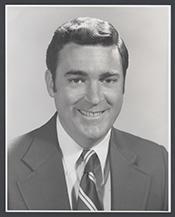
Matthew McHugh
Former U.S. Representative · New York District 28 · 1975–1993 · Democratic
Matthew McHugh represented New York's District 28 in the United States House of Representatives (1975–1993) for the Democratic party. The page below collects sourced biographical facts, term history, committee roles, and provenance for McHugh.
Bioguide ID: M000473
Key facts
- Full name
- Matthew McHugh
- State
- New York
- District
- District 28
- Party
- Democratic
- House service
- 1975–1993
- First House term
- 1975
- Status
- Left office
- Current term ends
- —
- Born
- 1938
- Bioguide ID
- M000473
- Committee assignments
- —
- Dataset version
- 1.20260605
Biographical narrative
828 words · sourced from the Wikipedia REST extract
Matthew F. McHugh is a former American lawyer and politician who served as a Democratic member of the United States House of Representatives from New York's 28th congressional district. His tenure in the House spanned from January 3, 1975, to January 3, 1993, during which he became known for his commitment to civil rights and his ability to work across party lines. McHugh's political career began in local government before he transitioned to national politics, where he made significant contributions to various legislative committees.
Early life and career
Matthew Francis McHugh was born on December 6, 1938, in Philadelphia, Pennsylvania. He spent a considerable part of his adult life in New York City, where he pursued his education and professional career. McHugh attended Brooklyn Technical High School, a prestigious institution known for its focus on engineering and technology. He later enrolled at Mount St. Mary's University, where he earned a Bachelor of Science degree in 1960. Following his undergraduate studies, McHugh attended the Villanova University School of Law, where he obtained his Juris Doctor degree in 1963.
After completing his legal education, McHugh began his career in private law practice in Ithaca, New York. His legal career progressed when he was elected as the district attorney of Tompkins County, a position he held from 1969 until 1973. This role provided him with valuable experience in the legal and political arenas, laying the groundwork for his future endeavors in public service. Following his tenure as district attorney, McHugh became involved with the state Democratic Committee, serving for two years and further solidifying his political connections and influence within the party.
House tenure
McHugh's political career took a significant turn when he was elected to the U.S. House of Representatives in 1974. He successfully defeated his opponent, Al Libous, who was the then-mayor of Binghamton and a member of the Republican Party. McHugh's victory in the general election marked a notable achievement, as he became the first Democrat to represent New York's 28th congressional district since 1915. His electoral success was characterized by a substantial margin, with McHugh receiving 83,562 votes compared to Libous's 68,273 votes.
Once in office, McHugh served a total of nine terms in the House, with his first term commencing on January 3, 1975. Throughout his congressional career, he developed a reputation for bipartisanship, often collaborating with members of both parties to address various legislative issues. His commitment to civil rights and social justice was evident in his legislative priorities, aligning him with the liberal wing of the Democratic Party.
During his time in the House, McHugh served on several important committees, including the Veterans' Affairs Committee, the Agricultural Committee, and the Interior Committee. These roles allowed him to influence a wide range of policy areas, from veterans' issues to agricultural concerns and environmental matters. In the latter part of his congressional career, he was a member of the House Select Committee on Children, Youth, and Families, where he focused on issues affecting children and families.
McHugh's tenure in Congress concluded when he chose not to seek reelection in 1992. His decision to step down marked the end of nearly two decades of service in the House, during which he had established himself as a prominent figure in New York politics.
Legislative focus and committees
Throughout his congressional career, McHugh's legislative focus encompassed a variety of issues, reflecting his commitment to civil rights and social justice. He was known for his advocacy on behalf of marginalized communities and his efforts to promote policies that would benefit children, families, and veterans. His work on the House Select Committee on Children, Youth, and Families highlighted his dedication to addressing the needs of vulnerable populations, particularly in the areas of education, health care, and social services.
In addition to his work on children's issues, McHugh's involvement in the Veterans' Affairs Committee underscored his commitment to supporting those who had served in the military. He worked on legislation aimed at improving the quality of life for veterans and ensuring they received the benefits and services they deserved. His experience as a district attorney also informed his approach to issues related to public safety and justice.
McHugh's service on the Agricultural Committee allowed him to engage with issues pertinent to the agricultural sector, advocating for policies that supported farmers and rural communities. His work in this area was particularly relevant given the importance of agriculture to New York's economy and the livelihoods of many constituents in his district.
Overall, McHugh's legislative focus was characterized by a blend of progressive ideals and a pragmatic approach to governance. His ability to work across party lines and engage with a diverse range of stakeholders contributed to his effectiveness as a legislator. After leaving Congress, McHugh continued to be active in public service and the private sector, taking on roles such as vice president at Cornell University and working with the World Bank, further demonstrating his commitment to civic engagement and leadership.
Notable legislation
Sponsored and co-sponsored legislation for Matthew McHugh is pending operator curation. The biographical narrative above carries the same provenance trail until per-bill rows are written.
Sources
- [1]https://en.wikipedia.org/wiki/Matthew_F._McHughWikipedia · retrieved 2026-06-05
Notable quotes
Sourced quotes for Matthew McHugh are pending operator curation. Narrative-scope provenance remains attached below.
Sources
- [1]https://en.wikipedia.org/wiki/Matthew_F._McHughWikipedia · retrieved 2026-06-05
Key positions
Curated policy positions for Matthew McHugh are pending operator review. The biographical narrative above carries the same provenance trail until per-topic positions are written.
Sources
- [1]https://en.wikipedia.org/wiki/Matthew_F._McHughWikipedia · retrieved 2026-06-05
Terms served
- 1975–1977U.S. House · Term 1 · Democratic
- 1977–1979U.S. House · Term 2 · Democratic
- 1979–1981U.S. House · Term 3 · Democratic
- 1981–1983U.S. House · Term 4 · Democratic
- 1983–1985U.S. House · Term 5 · Democratic
- 1985–1987U.S. House · Term 6 · Democratic
- 1987–1989U.S. House · Term 7 · Democratic
- 1989–1991U.S. House · Term 8 · Democratic
- 1991–1993U.S. House · Term 9 · Democratic
Sources & provenance
Every attributable claim above carries a per-section [N] marker that resolves to the corresponding URL below. Each entry records the upstream provider, the canonical URL, and the timestamp at which the source was retrieved by the ingest pipeline.
Key facts
- https://bioguide.congress.gov/search/bio/M000473bioguide · retrieved 2026-06-05
- https://www.govtrack.us/congress/members/407471govtrack · retrieved 2026-06-05
Biographical narrative
- https://en.wikipedia.org/wiki/Matthew_F._McHughwikipedia · retrieved 2026-06-05
Find your representative
Every U.S. state elects representatives by district. Browse New York’s delegation, the full former-representative roster, or explore the role and term length.
Related on The Candidate
- Preceded by Joseph ResnickEarlier holder of the New York District 28 House seat · Democratic.Open
- Abel HuntingtonFormer U.S. Representative · New York District 1 · JacksonOpen
- Alfred ChapinFormer U.S. Representative · New York District 1 · DemocraticOpen
- Cadwallader ColdenFormer U.S. Representative · New York District 1 · FederalistOpen
- Charles FloydFormer U.S. Representative · New York District 1 · DemocraticOpen
- Democratic PartyFederal candidates and office holders on the Democratic line.Open