
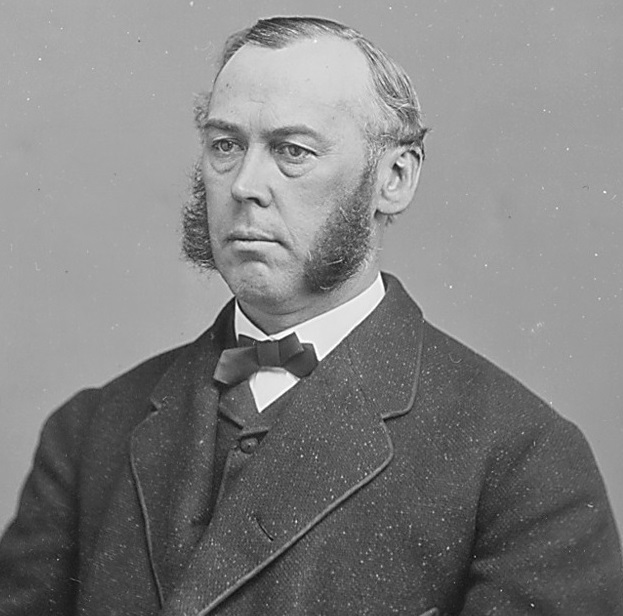
Historical · U.S. House · New York · District 28
Roswell Hart
Former U.S. Representative · New York District 28 · 1865–1867 · Republican
Roswell Hart represented New York's District 28 in the United States House of Representatives (1865–1867) for the Republican party. The page below collects sourced biographical facts, term history, committee roles, and provenance for Hart.
Bioguide ID: H000292
Key facts
- Full name
- Roswell Hart
- State
- New York
- District
- District 28
- Party
- Republican
- House service
- 1865–1867
- First House term
- 1865
- Status
- Left office
- Current term ends
- —
- Born
- 1824
- Bioguide ID
- H000292
- Committee assignments
- —
- Dataset version
- 1.20260606
Biographical narrative
937 words · sourced from the Wikipedia REST extract
Roswell Hart was a notable figure in American politics during the mid-19th century, serving as a U.S. Representative for New York's 28th congressional district. A member of the Republican Party, Hart's congressional career was marked by his tenure in the 39th United States Congress from 1865 to 1867. His professional journey also included significant roles in law and public service, particularly in the Railway Mail Service. Born in Rochester, New York, Hart's educational background and early career laid the foundation for his political aspirations and contributions to public service.
Early life and career
Roswell Hart was born on August 4, 1824, in Rochester, New York. Growing up in a rapidly developing city, Hart was exposed to the dynamic changes occurring in America during the early 19th century. He pursued his education with diligence, ultimately graduating from Yale College in 1843. During his time at Yale, he became a member of the prestigious secret society Skull and Bones, which has been known for its influential alumni and connections. This experience at Yale likely provided him with a network of contacts and a foundation in leadership that would serve him well in his future endeavors.
After completing his undergraduate studies, Hart turned his attention to the field of law. He studied diligently and was admitted to the bar in 1847, marking the beginning of his legal career. As a lawyer, Hart engaged in commercial pursuits, which would have involved various aspects of business law and possibly litigation. This experience in the legal field not only honed his skills in argumentation and negotiation but also provided him with insights into the legislative process and the workings of government.
Hart's early career was characterized by a blend of legal practice and commercial interests, which positioned him well for a future in public service. His involvement in the legal community and his understanding of commercial matters would later influence his legislative priorities and decisions as a congressman. The skills he developed during this period would prove invaluable as he transitioned into a political role, where legal acumen and an understanding of economic issues were essential.
House tenure
Roswell Hart's political career began in earnest when he was elected as a Republican to the 39th United States Congress. His term in the House of Representatives commenced on March 4, 1865, a significant period in American history marked by the aftermath of the Civil War. Hart represented New York's 28th congressional district during a time of national transformation and reconstruction. His election to Congress came at a time when the Republican Party was gaining prominence, particularly in the Northern states, as it championed issues such as abolition and civil rights.
During his time in the House, Hart participated in the legislative process at a critical juncture in American history. The 39th Congress was tasked with addressing the challenges of post-war recovery, including the reintegration of Southern states into the Union and the protection of newly acquired civil rights for formerly enslaved individuals. Although specific details about Hart's legislative contributions during this term are not extensively documented, his role as a congressman would have involved engaging in debates, voting on key legislation, and representing the interests of his constituents in New York.
Hart's congressional career was relatively brief, as he served only one term and did not seek re-election in 1866 for the 40th United States Congress. The reasons for his decision not to pursue a second term are not detailed in the available records, but it was not uncommon for politicians of the era to face challenges in maintaining their positions, particularly in the shifting political landscape of the post-Civil War period. Following his departure from Congress, Hart continued to contribute to public service in other capacities.
Legislative focus and committees
While specific details regarding the committees Hart served on during his congressional tenure are not provided, it is reasonable to infer that his legal background and commercial experience would have influenced his legislative focus. Members of Congress typically align themselves with committees that reflect their interests and expertise, and Hart's professional history suggests he may have been involved in matters related to commerce, transportation, or legal reform.
After his time in Congress, Hart took on a significant role as the superintendent of the Railway Mail Service for the states of New York and Pennsylvania from 1869 to 1876. This position was crucial during a period when the expansion of the railway system was transforming communication and commerce across the United States. The Railway Mail Service was responsible for the efficient transportation of mail, which was essential for connecting communities and facilitating trade. Hart's leadership in this role would have required organizational skills, an understanding of logistics, and the ability to navigate the complexities of federal and state regulations.
Hart's work in the Railway Mail Service reflects a broader commitment to improving infrastructure and services that benefited the public. His involvement in this capacity likely allowed him to apply his legal and commercial knowledge to enhance the efficiency of mail delivery, which was increasingly important as the nation expanded and urbanized.
Roswell Hart passed away on April 20, 1883, in Rochester, New York. His final resting place is in Mount Hope Cemetery, a site that serves as a memorial to many notable individuals in the region. Hart's life and career exemplify the journey of a 19th-century American politician who navigated the complexities of law, commerce, and public service during a transformative era in the nation's history. His contributions, though limited to a single term in Congress, reflect the broader themes of reconstruction and the evolving role of government in American society.
Notable legislation
Sponsored and co-sponsored legislation for Roswell Hart is pending operator curation. The biographical narrative above carries the same provenance trail until per-bill rows are written.
Sources
- [1]https://en.wikipedia.org/wiki/Roswell_HartWikipedia · retrieved 2026-06-06
Notable quotes
Sourced quotes for Roswell Hart are pending operator curation. Narrative-scope provenance remains attached below.
Sources
- [1]https://en.wikipedia.org/wiki/Roswell_HartWikipedia · retrieved 2026-06-06
Key positions
Curated policy positions for Roswell Hart are pending operator review. The biographical narrative above carries the same provenance trail until per-topic positions are written.
Sources
- [1]https://en.wikipedia.org/wiki/Roswell_HartWikipedia · retrieved 2026-06-06
Terms served
- 1865–1867U.S. House · Term 1 · Republican
Sources & provenance
Every attributable claim above carries a per-section [N] marker that resolves to the corresponding URL below. Each entry records the upstream provider, the canonical URL, and the timestamp at which the source was retrieved by the ingest pipeline.
Key facts
- https://bioguide.congress.gov/search/bio/H000292bioguide · retrieved 2026-06-06
- https://www.govtrack.us/congress/members/405165govtrack · retrieved 2026-06-06
Biographical narrative
- https://en.wikipedia.org/wiki/Roswell_Hartwikipedia · retrieved 2026-06-06
Find your representative
Every U.S. state elects representatives by district. Browse New York’s delegation, the full former-representative roster, or explore the role and term length.
Related on The Candidate
- Preceded by William IrvineEarlier holder of the New York District 28 House seat · Republican.Open
- Succeeded by Lewis SelyeLater holder of the New York District 28 House seat · Ind. Republican.Open
- Abel HuntingtonFormer U.S. Representative · New York District 1 · JacksonOpen
- Alfred ChapinFormer U.S. Representative · New York District 1 · DemocraticOpen
- Cadwallader ColdenFormer U.S. Representative · New York District 1 · FederalistOpen
- Charles FloydFormer U.S. Representative · New York District 1 · DemocraticOpen