
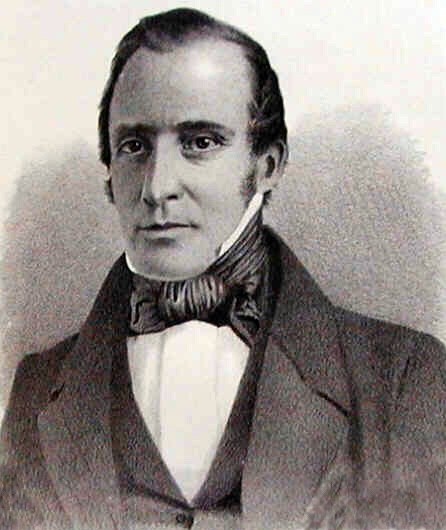
Historical · U.S. House · New York · District 29
Seth Gates
Former U.S. Representative · New York District 29 · 1839–1843 · Whig
Seth Gates represented New York's District 29 in the United States House of Representatives (1839–1843) for the Whig party. The page below collects sourced biographical facts, term history, committee roles, and provenance for Gates.
Bioguide ID: G000097
Key facts
- Full name
- Seth Gates
- State
- New York
- District
- District 29
- Party
- Whig
- House service
- 1839–1843
- First House term
- 1839
- Status
- Left office
- Current term ends
- —
- Born
- 1800
- Bioguide ID
- G000097
- Committee assignments
- —
- Dataset version
- 1.20260606
Biographical narrative
907 words · sourced from the Wikipedia REST extract
Seth Gates was an American merchant, attorney, and politician who served as a U.S. Representative from New York. A member of the Whig Party, Gates was known for his antislavery stance and was active in both state and national politics during the early to mid-19th century. His congressional career spanned from 1839 to 1843, during which he participated in significant legislative debates, particularly regarding the contentious issue of slavery and the annexation of Texas.
Early life and career
Seth Gates was born on October 10, 1800, in Winfield, New York. He was the son of Seth Gates and Abigail Merrill Gates. In 1806, when Gates was just six years old, his family relocated to Sheldon, New York. He received his early education in common schools and attended Middlebury Academy in the village of Wyoming, New York. Following his education, Gates began his professional career as a teacher, which provided him with valuable experience in leadership and public service.
In the early stages of his career, Gates took on various roles that demonstrated his commitment to public service and community involvement. He became the inspector of common schools, a position that allowed him to influence educational standards in his community. In 1825, he served as the deputy sheriff of Le Roy, New York, further establishing his presence in local governance. Gates pursued a legal career by studying law and was admitted to the bar in 1827, subsequently beginning his law practice in Le Roy.
His political career began to take shape in 1830 when he served as the supervisor of Le Roy, a role that involved overseeing local government operations. Gates's political ambitions grew, and in 1832, he was elected as a member of the New York State Assembly as a representative of the Whig Party. However, he chose not to seek renomination after his term in the Assembly, indicating a strategic approach to his political career.
House tenure
Gates's tenure in the U.S. House of Representatives began on March 4, 1839, when he was elected to serve as a representative for New York's 29th congressional district. He was a member of the Whig Party, which was known for its opposition to the expansion of slavery and its support for various reform movements. Gates's election came during a period of significant national debate over issues such as slavery, territorial expansion, and economic policy.
During his time in Congress, Gates was known for his strong antislavery position. He was part of the twenty-sixth and twenty-seventh U.S. Congresses, where he actively participated in discussions and legislative efforts surrounding the contentious issue of slavery in the United States. One notable action during his congressional career was his involvement in drafting a protest against the annexation of Texas, which was signed by fellow Whigs in Congress. This protest reflected the party's concerns about the implications of expanding slave territory and the potential impact on the balance of power in the nation.
Despite his contributions, Gates faced challenges in his political career. He was unsuccessful in his bid for reelection, and his last term in the House ended on March 3, 1843. Following his departure from Congress, Gates returned to New York, where he continued to practice law and engage in various business ventures.
Legislative focus and committees
Throughout his congressional career, Gates's legislative focus was primarily centered on issues related to slavery and civil rights. His antislavery stance was a defining characteristic of his political identity, aligning him with the broader Whig Party agenda that sought to limit the expansion of slavery into new territories. Gates's involvement in drafting the protest against Texas annexation underscored his commitment to opposing policies that he believed would exacerbate the institution of slavery.
In addition to his work on slavery, Gates was engaged in various other legislative matters during his time in office. His experience as a lawyer likely informed his understanding of legal and constitutional issues, allowing him to contribute meaningfully to discussions on a range of topics. However, specific details regarding the committees he served on or particular pieces of legislation he supported are not extensively documented.
After his congressional tenure, Gates remained active in public life. He moved to Warsaw, New York, in 1843, where he continued his law practice and engaged in the lumber trade and merchant activities. His political aspirations did not end with his congressional service; he sought the position of Lieutenant Governor of New York on two occasions, running on the Barnburners and Free Soil tickets in 1848 and 1852, respectively. However, he was unsuccessful in these endeavors.
Gates's commitment to public service extended beyond his political career. From 1851 to 1865, he served as the secretary of the Wyoming County Insurance Company, further demonstrating his involvement in local economic affairs. In 1861, he was appointed postmaster at Warsaw, a position he held until 1870, which allowed him to maintain a connection with his community.
Seth Gates passed away on August 24, 1877, in Warsaw, New York. He was interred in Warsaw Cemetery, leaving behind a legacy as a dedicated public servant and a figure in the political landscape of his time. His home, known as the Seth M. Gates House, was recognized for its historical significance and was listed on the National Register of Historic Places in 1992. Gates's life and career reflect the complexities of American politics during a transformative period in the nation's history, particularly concerning the issues of slavery and civil rights.
Notable legislation
Sponsored and co-sponsored legislation for Seth Gates is pending operator curation. The biographical narrative above carries the same provenance trail until per-bill rows are written.
Sources
- [1]https://en.wikipedia.org/wiki/Seth_M._GatesWikipedia · retrieved 2026-06-06
Notable quotes
Sourced quotes for Seth Gates are pending operator curation. Narrative-scope provenance remains attached below.
Sources
- [1]https://en.wikipedia.org/wiki/Seth_M._GatesWikipedia · retrieved 2026-06-06
Key positions
Curated policy positions for Seth Gates are pending operator review. The biographical narrative above carries the same provenance trail until per-topic positions are written.
Sources
- [1]https://en.wikipedia.org/wiki/Seth_M._GatesWikipedia · retrieved 2026-06-06
Terms served
- 1839–1841U.S. House · Term 1 · Whig
- 1841–1843U.S. House · Term 2 · Whig
Sources & provenance
Every attributable claim above carries a per-section [N] marker that resolves to the corresponding URL below. Each entry records the upstream provider, the canonical URL, and the timestamp at which the source was retrieved by the ingest pipeline.
Key facts
- https://bioguide.congress.gov/search/bio/G000097bioguide · retrieved 2026-06-06
- https://www.govtrack.us/congress/members/404469govtrack · retrieved 2026-06-06
Biographical narrative
- https://en.wikipedia.org/wiki/Seth_M._Gateswikipedia · retrieved 2026-06-06
Find your representative
Every U.S. state elects representatives by district. Browse New York’s delegation, the full former-representative roster, or explore the role and term length.
Related on The Candidate
- Preceded by William PattersonEarlier holder of the New York District 29 House seat · Whig.Open
- Succeeded by Charles CarrollLater holder of the New York District 29 House seat · Whig.Open
- Abel HuntingtonFormer U.S. Representative · New York District 1 · JacksonOpen
- Alfred ChapinFormer U.S. Representative · New York District 1 · DemocraticOpen
- Cadwallader ColdenFormer U.S. Representative · New York District 1 · FederalistOpen
- Charles FloydFormer U.S. Representative · New York District 1 · DemocraticOpen