
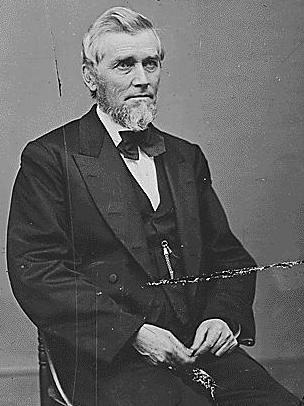
Historical · U.S. House · New York · District 29
Seth Wakeman
Former U.S. Representative · New York District 29 · 1871–1873 · Republican
Seth Wakeman represented New York's District 29 in the United States House of Representatives (1871–1873) for the Republican party. The page below collects sourced biographical facts, term history, committee roles, and provenance for Wakeman.
Bioguide ID: W000028
Key facts
- Full name
- Seth Wakeman
- State
- New York
- District
- District 29
- Party
- Republican
- House service
- 1871–1873
- First House term
- 1871
- Status
- Left office
- Current term ends
- —
- Born
- 1811
- Bioguide ID
- W000028
- Committee assignments
- —
- Dataset version
- 1.20260606
Biographical narrative
893 words · sourced from the Wikipedia REST extract
Seth Wakeman was an American attorney and politician who served as a U.S. Representative for New York's 29th congressional district. A member of the Republican Party, he held office in the early 1870s after a career that included significant roles in local government and the New York State Assembly. His political journey began as a Whig before transitioning to the Republican Party, reflecting the shifting political landscape of the time. Wakeman's tenure in the U.S. House of Representatives lasted from 1871 to 1873, marking a notable chapter in his public service.
Early life and career
Seth Wakeman was born on January 15, 1811, in Franklin, Vermont, to Nathan Wakeman and Phoebe Johnston. His family relocated to Pembroke, New York, during his early childhood. Nathan Wakeman became involved in the War of 1812 as a member of the New York Militia, but he tragically passed away while on duty in Malone, New York. Growing up in Pembroke, Seth Wakeman received his education at local schools and initially pursued a career in farming.
Wakeman's early involvement in local governance included serving as constable and justice of the peace, roles that provided him with foundational experience in public service. He later studied law and was admitted to the bar in 1844, which allowed him to begin practicing law in Batavia, New York. His legal career coincided with a growing interest in politics. He initially aligned with the Whig Party, which was prominent during the mid-19th century.
In addition to his legal practice, Wakeman engaged in various business ventures. He served as the Genesee County Treasurer from 1845 to 1846 and held the position of Genesee County District Attorney from 1850 to 1855. His involvement in infrastructure development included serving as secretary of the Batavia and Lancaster Plank Road Company and being a member of the board of directors for the Batavia and Oakfield Plank Road Company. In 1852, he was appointed secretary of the Buffalo and Batavia Plank Road Company, further demonstrating his commitment to local economic development.
Wakeman's political career began to gain momentum when he became a member of the New York State Assembly, representing Genesee County's first district in 1856 and 1857. His political affiliations shifted with the founding of the Republican Party in the mid-1850s, and he became an active member of this new political movement. He also participated as a delegate in the New York State constitutional convention of 1867 and 1868, contributing to the shaping of state governance during a transformative period in American history.
House tenure
Seth Wakeman's congressional career began when he was elected to the 42nd United States Congress in 1870. He officially took office on March 4, 1871, representing New York's 29th congressional district. His election to the House marked a significant achievement in his political trajectory, as he transitioned from state-level politics to the national stage. During his time in Congress, Wakeman served a single term, which concluded on March 3, 1873.
While specific details regarding his legislative activities during his term are not extensively documented, his role as a U.S. Representative involved participating in discussions and decisions on various national issues of the time. The early 1870s were characterized by significant political and social changes in the United States, including the aftermath of the Civil War and the ongoing Reconstruction era. As a member of the Republican Party, Wakeman would have been involved in debates surrounding these critical issues, although the specifics of his contributions remain less clear.
After completing his term in the House, Wakeman returned to his legal practice in Batavia. His post-congressional career was marked by a gradual decline in health, which began to affect his ability to engage in professional and public life. By 1875, he had largely retired from his legal and business interests, and his later years were spent in relative seclusion due to health issues.
Legislative focus and committees
Seth Wakeman's legislative focus during his time in the U.S. House of Representatives is not extensively documented in available records. However, as a member of the Republican Party during a period of significant national transformation, it can be inferred that his legislative priorities may have aligned with the party's broader goals, which included issues related to Reconstruction, civil rights, and economic development.
While specific committee assignments or legislative initiatives during Wakeman's term are not detailed in the available information, it is common for members of Congress to engage in discussions and votes on a range of topics, including infrastructure, public welfare, and governance reforms. The political environment of the early 1870s was complex, with various factions within the Republican Party advocating for different approaches to the challenges facing the nation.
Wakeman's background as an attorney and his previous experience in local government likely informed his perspectives on legislative matters. His involvement in state politics and local governance would have provided him with insights into the needs and concerns of his constituents in New York's 29th district, shaping his approach to representation during his congressional tenure.
Following his departure from Congress, Wakeman continued to engage with the legal profession until his health declined. He passed away on January 4, 1880, in Batavia, New York, and was interred at Elmwood Cemetery. His life and career reflect the complexities of American political life in the 19th century, marked by shifts in party affiliation, local governance, and national representation.
Notable legislation
Sponsored and co-sponsored legislation for Seth Wakeman is pending operator curation. The biographical narrative above carries the same provenance trail until per-bill rows are written.
Sources
- [1]https://en.wikipedia.org/wiki/Seth_WakemanWikipedia · retrieved 2026-06-06
Notable quotes
Sourced quotes for Seth Wakeman are pending operator curation. Narrative-scope provenance remains attached below.
Sources
- [1]https://en.wikipedia.org/wiki/Seth_WakemanWikipedia · retrieved 2026-06-06
Key positions
Curated policy positions for Seth Wakeman are pending operator review. The biographical narrative above carries the same provenance trail until per-topic positions are written.
Sources
- [1]https://en.wikipedia.org/wiki/Seth_WakemanWikipedia · retrieved 2026-06-06
Terms served
- 1871–1873U.S. House · Term 1 · Republican
Sources & provenance
Every attributable claim above carries a per-section [N] marker that resolves to the corresponding URL below. Each entry records the upstream provider, the canonical URL, and the timestamp at which the source was retrieved by the ingest pipeline.
Key facts
- https://bioguide.congress.gov/search/bio/W000028bioguide · retrieved 2026-06-06
- https://www.govtrack.us/congress/members/411207govtrack · retrieved 2026-06-06
Biographical narrative
- https://en.wikipedia.org/wiki/Seth_Wakemanwikipedia · retrieved 2026-06-06
Find your representative
Every U.S. state elects representatives by district. Browse New York’s delegation, the full former-representative roster, or explore the role and term length.
Related on The Candidate
- Preceded by John FisherEarlier holder of the New York District 29 House seat · Republican.Open
- Succeeded by Charles WalkerLater holder of the New York District 29 House seat · Democratic.Open
- Abel HuntingtonFormer U.S. Representative · New York District 1 · JacksonOpen
- Alfred ChapinFormer U.S. Representative · New York District 1 · DemocraticOpen
- Cadwallader ColdenFormer U.S. Representative · New York District 1 · FederalistOpen
- Charles FloydFormer U.S. Representative · New York District 1 · DemocraticOpen