
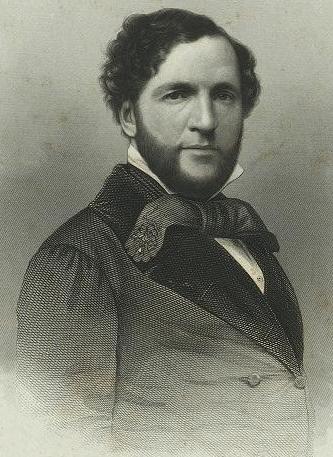
Historical · U.S. House · New York · District 3
Emanuel Hart
Former U.S. Representative · New York District 3 · 1851–1853 · Democratic
Emanuel Hart represented New York's District 3 in the United States House of Representatives (1851–1853) for the Democratic party. The page below collects sourced biographical facts, term history, committee roles, and provenance for Hart.
Bioguide ID: H000286
Key facts
- Full name
- Emanuel Hart
- State
- New York
- District
- District 3
- Party
- Democratic
- House service
- 1851–1853
- First House term
- 1851
- Status
- Left office
- Current term ends
- —
- Born
- 1809
- Bioguide ID
- H000286
- Committee assignments
- —
- Dataset version
- 1.20260606
Biographical narrative
998 words · sourced from the Wikipedia REST extract
Emanuel Hart was an American lawyer and politician who served as a U.S. Representative for New York's 3rd congressional district from 1851 to 1853. A member of the Democratic Party, Hart made history as New York's first Jewish congressman and was among the early Jewish representatives in the United States Congress. His career spanned various roles in public service and the legal profession, reflecting a commitment to civic engagement and community service throughout his life.
Early life and career
Emanuel Hart was born on October 27, 1809, in New York City. His early education took place in local public schools, where he received a foundational education that would later support his professional endeavors. Following his schooling, Hart pursued a career in law, studying diligently to prepare for the legal profession. He successfully gained admission to the bar in 1868, marking the official beginning of his legal career.
In addition to his legal pursuits, Hart engaged in mercantile activities, which provided him with insights into business and commerce. His involvement in trade and business likely contributed to his understanding of the economic landscape of New York City during the mid-19th century. Hart also demonstrated a commitment to public service early in his career. He served as a colonel in the militia, a role that would have involved leadership and organizational responsibilities, reflecting his dedication to his community and state.
Hart's political career began to take shape when he was elected to the New York City Board of Aldermen in 1845. This position allowed him to engage directly with local governance and community issues, providing him with valuable experience in public administration. His tenure on the Board of Aldermen would have involved addressing various municipal matters, including infrastructure, public safety, and local legislation. This experience laid the groundwork for his later election to the U.S. Congress.
House tenure
Emanuel Hart was elected as a Democrat to the Thirty-second Congress, serving from March 4, 1851, until March 3, 1853. His election to the House of Representatives was significant not only for his political affiliation but also for his heritage, as he became New York's first Jewish congressman. Hart's election marked an important moment in the representation of Jewish Americans in government, as he was the third individual of Jewish descent to serve in the United States Congress, following David Levy Yulee and Lewis Charles Levin.
During his time in Congress, Hart participated in the legislative process and contributed to discussions on various issues facing the nation. However, specific details regarding his legislative initiatives or committee assignments during his tenure are not extensively documented. His time in the House was relatively brief, as he served only one term before concluding his congressional career in early March 1853. The political landscape of the time was marked by significant national debates, including issues related to slavery, states' rights, and economic policy, which would have influenced the context in which Hart operated.
Despite the limited duration of his congressional service, Hart's election and representation were notable for their historical significance, particularly in the context of Jewish representation in American politics. His role in Congress contributed to the gradual inclusion of diverse voices in the legislative process, reflecting the evolving demographics of the United States during the 19th century.
Legislative focus and committees
While specific details regarding Emanuel Hart's legislative focus and committee assignments during his time in Congress are not extensively recorded, his background in law and local governance likely informed his approach to legislative matters. As a member of the Democratic Party, Hart would have aligned with the party's platform of the time, which included support for states' rights and an emphasis on agrarian interests, among other issues.
In addition to his congressional duties, Hart's involvement in public service extended beyond his time in the House. Following his congressional tenure, he was appointed by President James Buchanan to serve as the surveyor of the Port of New York from 1857 to 1861. This position involved overseeing the operations and regulations of one of the busiest ports in the United States, highlighting Hart's continued engagement in matters of commerce and trade.
Hart also served as a member of the city board of assessors, a role that would have involved evaluating property values and assessing taxes, further contributing to his experience in municipal governance. His leadership extended to the healthcare sector when he was appointed president of Mount Sinai Hospital from 1870 to 1876. In this capacity, Hart played a role in overseeing hospital operations and addressing healthcare issues within the community.
In addition to his work in healthcare, Hart served as New York City's commissioner of immigration from 1870 to 1873, a position that involved managing the influx of immigrants arriving in the city during a period of significant demographic change. His work in this role would have required an understanding of immigration policy and its impact on the city, reflecting the complexities of urban governance in the 19th century.
Hart's commitment to social welfare was also evident in his role as treasurer of the Society for the Relief of Poor Hebrews, an organization dedicated to providing assistance to impoverished members of the Jewish community. His involvement in this organization underscored his dedication to addressing social issues and supporting vulnerable populations.
In 1868, Hart participated in the electoral process as a presidential elector, further demonstrating his ongoing engagement in the political landscape of the nation. His varied roles in public service, law, and community organizations illustrate a multifaceted career dedicated to civic responsibility and leadership.
Emanuel Hart passed away in New York City on August 29, 1897. He was interred in Cypress Hills Cemetery in Brooklyn, New York. His legacy as a pioneering figure in American politics, particularly as a Jewish representative, remains a notable aspect of his life and career. Through his various roles in public service, Hart contributed to the shaping of his community and the broader political landscape of the United States during a transformative period in its history.
Notable legislation
Sponsored and co-sponsored legislation for Emanuel Hart is pending operator curation. The biographical narrative above carries the same provenance trail until per-bill rows are written.
Sources
- [1]https://en.wikipedia.org/wiki/Emanuel_B._HartWikipedia · retrieved 2026-06-06
Notable quotes
Sourced quotes for Emanuel Hart are pending operator curation. Narrative-scope provenance remains attached below.
Sources
- [1]https://en.wikipedia.org/wiki/Emanuel_B._HartWikipedia · retrieved 2026-06-06
Key positions
Curated policy positions for Emanuel Hart are pending operator review. The biographical narrative above carries the same provenance trail until per-topic positions are written.
Sources
- [1]https://en.wikipedia.org/wiki/Emanuel_B._HartWikipedia · retrieved 2026-06-06
Terms served
- 1851–1853U.S. House · Term 1 · Democratic
Sources & provenance
Every attributable claim above carries a per-section [N] marker that resolves to the corresponding URL below. Each entry records the upstream provider, the canonical URL, and the timestamp at which the source was retrieved by the ingest pipeline.
Key facts
- https://bioguide.congress.gov/search/bio/H000286bioguide · retrieved 2026-06-06
- https://www.govtrack.us/congress/members/405160govtrack · retrieved 2026-06-06
Biographical narrative
- https://en.wikipedia.org/wiki/Emanuel_B._Hartwikipedia · retrieved 2026-06-06
Find your representative
Every U.S. state elects representatives by district. Browse New York’s delegation, the full former-representative roster, or explore the role and term length.
Related on The Candidate
- Preceded by Jonas PhoenixEarlier holder of the New York District 3 House seat · Whig.Open
- Succeeded by Hiram WalbridgeLater holder of the New York District 3 House seat · Democratic.Open
- Abel HuntingtonFormer U.S. Representative · New York District 1 · JacksonOpen
- Alfred ChapinFormer U.S. Representative · New York District 1 · DemocraticOpen
- Cadwallader ColdenFormer U.S. Representative · New York District 1 · FederalistOpen
- Charles FloydFormer U.S. Representative · New York District 1 · DemocraticOpen