
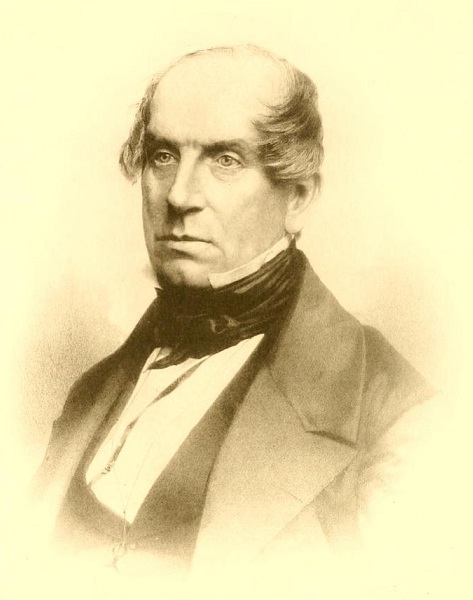
Historical · U.S. House · New York · District 3
Josiah Hoffman
Former U.S. Representative · New York District 3 · 1837–1841 · Whig
Josiah Hoffman represented New York's District 3 in the United States House of Representatives (1837–1841) for the Whig party. The page below collects sourced biographical facts, term history, committee roles, and provenance for Hoffman.
Bioguide ID: H000687
Key facts
- Full name
- Josiah Hoffman
- State
- New York
- District
- District 3
- Party
- Whig
- House service
- 1837–1841
- First House term
- 1837
- Status
- Left office
- Current term ends
- —
- Born
- 1793
- Bioguide ID
- H000687
- Committee assignments
- —
- Dataset version
- 1.20260606
Biographical narrative
864 words · sourced from the Wikipedia REST extract
Josiah Hoffman was a 19th-century American lawyer and politician who served as a U.S. Representative for New York's 3rd congressional district. A member of the Whig Party, he held office in the United States House of Representatives from 1837 until 1841. His political career was marked by a transition from the Democratic Party, influenced by his opposition to President Andrew Jackson's policies, particularly regarding banking. In addition to his congressional service, Hoffman held various legal and political positions throughout his career, including serving as the United States Attorney for the Southern District of New York and later as New York Attorney General.
Early life and career
Josiah Hoffman was born on May 3, 1793. His early education included classical studies, which he pursued at Columbia College, where he graduated in 1812. Following his academic pursuits, Hoffman joined the United States Navy, where he served as a midshipman starting in 1814. His naval career included participation in significant conflicts such as the War of 1812 and the Second Barbary War. During the War of 1812, he was a crew member on the USS President, a naval ship that was captured, leading to his imprisonment.
After his naval service, Hoffman transitioned to a legal career. He studied law under the guidance of his father, who was a prominent attorney and served as the New York Attorney General. Hoffman was admitted to the bar in 1818 and began practicing law in Goshen, New York. His legal career progressed as he took on various roles, including serving as the District Attorney for Orange County from May 1823 to January 1826. He also became a member of the New York State Assembly representing Orange County in 1826.
Hoffman's legal practice eventually brought him to New York City, where he formed a partnership with Hugh Maxwell, who was the New York County District Attorney at the time. His political involvement continued as he was elected to the New York State Assembly for New York County in 1828. He then served as the New York County District Attorney from 1829 until 1835. Throughout his early career, Hoffman was known for his legal acumen and his willingness to engage in high-profile cases, including a notable defense of Richard P. Robinson in a murder trial in 1836, which resulted in an acquittal.
House tenure
Hoffman's congressional career began when he was elected as a member of the Whig Party to the 25th United States Congress, serving from March 4, 1837, to March 3, 1841. His election to Congress came during a period of significant political realignment in the United States, as the Whig Party emerged in opposition to the policies of President Andrew Jackson and the Democratic Party. Hoffman's shift from the Democratic Party to the Whigs was largely influenced by his disagreement with Jackson's administration, particularly regarding the need for a federally chartered central bank.
During his time in the House of Representatives, Hoffman participated in legislative discussions and decisions that were pivotal to the era. His tenure coincided with a range of national issues, including debates over economic policy, infrastructure development, and the expansion of the United States. While specific details of his legislative actions are not provided, it is understood that his role as a congressman involved navigating the complex political landscape of the time and representing the interests of his constituents in New York.
Hoffman's congressional service concluded in 1841, after which he continued to engage in public service in various capacities. His political career did not end with his departure from Congress; instead, he transitioned into other significant legal and political roles.
Legislative focus and committees
While specific details regarding Hoffman's committee assignments and legislative focus during his time in the House of Representatives are not documented, it can be inferred that his legal background and experience as a district attorney likely influenced his approach to legislative matters. As a member of the Whig Party, he would have been involved in discussions surrounding economic policy, particularly in relation to banking and infrastructure, which were central issues for the party during its formation and early years.
The Whig Party was characterized by its opposition to the policies of President Jackson, especially concerning the Second Bank of the United States and federal economic intervention. Hoffman's alignment with the Whigs suggests that he would have been engaged in legislative efforts aimed at promoting economic stability and growth, as well as advocating for the interests of his constituents in New York.
After his congressional tenure, Hoffman continued to serve in public office, which included his appointment as the United States Attorney for the Southern District of New York from 1841 to 1845. This role further underscored his legal expertise and commitment to public service. Later, he was elected as the New York Attorney General from 1854 to 1855, again representing the Whig Party.
Hoffman's legislative and legal career reflects the complexities of 19th-century American politics, as he navigated the shifting allegiances and emerging issues of his time. His contributions to the legal and political landscape of New York and the nation are indicative of the broader trends in American governance during a period marked by significant change and development.
Notable legislation
Sponsored and co-sponsored legislation for Josiah Hoffman is pending operator curation. The biographical narrative above carries the same provenance trail until per-bill rows are written.
Sources
- [1]https://en.wikipedia.org/wiki/Ogden_HoffmanWikipedia · retrieved 2026-06-06
Notable quotes
Sourced quotes for Josiah Hoffman are pending operator curation. Narrative-scope provenance remains attached below.
Sources
- [1]https://en.wikipedia.org/wiki/Ogden_HoffmanWikipedia · retrieved 2026-06-06
Key positions
Curated policy positions for Josiah Hoffman are pending operator review. The biographical narrative above carries the same provenance trail until per-topic positions are written.
Sources
- [1]https://en.wikipedia.org/wiki/Ogden_HoffmanWikipedia · retrieved 2026-06-06
Terms served
- 1837–1839U.S. House · Term 1 · Whig
- 1839–1841U.S. House · Term 2 · Whig
Sources & provenance
Every attributable claim above carries a per-section [N] marker that resolves to the corresponding URL below. Each entry records the upstream provider, the canonical URL, and the timestamp at which the source was retrieved by the ingest pipeline.
Key facts
- https://bioguide.congress.gov/search/bio/H000687bioguide · retrieved 2026-06-06
- https://www.govtrack.us/congress/members/405540govtrack · retrieved 2026-06-06
Biographical narrative
- https://en.wikipedia.org/wiki/Ogden_Hoffmanwikipedia · retrieved 2026-06-06
Find your representative
Every U.S. state elects representatives by district. Browse New York’s delegation, the full former-representative roster, or explore the role and term length.
Related on The Candidate
- Preceded by Gideon LeeEarlier holder of the New York District 3 House seat · Jackson.Open
- Succeeded by James RooseveltLater holder of the New York District 3 House seat · Democratic.Open
- Abel HuntingtonFormer U.S. Representative · New York District 1 · JacksonOpen
- Alfred ChapinFormer U.S. Representative · New York District 1 · DemocraticOpen
- Cadwallader ColdenFormer U.S. Representative · New York District 1 · FederalistOpen
- Charles FloydFormer U.S. Representative · New York District 1 · DemocraticOpen