
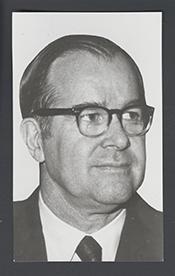
Historical · U.S. House · New York · District 30
Barber Conable Jr.
Former U.S. Representative · New York District 30 · 1965–1985 · Republican
Barber Conable Jr. represented New York's District 30 in the United States House of Representatives (1965–1985) for the Republican party. The page below collects sourced biographical facts, term history, committee roles, and provenance for Jr..
Bioguide ID: C000666
Key facts
- Full name
- Barber Conable Jr.
- State
- New York
- District
- District 30
- Party
- Republican
- House service
- 1965–1985
- First House term
- 1965
- Status
- Left office
- Current term ends
- —
- Born
- 1922
- Bioguide ID
- C000666
- Committee assignments
- —
- Dataset version
- 1.20260605
Biographical narrative
972 words · sourced from the Wikipedia REST extract
Barber B. Conable Jr. was a prominent American politician and attorney who served as a U.S. Representative for New York's 30th congressional district from 1965 until 1985. A member of the Republican Party, Conable was known for his integrity and bipartisanship during his decade-long tenure in Congress. Following his legislative career, he became the president of the World Bank Group, where he utilized his political experience to influence international financial policies and humanitarian efforts.
Early life and career
Barber Benjamin Conable Jr. was born on November 2, 1922, in Warsaw, New York. He grew up in a community that valued civic engagement and public service, which likely influenced his later career in politics. Conable was an accomplished youth, earning the rank of Eagle Scout and receiving the Distinguished Eagle Scout Award from the Boy Scouts of America, a testament to his leadership and commitment to service from an early age.
He attended Cornell University, where he graduated in 1942. During his time at Cornell, he was actively involved in campus life, serving as president of the Quill and Dagger society and being a member of the Phi Delta Theta fraternity. His academic pursuits were interrupted by World War II, during which he enlisted in the United States Marine Corps. Conable served in the Pacific theater, participating in significant battles, including the Battle of Iwo Jima. His military service not only shaped his character but also equipped him with language skills, as he learned to speak Japanese during his time in the Marines.
After the war, Conable returned to academia, earning a law degree from Cornell University Law School in 1948. His legal education was complemented by his involvement with the Telluride Association, where he lived at the Cornell Branch. Following his graduation, Conable briefly entered politics, although his first attempt to secure a congressional seat as an undergraduate was unsuccessful. He later re-enlisted in the military and served during the Korean War, further solidifying his commitment to public service.
In 1952, Conable married Charlotte Williams, and they remained together until his death. His personal life, marked by stability and partnership, paralleled his professional trajectory, which would see him rise through the ranks of public office.
House tenure
Conable's political career began in earnest when he was elected to the New York State Senate in 1962 as a Republican. He served a single term before successfully running for the U.S. House of Representatives in 1964, representing a district based in Rochester, New York. Over the course of his ten terms in Congress, which began in 1965 and concluded in 1985, Conable became known for his principled approach to governance and his ability to work across party lines.
Throughout his tenure, Conable was recognized for his integrity and was respected by colleagues from both parties. He was noted for his refusal to accept personal contributions exceeding $50, a policy that underscored his commitment to ethical standards in political fundraising. His reputation for honesty earned him the distinction of being voted the "most respected" member of Congress by his peers at one point during his career.
Conable served as a long-time ranking member of the House Ways and Means Committee, which is responsible for taxation and revenue-related legislation. One of his significant legislative achievements was the introduction of provisions in the U.S. tax code that facilitated the establishment of 401(k) and 403(b) defined-contribution retirement plans. These provisions allowed for tax-deferred contributions from both employers and employees, fundamentally altering the landscape of retirement savings in the United States.
His political career was not without challenges. Conable was initially a supporter of President Richard Nixon, but he distanced himself from Nixon following the Watergate scandal. Conable's disillusionment with Nixon culminated in his public condemnation of the administration's actions, particularly after the release of tapes that revealed attempts to obstruct justice. His use of the term "smoking gun" to describe the tapes became a notable phrase in the political discourse of the time.
Conable chose to retire from the House in 1984, concluding a significant chapter in his political life. His decision to step down came after a decade of service marked by notable achievements and a commitment to public service.
Legislative focus and committees
During his time in the House of Representatives, Conable's legislative focus was primarily centered on fiscal policy, taxation, and social welfare programs. As a member of the Ways and Means Committee, he played a crucial role in shaping tax legislation and advocating for policies that would benefit both individuals and businesses. His work on retirement savings plans, particularly the 401(k) and 403(b) plans, has had a lasting impact on American retirement security, allowing millions of Americans to save for their futures in a tax-advantaged manner.
Conable's approach to legislation was characterized by a commitment to bipartisanship and a focus on practical solutions. He was known for his ability to build consensus among colleagues, which was essential in navigating the complexities of tax policy and social programs. His reputation for integrity and honesty helped him gain the trust of both constituents and fellow lawmakers.
After leaving Congress, Conable transitioned to an influential role as president of the World Bank Group from 1986 to 1991. His experience in Congress proved invaluable as he worked to secure increased appropriations for the bank and advocated for humanitarian loans, particularly in the context of China following the Tiananmen Square protests. Conable's leadership at the World Bank was marked by a focus on development and environmental sustainability, including initiatives that led to the planting of a billion trees in China.
Barber B. Conable Jr. passed away on November 30, 2003, from a staphylococcus infection at his winter residence in Sarasota, Florida. His legacy as a public servant, legislator, and leader in international finance continues to be recognized for its impact on both domestic and global policies.
Notable legislation
Sponsored and co-sponsored legislation for Barber Conable Jr. is pending operator curation. The biographical narrative above carries the same provenance trail until per-bill rows are written.
Sources
- [1]https://en.wikipedia.org/wiki/Barber_ConableWikipedia · retrieved 2026-06-05
Notable quotes
Sourced quotes for Barber Conable Jr. are pending operator curation. Narrative-scope provenance remains attached below.
Sources
- [1]https://en.wikipedia.org/wiki/Barber_ConableWikipedia · retrieved 2026-06-05
Key positions
Curated policy positions for Barber Conable Jr. are pending operator review. The biographical narrative above carries the same provenance trail until per-topic positions are written.
Sources
- [1]https://en.wikipedia.org/wiki/Barber_ConableWikipedia · retrieved 2026-06-05
Terms served
- 1965–1967U.S. House · Term 1 · Republican
- 1967–1969U.S. House · Term 2 · Republican
- 1969–1971U.S. House · Term 3 · Republican
- 1971–1973U.S. House · Term 4 · Republican
- 1973–1975U.S. House · Term 5 · Republican
- 1975–1977U.S. House · Term 6 · Republican
- 1977–1979U.S. House · Term 7 · Republican
- 1979–1981U.S. House · Term 8 · Republican
- 1981–1983U.S. House · Term 9 · Republican
- 1983–1985U.S. House · Term 10 · Republican
Sources & provenance
Every attributable claim above carries a per-section [N] marker that resolves to the corresponding URL below. Each entry records the upstream provider, the canonical URL, and the timestamp at which the source was retrieved by the ingest pipeline.
Key facts
- https://bioguide.congress.gov/search/bio/C000666bioguide · retrieved 2026-06-05
- https://www.govtrack.us/congress/members/402793govtrack · retrieved 2026-06-05
Biographical narrative
- https://en.wikipedia.org/wiki/Barber_Conablewikipedia · retrieved 2026-06-05
Find your representative
Every U.S. state elects representatives by district. Browse New York’s delegation, the full former-representative roster, or explore the role and term length.
Related on The Candidate
- Preceded by Jay Le FevreEarlier holder of the New York District 30 House seat · Republican.Open
- Succeeded by Fred EckertLater holder of the New York District 30 House seat · Republican.Open
- Abel HuntingtonFormer U.S. Representative · New York District 1 · JacksonOpen
- Alfred ChapinFormer U.S. Representative · New York District 1 · DemocraticOpen
- Cadwallader ColdenFormer U.S. Representative · New York District 1 · FederalistOpen
- Charles FloydFormer U.S. Representative · New York District 1 · DemocraticOpen