
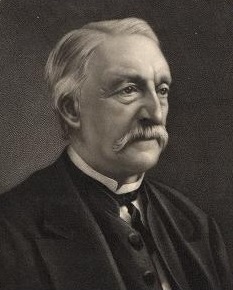
Historical · U.S. House · New York · District 30
Benjamin Pringle
Former U.S. Representative · New York District 30 · 1853–1857 · Ind. Republican-Democrat
Benjamin Pringle represented New York's District 30 in the United States House of Representatives (1853–1857) for the Ind. Republican-Democrat party. The page below collects sourced biographical facts, term history, committee roles, and provenance for Pringle.
Bioguide ID: P000543
Key facts
- Full name
- Benjamin Pringle
- State
- New York
- District
- District 30
- Party
- Ind. Republican-Democrat
- House service
- 1853–1857
- First House term
- 1853
- Status
- Left office
- Current term ends
- —
- Born
- 1807
- Bioguide ID
- P000543
- Committee assignments
- —
- Dataset version
- 1.20260606
Biographical narrative
842 words · sourced from the Wikipedia REST extract
Benjamin Pringle was a U.S. Representative from New York, serving in the House of Representatives during the mid-19th century. He was a member of the Independent Republican-Democrat party and held office from 1853 until 1857. Pringle's career encompassed various roles, including practicing law, serving as a bank president, and holding judicial positions. His legislative work included a focus on Indian affairs, reflecting the complex issues of his time.
Early life and career
Benjamin Pringle was born on November 9, 1807, in Richfield Springs, located in Otsego County, New York. He pursued his education through preparatory studies, which laid the groundwork for his later career in law. After completing his studies, Pringle was admitted to the bar in 1830, marking the beginning of his professional journey in the legal field. He practiced law for several years, gaining experience and establishing a reputation in his community.
In addition to his legal career, Pringle took on significant roles in the banking sector. He served as the president of a bank in Batavia, which is situated in Genesee County, New York. This position allowed him to engage with the financial aspects of local governance and the economy. His involvement in the banking industry was complemented by his judicial experience, as he was appointed as a judge of the Genesee County Court from 1841 to 1846. This role further solidified his standing in the community and provided him with insights into the legal and administrative challenges of the time.
Pringle's early career was marked by a blend of legal, financial, and judicial responsibilities, which would later inform his approach to governance and legislation during his time in Congress. His diverse experiences contributed to his understanding of the complexities facing his constituents and the nation as a whole.
House tenure
Pringle's political career in the U.S. House of Representatives began when he was elected as a member of the Whig Party to the Thirty-third Congress. He officially took office on March 4, 1853, representing New York's 30th congressional district. His election to Congress came during a period of significant political realignment in the United States, as the Whig Party was beginning to fracture and new political movements were emerging.
During his time in the House, Pringle was re-elected to the Thirty-fourth Congress, serving until March 3, 1857. His tenure in Congress was characterized by his involvement in various legislative matters, particularly those related to Indian affairs. He served as the chairman of the Committee on Indian Affairs during the Thirty-fourth Congress, a position that allowed him to influence policies concerning Native American tribes and their relations with the federal government. This role was particularly relevant given the ongoing conflicts and negotiations between the U.S. government and Indigenous peoples during this era.
Despite his contributions, Pringle faced challenges in securing re-election. He was an unsuccessful candidate for a third term in the Thirty-fifth Congress, which marked the end of his congressional career. After leaving the House, he continued to engage in public service and community affairs, reflecting his commitment to civic duty.
Legislative focus and committees
Throughout his time in the House of Representatives, Benjamin Pringle's legislative focus was notably centered on Indian affairs, a critical issue during the 1850s. The role of the Committee on Indian Affairs was significant, as it dealt with the policies and legislation affecting Native American tribes, including treaties, land rights, and the administration of Indian affairs. Pringle's leadership in this committee indicated his engagement with the pressing issues of the day, particularly those impacting Indigenous populations and their rights.
In addition to his work on Indian affairs, Pringle's broader legislative activities were influenced by his background in law and finance. His experiences as a lawyer and bank president likely informed his perspectives on economic policies and legal frameworks relevant to his constituents. While specific legislative initiatives or bills he sponsored are not detailed, his dual focus on legal and financial matters suggests a comprehensive approach to governance that considered both the legal implications and economic realities of proposed legislation.
After his congressional service, Pringle remained active in public life. In 1862, he served as a member of the New York State Assembly, representing Genesee County. This position allowed him to continue his involvement in state-level governance and address local issues. His commitment to public service was further demonstrated when he was appointed by President Abraham Lincoln in 1863 as a judge of the court of arbitration in Cape Town, South Africa. This appointment was part of a treaty aimed at suppressing the African slave trade, highlighting Pringle's engagement with international issues and humanitarian concerns.
In 1873, he was appointed to the board of trustees of the State Institution for the Blind, reflecting his ongoing dedication to public service and advocacy for marginalized communities. Pringle's later years were spent in Minnesota, where he passed away on June 7, 1887. He was interred in the Old Cemetery in Batavia, New York, marking the end of a life dedicated to law, public service, and the complexities of governance in a rapidly changing America.
Notable legislation
Sponsored and co-sponsored legislation for Benjamin Pringle is pending operator curation. The biographical narrative above carries the same provenance trail until per-bill rows are written.
Sources
- [1]https://en.wikipedia.org/wiki/Benjamin_PringleWikipedia · retrieved 2026-06-06
Notable quotes
Sourced quotes for Benjamin Pringle are pending operator curation. Narrative-scope provenance remains attached below.
Sources
- [1]https://en.wikipedia.org/wiki/Benjamin_PringleWikipedia · retrieved 2026-06-06
Key positions
Curated policy positions for Benjamin Pringle are pending operator review. The biographical narrative above carries the same provenance trail until per-topic positions are written.
Sources
- [1]https://en.wikipedia.org/wiki/Benjamin_PringleWikipedia · retrieved 2026-06-06
Terms served
- 1853–1855U.S. House · Term 1 · Whig
- 1855–1857U.S. House · Term 2 · Ind. Republican-Democrat
Sources & provenance
Every attributable claim above carries a per-section [N] marker that resolves to the corresponding URL below. Each entry records the upstream provider, the canonical URL, and the timestamp at which the source was retrieved by the ingest pipeline.
Key facts
- https://bioguide.congress.gov/search/bio/P000543bioguide · retrieved 2026-06-06
- https://www.govtrack.us/congress/members/408927govtrack · retrieved 2026-06-06
Biographical narrative
- https://en.wikipedia.org/wiki/Benjamin_Pringlewikipedia · retrieved 2026-06-06
Find your representative
Every U.S. state elects representatives by district. Browse New York’s delegation, the full former-representative roster, or explore the role and term length.
Related on The Candidate
- Preceded by Reuben RobieEarlier holder of the New York District 30 House seat · Democratic.Open
- Succeeded by Judson ShermanLater holder of the New York District 30 House seat · Republican.Open
- Abel HuntingtonFormer U.S. Representative · New York District 1 · JacksonOpen
- Alfred ChapinFormer U.S. Representative · New York District 1 · DemocraticOpen
- Cadwallader ColdenFormer U.S. Representative · New York District 1 · FederalistOpen
- Charles FloydFormer U.S. Representative · New York District 1 · DemocraticOpen