
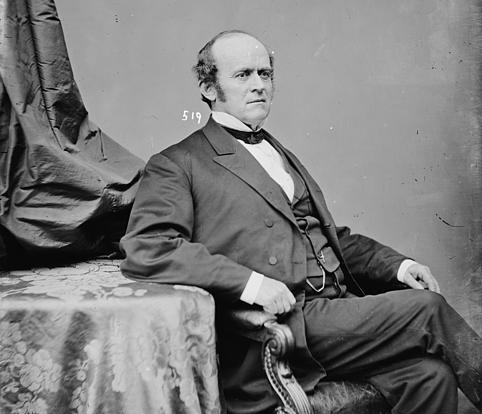
Historical · U.S. House · New York · District 30
David Bennett
Former U.S. Representative · New York District 30 · 1869–1871 · Republican
David Bennett represented New York's District 30 in the United States House of Representatives (1869–1871) for the Republican party. The page below collects sourced biographical facts, term history, committee roles, and provenance for Bennett.
Bioguide ID: B000373
Key facts
- Full name
- David Bennett
- State
- New York
- District
- District 30
- Party
- Republican
- House service
- 1869–1871
- First House term
- 1869
- Status
- Left office
- Current term ends
- —
- Born
- 1811
- Bioguide ID
- B000373
- Committee assignments
- —
- Dataset version
- 1.20260606
Biographical narrative
945 words · sourced from the Wikipedia REST extract
David Bennett was an American politician who served as a U.S. Representative for New York's 30th congressional district during the late 19th century. A member of the Republican Party, Bennett's congressional career was marked by his involvement in agricultural pursuits and his previous experience in state politics. His tenure in the House of Representatives lasted from 1869 until 1871, after which he returned to his business interests in Buffalo, New York. Born in 1811, Bennett's life and career reflect the economic and political developments of his time, particularly in the context of post-Civil War America.
Early life and career
David Bennett was born on May 3, 1811, on a farm near Camillus, New York. He was the son of James B. Bennett and Sarah Olmstead Bennett. Growing up in a rural setting, Bennett received his education through the common schools available in his area, as well as attending a local academy in Onondaga. This educational background provided him with the foundational skills that would later support his various business ventures and political career.
Bennett's early career was primarily focused on agriculture. He engaged in farming and related activities, which were common pursuits in the region during that era. His agricultural background likely influenced his later political focus, as issues related to farming and land use were critical to many constituents in his district. As he progressed in his career, Bennett moved to Syracuse, New York, where he expanded his business interests beyond agriculture.
In 1853, he relocated to Buffalo, New York, a city that was rapidly growing and becoming a significant economic hub in the northeastern United States. In Buffalo, Bennett built and operated several grain elevators, which played a crucial role in the transportation and storage of grain. His involvement in the grain industry not only contributed to his personal wealth but also positioned him as an influential figure in the local economy.
Bennett's business acumen and connections within the community eventually led him to pursue a career in politics. His experience in the grain industry and his understanding of the agricultural sector likely informed his views and legislative priorities as he transitioned into public service.
House tenure
David Bennett's political career took a significant turn when he was elected to the New York State Senate, where he served as a senator for the 31st District during the 89th and 90th New York State Legislatures in 1866 and 1867, respectively. His tenure in the state legislature provided him with valuable experience in governance and legislative processes, which would serve him well in his subsequent role at the federal level.
In 1868, Bennett was elected as a U.S. Representative for New York's 30th congressional district as a member of the Republican Party. He officially took office on March 4, 1869. During his time in the House of Representatives, Bennett participated in the legislative activities of the 41st United States Congress. His service in Congress occurred during a period of significant change in the United States, particularly in the aftermath of the Civil War. The nation was grappling with issues related to Reconstruction, economic recovery, and the integration of formerly enslaved individuals into society.
Bennett's congressional term lasted until March 3, 1871. Throughout his time in office, he was involved in discussions and decisions that would have lasting implications for his constituents and the nation as a whole. However, specific details regarding the legislation he supported or the committees he served on during his term are not documented in the available records.
After completing his term in the House, Bennett chose not to seek renomination in 1870. This decision marked the end of his formal political career, and he returned to Buffalo to resume his business pursuits. His choice to step away from politics may have been influenced by various factors, including personal considerations and the political landscape of the time.
Legislative focus and committees
While specific details about Bennett's legislative focus and committee assignments during his time in Congress are not extensively documented, it can be inferred that his background in agriculture and business likely influenced his priorities as a legislator. Given the economic context of the post-Civil War era, issues related to agriculture, trade, and economic development would have been critical to the constituents of New York's 30th district.
As a member of the Republican Party during this period, Bennett would have been part of a political landscape that was increasingly focused on issues such as civil rights, economic growth, and the rebuilding of the nation. The Republican Party, having emerged as a major political force in the 1860s, was committed to advancing policies that supported industrialization and infrastructure development, which were essential for the economic recovery of the nation.
Bennett's experience in the grain industry may have led him to advocate for policies that supported agricultural interests, including transportation infrastructure that facilitated the movement of goods. His understanding of the challenges faced by farmers and business owners in his district would have informed his approach to legislation and constituent services.
After leaving Congress, Bennett continued to be involved in business activities in Buffalo, where he had established a successful career in the grain industry. His decision to focus on his business pursuits after his congressional term indicates a commitment to the economic development of the region, which remained a priority throughout his life.
David Bennett passed away on November 6, 1894, in Buffalo, New York, at the age of 83. He is interred at Oakwood Cemetery in Syracuse, New York. His life and career reflect the complexities of American politics during a transformative period in the nation's history, highlighting the interplay between business, agriculture, and governance in the 19th century.
Notable legislation
Sponsored and co-sponsored legislation for David Bennett is pending operator curation. The biographical narrative above carries the same provenance trail until per-bill rows are written.
Sources
- [1]https://en.wikipedia.org/wiki/David_S._BennettWikipedia · retrieved 2026-06-06
Notable quotes
Sourced quotes for David Bennett are pending operator curation. Narrative-scope provenance remains attached below.
Sources
- [1]https://en.wikipedia.org/wiki/David_S._BennettWikipedia · retrieved 2026-06-06
Key positions
Curated policy positions for David Bennett are pending operator review. The biographical narrative above carries the same provenance trail until per-topic positions are written.
Sources
- [1]https://en.wikipedia.org/wiki/David_S._BennettWikipedia · retrieved 2026-06-06
Terms served
- 1869–1871U.S. House · Term 1 · Republican
Sources & provenance
Every attributable claim above carries a per-section [N] marker that resolves to the corresponding URL below. Each entry records the upstream provider, the canonical URL, and the timestamp at which the source was retrieved by the ingest pipeline.
Key facts
- https://bioguide.congress.gov/search/bio/B000373bioguide · retrieved 2026-06-06
- https://www.govtrack.us/congress/members/401365govtrack · retrieved 2026-06-06
Biographical narrative
- https://en.wikipedia.org/wiki/David_S._Bennettwikipedia · retrieved 2026-06-06
Find your representative
Every U.S. state elects representatives by district. Browse New York’s delegation, the full former-representative roster, or explore the role and term length.
Related on The Candidate
- Preceded by James HumphreyEarlier holder of the New York District 30 House seat · Democratic.Open
- Succeeded by William WilliamsLater holder of the New York District 30 House seat · Democratic.Open
- Abel HuntingtonFormer U.S. Representative · New York District 1 · JacksonOpen
- Alfred ChapinFormer U.S. Representative · New York District 1 · DemocraticOpen
- Cadwallader ColdenFormer U.S. Representative · New York District 1 · FederalistOpen
- Charles FloydFormer U.S. Representative · New York District 1 · DemocraticOpen