
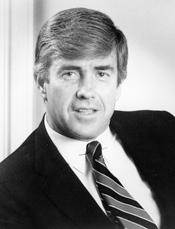
Historical · U.S. House · New York · District 31
Jack Kemp
Former U.S. Representative · New York District 31 · 1971–1989 · Republican
Jack Kemp represented New York's District 31 in the United States House of Representatives (1971–1989) for the Republican party. The page below collects sourced biographical facts, term history, committee roles, and provenance for Kemp.
Bioguide ID: K000086
Key facts
- Full name
- Jack Kemp
- State
- New York
- District
- District 31
- Party
- Republican
- House service
- 1971–1989
- First House term
- 1971
- Status
- Left office
- Current term ends
- —
- Born
- 1935
- Bioguide ID
- K000086
- Committee assignments
- —
- Dataset version
- 1.20260605
Biographical narrative
1,079 words · sourced from the Wikipedia REST extract
Jack Kemp was an American politician, professional football player, and U.S. Army veteran who served as a U.S. Representative for New York's 31st congressional district from 1971 to 1989. A member of the Republican Party, Kemp was known for his advocacy of supply-side economics and low tax policies. He later served as the ninth U.S. Secretary of Housing and Urban Development under President George H. W. Bush from 1989 to 1993. Kemp was also the party's vice presidential nominee in the 1996 U.S. presidential election alongside Bob Dole. His multifaceted career included significant contributions to both sports and politics, leaving a lasting impact on American political discourse and policy.
Early life and career
Jack Kemp was born on July 13, 1935, in Los Angeles, California, to Frances Elizabeth and Paul Robert Kemp Sr. He was the third of four sons in a middle-class family. His father operated a motorcycle messenger service that expanded into a trucking company, while his mother worked as a social worker and Spanish teacher. Growing up in the predominantly Jewish Wilshire district of West Los Angeles, Kemp was influenced by a diverse cultural environment, although his family practiced the Church of Christ, Scientist.
Kemp's early passion for sports was evident from a young age. He attended Fairfax High School, which was known for its high concentration of Jewish students and children of celebrities. During his time there, he worked alongside his brothers at their father's trucking company and developed a keen interest in reading, particularly history and philosophy. His high school experience was marked by a strong focus on athletics, which would later shape his career.
After graduating from high school in 1953, Kemp enrolled at Occidental College. He chose Occidental for its football program, which utilized professional formations and plays, hoping this experience would help him achieve his goal of becoming a professional quarterback. Despite being considered undersized for the position at 5 feet 10 inches and 175 pounds, Kemp excelled in various roles on the football team, including quarterback, defensive back, place kicker, and punter. He set records as a javelin thrower and was recognized as a Little All-America player during his college career. After earning a degree in physical education in 1957, he continued his education with postgraduate studies in economics while also serving in the U.S. Army Reserve from 1958 to 1962.
Kemp married his college sweetheart, Joanne Main, shortly after her graduation in 1958. The couple had four children, including two sons who followed in their father's footsteps as professional football quarterbacks. Kemp's commitment to family was evident, as he made it a priority to attend all of his children's games throughout their youth and college years. His personal experiences, including a miscarriage suffered by his wife, influenced his views on the sanctity of life and solidified his opposition to abortion.
House tenure
Kemp's political career began when he was elected to the U.S. House of Representatives in 1970, representing New York's 31st congressional district. He took office in January 1971 and served a total of nine terms until January 1989. During his time in Congress, Kemp became known for his strong advocacy of supply-side economics, which emphasized tax cuts and deregulation as means to stimulate economic growth. He played a significant role in shaping the Republican Party's economic policies during the 1970s and 1980s.
Throughout his tenure, Kemp was a vocal supporter of various economic initiatives, including the Economic Recovery Tax Act of 1981, which aimed to reduce taxes and promote investment. His efforts in Congress were characterized by a commitment to conservative fiscal policies, and he became a prominent figure in the movement advocating for lower taxes and reduced government intervention in the economy. Kemp's influence extended beyond economic matters; he also addressed social issues, advocating for immigration reform and taking conservative stances on various social policies.
Kemp's political career included participation in several key legislative debates and initiatives. He was known for his ability to connect with constituents and for his efforts to promote economic development in his district. His leadership style was marked by a focus on collaboration and coalition-building, which helped him navigate the complexities of congressional politics.
In addition to his legislative work, Kemp was involved in various committees during his time in the House. His committee assignments allowed him to influence a range of issues, from economic policy to social welfare programs. His experience as a professional athlete provided him with a unique perspective on issues related to sports and recreation, and he often advocated for policies that supported athletes and sports organizations.
Legislative focus and committees
Kemp's legislative focus was primarily centered on economic issues, reflecting his belief in the principles of supply-side economics. He was a proponent of tax cuts as a means to stimulate economic growth and job creation. His advocacy for the Economic Recovery Tax Act of 1981 was a significant milestone in his career, as it represented a major shift in U.S. tax policy aimed at reducing the tax burden on individuals and businesses.
In addition to his economic initiatives, Kemp was known for his commitment to social issues. He held conservative views on topics such as abortion and was an advocate for immigration reform. His positions often reflected a blend of traditional conservative values and more libertarian perspectives, allowing him to appeal to a broad range of constituents within the Republican Party.
Kemp's involvement in various congressional committees enabled him to engage with a wide array of policy areas. His work on committees related to finance and economic policy allowed him to influence legislation that shaped the nation's economic landscape. He was recognized for his ability to articulate complex economic concepts and advocate for policies that aligned with his vision of a prosperous and free-market economy.
Throughout his congressional career, Kemp maintained a focus on fostering economic opportunities for all Americans. He sought to create an environment conducive to entrepreneurship and innovation, believing that a thriving economy would benefit individuals and families across the nation. His efforts to promote economic growth and advocate for conservative fiscal policies left a lasting impact on the Republican Party and American politics as a whole.
Kemp's tenure in the U.S. House of Representatives was marked by a dedication to public service and a commitment to the principles he believed would lead to a stronger and more prosperous America. His legacy continues to influence discussions on economic policy and the role of government in promoting individual opportunity and growth.
Notable legislation
Sponsored and co-sponsored legislation for Jack Kemp is pending operator curation. The biographical narrative above carries the same provenance trail until per-bill rows are written.
Sources
- [1]https://en.wikipedia.org/wiki/Jack_KempWikipedia · retrieved 2026-06-05
Notable quotes
Sourced quotes for Jack Kemp are pending operator curation. Narrative-scope provenance remains attached below.
Sources
- [1]https://en.wikipedia.org/wiki/Jack_KempWikipedia · retrieved 2026-06-05
Key positions
Curated policy positions for Jack Kemp are pending operator review. The biographical narrative above carries the same provenance trail until per-topic positions are written.
Sources
- [1]https://en.wikipedia.org/wiki/Jack_KempWikipedia · retrieved 2026-06-05
Terms served
- 1971–1973U.S. House · Term 1 · Republican
- 1973–1975U.S. House · Term 2 · Republican
- 1975–1977U.S. House · Term 3 · Republican
- 1977–1979U.S. House · Term 4 · Republican
- 1979–1981U.S. House · Term 5 · Republican
- 1981–1983U.S. House · Term 6 · Republican
- 1983–1985U.S. House · Term 7 · Republican
- 1985–1987U.S. House · Term 8 · Republican
- 1987–1989U.S. House · Term 9 · Republican
Sources & provenance
Every attributable claim above carries a per-section [N] marker that resolves to the corresponding URL below. Each entry records the upstream provider, the canonical URL, and the timestamp at which the source was retrieved by the ingest pipeline.
Key facts
- https://bioguide.congress.gov/search/bio/K000086bioguide · retrieved 2026-06-05
- https://www.govtrack.us/congress/members/406255govtrack · retrieved 2026-06-05
Biographical narrative
- https://en.wikipedia.org/wiki/Jack_Kempwikipedia · retrieved 2026-06-05
Find your representative
Every U.S. state elects representatives by district. Browse New York’s delegation, the full former-representative roster, or explore the role and term length.
Related on The Candidate
- Preceded by Clarence KilburnEarlier holder of the New York District 31 House seat · Republican.Open
- Abel HuntingtonFormer U.S. Representative · New York District 1 · JacksonOpen
- Alfred ChapinFormer U.S. Representative · New York District 1 · DemocraticOpen
- Cadwallader ColdenFormer U.S. Representative · New York District 1 · FederalistOpen
- Charles FloydFormer U.S. Representative · New York District 1 · DemocraticOpen
- Republican PartyFederal candidates and office holders on the Republican line.Open