
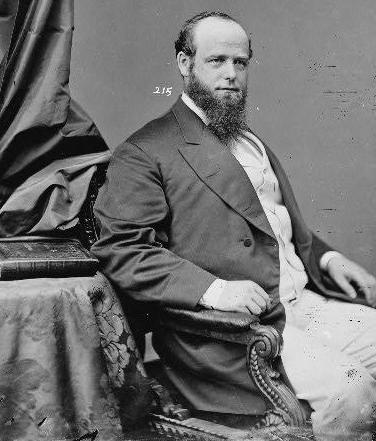
Historical · U.S. House · New York · District 31
Porter Sheldon
Former U.S. Representative · New York District 31 · 1869–1871 · Republican
Porter Sheldon represented New York's District 31 in the United States House of Representatives (1869–1871) for the Republican party. The page below collects sourced biographical facts, term history, committee roles, and provenance for Sheldon.
Bioguide ID: S000323
Key facts
- Full name
- Porter Sheldon
- State
- New York
- District
- District 31
- Party
- Republican
- House service
- 1869–1871
- First House term
- 1869
- Status
- Left office
- Current term ends
- —
- Born
- 1831
- Bioguide ID
- S000323
- Committee assignments
- —
- Dataset version
- 1.20260606
Biographical narrative
927 words · sourced from the Wikipedia REST extract
Porter Sheldon was an American politician who served as a U.S. Representative for New York's 31st congressional district. A member of the Republican Party, he held office during the Forty-first Congress from 1869 to 1871. Born in 1831, Sheldon had a multifaceted career that included law practice and involvement in the early stages of the American photographic industry. His contributions to both politics and business reflect the dynamic nature of American society during the post-Civil War era.
Early life and career
Porter Sheldon was born on September 29, 1831, in Victor, New York. His early education included preparatory studies, which laid the groundwork for his future academic and professional pursuits. Following his education, Sheldon decided to pursue a career in law. He studied law diligently and was admitted to the bar in 1854 in Batavia, New York. This achievement marked the beginning of his legal career, which would span several years and locations.
After being admitted to the bar, Sheldon commenced his legal practice in Randolph, New York. His early career in Randolph allowed him to gain valuable experience and establish a reputation in the legal community. In 1857, seeking new opportunities, he relocated to Rockford, Illinois, where he continued to practice law. His time in Illinois was significant, as it included his participation in the Illinois constitutional convention in 1861. This involvement highlighted his commitment to civic engagement and the shaping of legal frameworks during a transformative period in American history.
In 1865, after several years in Illinois, Sheldon returned to Jamestown, New York. This move marked a return to his roots, and he resumed his legal practice in the area. Throughout his career, Sheldon was known for his dedication to the law and his community, which would later influence his political aspirations.
House tenure
Porter Sheldon’s political career took a significant turn when he was elected as a Republican to the Forty-first Congress. He served as a U.S. Representative for New York's 31st congressional district from March 4, 1869, until March 3, 1871. His election to Congress came during a period of reconstruction and recovery following the Civil War, a time when the nation was grappling with numerous social and economic challenges.
During his time in the House of Representatives, Sheldon was involved in various legislative activities that reflected the concerns and priorities of his constituents. However, his tenure was relatively brief, as he was an unsuccessful candidate for renomination in 1870. Following this setback, he chose to return to his legal career, where he continued to practice law in Jamestown.
Despite the brevity of his congressional career, Sheldon’s election to the House was significant in that it represented the interests of his district during a critical period in American history. The political landscape of the time was marked by efforts to rebuild the nation and address the needs of a diverse population emerging from the war.
Legislative focus and committees
While specific details regarding Porter Sheldon’s legislative focus and committee assignments during his time in Congress are not extensively documented, it is important to contextualize his role within the broader legislative environment of the Forty-first Congress. This period was characterized by significant legislative efforts aimed at addressing the aftermath of the Civil War, including issues related to civil rights, economic recovery, and the integration of formerly enslaved individuals into society.
As a member of the Republican Party, Sheldon would have aligned with the party's platform, which at the time included support for civil rights and reconstruction efforts. The Republican Party was instrumental in advocating for legislation that aimed to secure rights for African Americans and promote economic development in the post-war South. Given the historical context, it is likely that Sheldon engaged in discussions and debates surrounding these critical issues, although specific records of his contributions are limited.
In addition to his legislative duties, Sheldon was also involved in the business sector. He was one of the founders of the American Aristotype Company, which played a role in the early development of photographic technology. This company would later become part of the Eastman Kodak Company, a significant player in the photography industry. His involvement in this venture illustrates the intersection of politics and business during a time of rapid technological advancement.
After concluding his congressional term, Sheldon returned to his legal practice, where he continued to contribute to his community and the legal profession. His career trajectory reflects the multifaceted nature of public service during a transformative era in American history.
Porter Sheldon passed away on August 15, 1908, in Jamestown, New York, at the age of 76. His contributions to both law and politics left a lasting impact on his community. He is interred in Lake View Cemetery in Jamestown, a testament to his life and legacy. Additionally, his home, the Partridge-Sheldon House, was recognized for its historical significance and was listed on the National Register of Historic Places in 2000. This recognition underscores the importance of his contributions to the region and the broader historical narrative of the United States.
In his personal life, Porter Sheldon married Mary Crowley, and together they had a son named Ralph Crowley Sheldon. His family life, while less documented, adds a personal dimension to his biography, illustrating the connections that shaped his experiences and values.
Overall, Porter Sheldon’s life and career reflect the complexities of American society during the late 19th century. His experiences as a lawyer, politician, and businessman provide insight into the challenges and opportunities of the time, as well as the evolving role of public service in the United States.
Notable legislation
Sponsored and co-sponsored legislation for Porter Sheldon is pending operator curation. The biographical narrative above carries the same provenance trail until per-bill rows are written.
Sources
- [1]https://en.wikipedia.org/wiki/Porter_SheldonWikipedia · retrieved 2026-06-06
Notable quotes
Sourced quotes for Porter Sheldon are pending operator curation. Narrative-scope provenance remains attached below.
Sources
- [1]https://en.wikipedia.org/wiki/Porter_SheldonWikipedia · retrieved 2026-06-06
Key positions
Curated policy positions for Porter Sheldon are pending operator review. The biographical narrative above carries the same provenance trail until per-topic positions are written.
Sources
- [1]https://en.wikipedia.org/wiki/Porter_SheldonWikipedia · retrieved 2026-06-06
Terms served
- 1869–1871U.S. House · Term 1 · Republican
Sources & provenance
Every attributable claim above carries a per-section [N] marker that resolves to the corresponding URL below. Each entry records the upstream provider, the canonical URL, and the timestamp at which the source was retrieved by the ingest pipeline.
Key facts
- https://bioguide.congress.gov/search/bio/S000323bioguide · retrieved 2026-06-06
- https://www.govtrack.us/congress/members/409820govtrack · retrieved 2026-06-06
Biographical narrative
- https://en.wikipedia.org/wiki/Porter_Sheldonwikipedia · retrieved 2026-06-06
Find your representative
Every U.S. state elects representatives by district. Browse New York’s delegation, the full former-representative roster, or explore the role and term length.
Related on The Candidate
- Preceded by Edwin ReynoldsEarlier holder of the New York District 31 House seat · Republican.Open
- Succeeded by George HoskinsLater holder of the New York District 31 House seat · Republican.Open
- Abel HuntingtonFormer U.S. Representative · New York District 1 · JacksonOpen
- Alfred ChapinFormer U.S. Representative · New York District 1 · DemocraticOpen
- Cadwallader ColdenFormer U.S. Representative · New York District 1 · FederalistOpen
- Charles FloydFormer U.S. Representative · New York District 1 · DemocraticOpen