
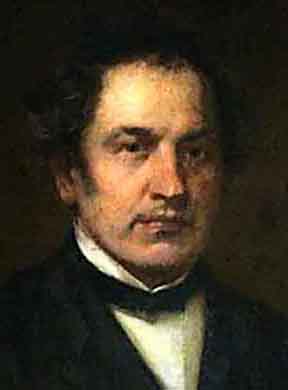
Historical · U.S. House · New York · District 32
Solomon Haven
Former U.S. Representative · New York District 32 · 1851–1857 · Ind. Republican-Democrat
Solomon Haven represented New York's District 32 in the United States House of Representatives (1851–1857) for the Ind. Republican-Democrat party. The page below collects sourced biographical facts, term history, committee roles, and provenance for Haven.
Bioguide ID: H000355
Key facts
- Full name
- Solomon Haven
- State
- New York
- District
- District 32
- Party
- Ind. Republican-Democrat
- House service
- 1851–1857
- First House term
- 1851
- Status
- Left office
- Current term ends
- —
- Born
- 1810
- Bioguide ID
- H000355
- Committee assignments
- —
- Dataset version
- 1.20260606
Biographical narrative
807 words · sourced from the Wikipedia REST extract
Solomon Haven was a prominent political figure in the mid-19th century, serving as a U.S. Representative from New York's 32nd congressional district. His career spanned several significant roles, including that of mayor of Buffalo, New York. As a member of the Whig Party, he was elected to three consecutive terms in the U.S. House of Representatives from 1851 to 1857. His contributions to local and national politics were marked by his legal background and his involvement in various civic matters.
Early life and career
Solomon Haven was born on November 27, 1810, in Guilford, New York. He pursued education early in his life, initially working as a schoolteacher before shifting his focus to law. In 1835, he relocated to Buffalo, New York, where he completed his legal studies under the mentorship of the law firm Fillmore & Hall, which included future U.S. President Millard Fillmore and Nathan K. Hall. This partnership not only provided Haven with a solid foundation in legal practice but also positioned him within influential circles in Buffalo.
On May 2, 1838, Haven married Harriett N. Scott, further establishing his roots in the Buffalo community. His legal career progressed, and in 1843, he was appointed as the district attorney for Erie County, a role that underscored his growing prominence in local governance and law. This position allowed him to gain valuable experience in the legal and political landscape of New York.
Haven's political career took a significant turn when he was elected mayor of Buffalo on March 3, 1846. During his tenure, he oversaw important changes in the city's governance, including an amendment to the city charter that granted the mayor veto power. Additionally, he played a role in designating the Buffalo Commercial Advertiser as the official newspaper of the city. His term as mayor concluded on March 9, 1847, but it laid the groundwork for his subsequent political endeavors.
House tenure
Following his mayoral term, Solomon Haven transitioned to national politics, aligning himself with the Whig Party. He was elected to the U.S. House of Representatives, representing New York's 32nd congressional district. His first term began on March 4, 1851, and he was subsequently reelected for two additional terms, serving until March 3, 1857. Throughout his congressional tenure, Haven participated in the legislative process during a tumultuous period in American history, which included issues related to slavery, economic policy, and the expansion of the United States.
Haven's election to the Thirty-second Congress marked the beginning of his influence in the House, where he engaged in discussions and debates that shaped the direction of national policy. His affiliation with the Whig Party aligned him with a group that was actively involved in addressing the challenges of the time, including the growing sectional tensions between the North and South.
Despite his initial success in securing three terms in Congress, Haven faced challenges in his later political career. He was an unsuccessful candidate for reelection in 1856 to the Thirty-fifth Congress and also failed to secure a seat in the Thirty-seventh Congress in 1860. These setbacks marked the end of his formal political career, although he continued to practice law in Buffalo until his death.
Legislative focus and committees
During his time in the U.S. House of Representatives, Solomon Haven's legislative focus was reflective of the broader concerns of the Whig Party and the nation at large. The Whigs were known for their advocacy of economic modernization, infrastructure development, and a cautious approach to the issue of slavery. Although specific details of Haven's legislative initiatives and committee assignments are not extensively documented, it can be inferred that he participated in discussions relevant to these pressing national issues.
The period in which Haven served was characterized by significant political and social upheaval, as the United States grappled with the implications of westward expansion and the contentious debates surrounding slavery. As a member of Congress, he would have been involved in the legislative processes that sought to address these matters, contributing to the dialogue that would ultimately shape the nation's future.
Haven's legal background likely informed his approach to legislation, as he would have been accustomed to analyzing complex legal issues and advocating for policies that aligned with his constituents' interests. His experience as a district attorney and mayor provided him with a unique perspective on governance, which he brought to his role in the House.
After leaving Congress, Haven continued to engage in legal practice until his death on December 24, 1861, in Buffalo, New York. He was interred at Forest Lawn Cemetery, leaving behind a legacy as a public servant who contributed to the political landscape of his time. His career reflects the interconnectedness of local and national governance in the 19th century, illustrating the pathways through which individuals could influence both their communities and the broader political framework of the United States.
Notable legislation
Sponsored and co-sponsored legislation for Solomon Haven is pending operator curation. The biographical narrative above carries the same provenance trail until per-bill rows are written.
Sources
- [1]https://en.wikipedia.org/wiki/Solomon_G._HavenWikipedia · retrieved 2026-06-06
Notable quotes
Sourced quotes for Solomon Haven are pending operator curation. Narrative-scope provenance remains attached below.
Sources
- [1]https://en.wikipedia.org/wiki/Solomon_G._HavenWikipedia · retrieved 2026-06-06
Key positions
Curated policy positions for Solomon Haven are pending operator review. The biographical narrative above carries the same provenance trail until per-topic positions are written.
Sources
- [1]https://en.wikipedia.org/wiki/Solomon_G._HavenWikipedia · retrieved 2026-06-06
Terms served
- 1851–1853U.S. House · Term 1 · Whig
- 1853–1855U.S. House · Term 2 · Whig
- 1855–1857U.S. House · Term 3 · Ind. Republican-Democrat
Sources & provenance
Every attributable claim above carries a per-section [N] marker that resolves to the corresponding URL below. Each entry records the upstream provider, the canonical URL, and the timestamp at which the source was retrieved by the ingest pipeline.
Key facts
- https://bioguide.congress.gov/search/bio/H000355bioguide · retrieved 2026-06-06
- https://www.govtrack.us/congress/members/405224govtrack · retrieved 2026-06-06
Biographical narrative
- https://en.wikipedia.org/wiki/Solomon_G._Havenwikipedia · retrieved 2026-06-06
Find your representative
Every U.S. state elects representatives by district. Browse New York’s delegation, the full former-representative roster, or explore the role and term length.
Related on The Candidate
- Preceded by Nathan HallEarlier holder of the New York District 32 House seat · Whig.Open
- Succeeded by Israel HatchLater holder of the New York District 32 House seat · Democratic.Open
- Abel HuntingtonFormer U.S. Representative · New York District 1 · JacksonOpen
- Alfred ChapinFormer U.S. Representative · New York District 1 · DemocraticOpen
- Cadwallader ColdenFormer U.S. Representative · New York District 1 · FederalistOpen
- Charles FloydFormer U.S. Representative · New York District 1 · DemocraticOpen