
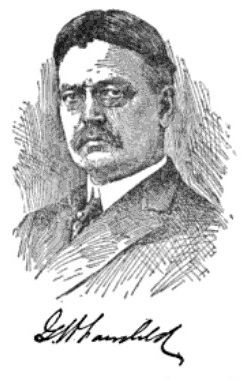
Historical · U.S. House · New York · District 34
George Fairchild
Former U.S. Representative · New York District 34 · 1907–1919 · Republican
George Fairchild represented New York's District 34 in the United States House of Representatives (1907–1919) for the Republican party. The page below collects sourced biographical facts, term history, committee roles, and provenance for Fairchild.
Bioguide ID: F000005
Key facts
- Full name
- George Fairchild
- State
- New York
- District
- District 34
- Party
- Republican
- House service
- 1907–1919
- First House term
- 1907
- Status
- Left office
- Current term ends
- —
- Born
- 1854
- Bioguide ID
- F000005
- Committee assignments
- —
- Dataset version
- 1.20260606
Biographical narrative
1,124 words · sourced from the Wikipedia REST extract
George Fairchild was a prominent American businessman and politician who served as a Republican U.S. Representative for New York's 34th congressional district from 1907 until 1919. Throughout his six terms in Congress, Fairchild was involved in various legislative initiatives and held significant roles within the Republican Party. Before his political career, he made notable contributions to the business world, particularly in the time recording industry, and he played a pivotal role in the early development of what would become IBM. His life was marked by a commitment to public service and an entrepreneurial spirit, which helped shape his legacy in both business and politics.
Early life and career
George Winthrop Fairchild was born on May 6, 1854, in Oneonta, New York, to Jesse and Belle Fairchild. His upbringing was modest; his father was a farmer who struggled to provide for the family. As a result, George and his siblings were required to assist with farm work from a young age, which limited their educational opportunities. Fairchild attended local schools until the age of 14, at which point he began an apprenticeship as a printer. This early experience in the printing industry would lay the groundwork for his future endeavors in journalism and business.
Despite the challenges he faced, Fairchild was primarily self-educated and demonstrated a strong work ethic and determination to succeed. In 1890, he became the sole proprietor of the Oneonta Herald, a weekly newspaper that allowed him to establish himself as a significant figure in local media. His involvement in journalism not only provided him with a platform to influence public opinion but also helped him build a network of connections that would be beneficial in his later political career.
Fairchild's entrepreneurial spirit led him to become a pioneer in the time recording industry. In 1896, he partnered with Harlow N. Bundy, joining the Bundy Manufacturing Company as both an investor and director. This company specialized in manufacturing time clocks, which were becoming increasingly important in the industrial sector. In 1900, Fairchild took a significant step by forming the International Time Recording Company, which served as the selling agency for several manufacturers, including Bundy Manufacturing Company, Willard and Frick Manufacturing Company, and Standard Time Stamp Company. This venture positioned him at the forefront of a burgeoning industry.
In 1911, Fairchild's career took another notable turn when he became president of the Computing-Tabulating-Recording Company, a new entity formed through the efforts of businessman Charles R. Flint. Under Fairchild's leadership, the company expanded its operations and influence. In February 1924, the company was renamed International Business Machines (IBM), and Fairchild continued to serve as chairman until his death in 1924. His contributions to the company and the industry as a whole were significant, as he helped lay the foundation for what would become one of the largest technology companies in the world.
House tenure
George Fairchild's political career began when he was elected as a Republican to the Sixtieth Congress, which commenced on March 4, 1907. He successfully secured re-election to five additional Congresses, serving in the House of Representatives until March 3, 1919. During his time in Congress, Fairchild was involved in various legislative matters and was known for his active participation in the political landscape of his time.
In addition to his congressional duties, Fairchild was a delegate to the Republican National Convention in both 1912 and 1916, where he played a role in shaping the party's platform and direction during a period of significant political change in the United States. His involvement in national politics provided him with a broader perspective on the issues facing the country and allowed him to contribute to discussions on key policies.
Fairchild's political career was marked by a commitment to public service and a focus on issues that affected his constituents in New York. He was known for his ability to connect with the people he represented, and he worked diligently to address their concerns. His experience as a businessman informed his approach to legislation, as he sought to promote economic growth and development in his district and beyond.
In addition to his legislative responsibilities, Fairchild was appointed by President William Howard Taft as a special commissioner to the First Centenary of Mexico in 1910. This role, which carried the rank of Minister, allowed him to engage in diplomatic efforts and further expand his influence on the international stage. His appointment reflected his standing within the Republican Party and his ability to represent American interests abroad.
Legislative focus and committees
Throughout his tenure in the U.S. House of Representatives, George Fairchild focused on a range of legislative issues that were pertinent to his constituents and the nation as a whole. His background in business and industry informed his approach to economic policy, and he was particularly interested in matters related to commerce, manufacturing, and labor. Fairchild's experience as a businessman allowed him to advocate for policies that promoted economic growth and job creation, which were critical issues during the early 20th century.
Fairchild's involvement in various committees during his time in Congress enabled him to play a significant role in shaping legislation. He was known for his ability to collaborate with colleagues across party lines, which helped him build consensus on important issues. His legislative efforts were aimed at addressing the needs of his constituents while also contributing to the broader goals of the Republican Party.
In addition to his work on economic issues, Fairchild was also engaged in discussions related to social policies and international relations. His appointment as a special commissioner to Mexico demonstrated his interest in foreign affairs and his commitment to fostering diplomatic relations. This experience enriched his understanding of the complexities of international politics and allowed him to contribute to discussions on trade and cooperation between nations.
Fairchild's legislative focus and committee work reflected his dedication to public service and his desire to make a positive impact on the lives of the people he represented. His ability to navigate the complexities of Congress and advocate for meaningful change contributed to his reputation as a respected member of the House. After serving six terms, Fairchild's congressional career came to an end in 1919, but his legacy continued through his contributions to both business and politics.
In summary, George Fairchild's life was characterized by a blend of entrepreneurial success and public service. His journey from a modest upbringing to becoming a prominent businessman and U.S. Representative illustrates his determination and commitment to making a difference in his community and beyond. His contributions to the time recording industry and his role in the early development of IBM, coupled with his legislative work in Congress, have left a lasting impact on both the business and political landscapes of the United States.
Notable legislation
Sponsored and co-sponsored legislation for George Fairchild is pending operator curation. The biographical narrative above carries the same provenance trail until per-bill rows are written.
Sources
- [1]https://en.wikipedia.org/wiki/George_Winthrop_FairchildWikipedia · retrieved 2026-06-06
Notable quotes
Sourced quotes for George Fairchild are pending operator curation. Narrative-scope provenance remains attached below.
Sources
- [1]https://en.wikipedia.org/wiki/George_Winthrop_FairchildWikipedia · retrieved 2026-06-06
Key positions
Curated policy positions for George Fairchild are pending operator review. The biographical narrative above carries the same provenance trail until per-topic positions are written.
Sources
- [1]https://en.wikipedia.org/wiki/George_Winthrop_FairchildWikipedia · retrieved 2026-06-06
Terms served
- 1907–1909U.S. House · Term 1 · Republican
- 1909–1911U.S. House · Term 2 · Republican
- 1911–1913U.S. House · Term 3 · Republican
- 1913–1915U.S. House · Term 4 · Republican
- 1915–1917U.S. House · Term 5 · Republican
- 1917–1919U.S. House · Term 6 · Republican
Sources & provenance
Every attributable claim above carries a per-section [N] marker that resolves to the corresponding URL below. Each entry records the upstream provider, the canonical URL, and the timestamp at which the source was retrieved by the ingest pipeline.
Key facts
- https://bioguide.congress.gov/search/bio/F000005bioguide · retrieved 2026-06-06
- https://www.govtrack.us/congress/members/403967govtrack · retrieved 2026-06-06
Biographical narrative
- https://en.wikipedia.org/wiki/George_Winthrop_Fairchildwikipedia · retrieved 2026-06-06
Find your representative
Every U.S. state elects representatives by district. Browse New York’s delegation, the full former-representative roster, or explore the role and term length.
Related on The Candidate
- Preceded by James WadsworthEarlier holder of the New York District 34 House seat · Republican.Open
- Succeeded by William HillLater holder of the New York District 34 House seat · Republican.Open
- Abel HuntingtonFormer U.S. Representative · New York District 1 · JacksonOpen
- Alfred ChapinFormer U.S. Representative · New York District 1 · DemocraticOpen
- Cadwallader ColdenFormer U.S. Representative · New York District 1 · FederalistOpen
- Charles FloydFormer U.S. Representative · New York District 1 · DemocraticOpen