
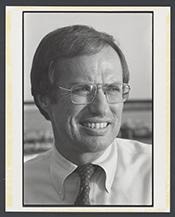
Historical · U.S. House · New York · District 34
Stanley Lundine
Former U.S. Representative · New York District 34 · 1975–1987 · Democratic
Stanley Lundine represented New York's District 34 in the United States House of Representatives (1975–1987) for the Democratic party. The page below collects sourced biographical facts, term history, committee roles, and provenance for Lundine.
Bioguide ID: L000516
Key facts
- Full name
- Stanley Lundine
- State
- New York
- District
- District 34
- Party
- Democratic
- House service
- 1975–1987
- First House term
- 1975
- Status
- Left office
- Current term ends
- —
- Born
- 1939
- Bioguide ID
- L000516
- Committee assignments
- —
- Dataset version
- 1.20260605
Biographical narrative
876 words · sourced from the Wikipedia REST extract
Stanley N. Lundine is a former American politician who served as a U.S. Representative for New York's 34th congressional district from 1975 until 1987. A member of the Democratic Party, Lundine's political career also included serving as the mayor of Jamestown, New York, and later as the lieutenant governor of New York. His tenure in Congress was marked by a focus on labor-management relations, finance, and economic development.
Early life and career
Stanley Nelson Lundine was born on February 4, 1939, in Jamestown, New York. He pursued higher education at Duke University, where he graduated in 1961. Following his undergraduate studies, Lundine attended the New York University School of Law, earning his law degree in 1964. His educational background laid a foundation for his future career in public service and law.
Lundine began his political career in local government, serving as the mayor of Jamestown from 1970 to 1976. During his time as mayor, he gained recognition for his innovative Labor Management strategy, which aimed to improve relations between labor and management in a region historically marked by labor disputes. This approach garnered national attention and positioned Jamestown as a model for labor-management cooperation. Lundine's success in local governance and his ability to foster collaboration between different stakeholders set the stage for his transition to national politics.
In 1975, Lundine was elected to the U.S. House of Representatives, marking the beginning of a significant chapter in his political career. His election was notable as he became the only Democrat to represent the Western Southern Tier of New York in Congress during the 20th century. This distinction underscored the political landscape of the region, which had been predominantly Republican prior to his election.
House tenure
Lundine's congressional career spanned six terms, beginning in 1975 and concluding in 1987. Throughout his time in the House, he was an advocate for various policies that reflected his commitment to labor rights and economic development. His background as a mayor informed his legislative priorities, particularly in the areas of labor-management relations and economic policy.
During his tenure, Lundine was instrumental in developing legislation that promoted the establishment of labor-management councils and employee stock ownership plans. These initiatives were part of his broader vision to enhance cooperation between workers and employers, fostering a more equitable economic environment. His legislative efforts were rooted in the belief that improved labor relations could lead to better economic outcomes for both workers and businesses.
In addition to his focus on labor issues, Lundine served on several key committees during his time in Congress. He was a member of the House Banking Committee, where he held the position of subcommittee chairman. This role allowed him to influence financial and banking policies, aligning with his interests in economic development and fiscal responsibility. Lundine also served on the Science Committee, where he contributed to discussions and legislation related to scientific research and innovation.
Lundine's approach to governance was characterized by a commitment to bipartisanship and collaboration. He sought to bridge divides between different political factions, aiming to create policies that would benefit his constituents and the broader community. His tenure in the House was marked by a dedication to addressing the needs of his district while also engaging with national issues.
After serving six terms in Congress, Lundine chose not to seek re-election in 1986. His decision to step away from the House marked the end of a significant period in his political career, during which he had established himself as a prominent figure in New York politics.
Legislative focus and committees
Throughout his congressional career, Stanley Lundine's legislative focus was primarily centered on finance, banking, and economic development, with a particular emphasis on labor-management relations. His background as a mayor provided him with unique insights into the challenges faced by local governments and the importance of fostering positive relationships between workers and employers.
Lundine's advocacy for labor-management cooperation was a hallmark of his legislative agenda. He believed that by promoting collaboration between labor and management, it was possible to create a more stable and prosperous economic environment. His efforts in this area included the development of legislation aimed at establishing labor-management councils, which were designed to facilitate dialogue and cooperation between different parties in the workplace.
In addition to his work on labor issues, Lundine's role on the House Banking Committee allowed him to engage with critical financial policies. As subcommittee chairman, he was involved in shaping legislation that addressed banking regulations and economic policies, reflecting his commitment to responsible fiscal management. His involvement in these areas demonstrated his understanding of the interconnectedness of economic health and labor relations.
Lundine's service on the Science Committee further expanded his legislative portfolio, allowing him to contribute to discussions on scientific research and technological advancement. This involvement highlighted his recognition of the importance of innovation in driving economic growth and improving the quality of life for constituents.
Overall, Stanley N. Lundine's legislative focus and committee work during his time in Congress were characterized by a commitment to fostering cooperation between labor and management, promoting sound economic policies, and supporting scientific advancement. His contributions to these areas left a lasting impact on the legislative landscape and reflected his dedication to serving the interests of his constituents in New York.
Notable legislation
Sponsored and co-sponsored legislation for Stanley Lundine is pending operator curation. The biographical narrative above carries the same provenance trail until per-bill rows are written.
Sources
- [1]https://en.wikipedia.org/wiki/Stan_LundineWikipedia · retrieved 2026-06-05
Notable quotes
Sourced quotes for Stanley Lundine are pending operator curation. Narrative-scope provenance remains attached below.
Sources
- [1]https://en.wikipedia.org/wiki/Stan_LundineWikipedia · retrieved 2026-06-05
Key positions
Curated policy positions for Stanley Lundine are pending operator review. The biographical narrative above carries the same provenance trail until per-topic positions are written.
Sources
- [1]https://en.wikipedia.org/wiki/Stan_LundineWikipedia · retrieved 2026-06-05
Terms served
- 1975–1977U.S. House · Term 1 · Democratic
- 1977–1979U.S. House · Term 2 · Democratic
- 1979–1981U.S. House · Term 3 · Democratic
- 1981–1983U.S. House · Term 4 · Democratic
- 1983–1985U.S. House · Term 5 · Democratic
- 1985–1987U.S. House · Term 6 · Democratic
Sources & provenance
Every attributable claim above carries a per-section [N] marker that resolves to the corresponding URL below. Each entry records the upstream provider, the canonical URL, and the timestamp at which the source was retrieved by the ingest pipeline.
Key facts
- https://bioguide.congress.gov/search/bio/L000516bioguide · retrieved 2026-06-05
- https://www.govtrack.us/congress/members/407002govtrack · retrieved 2026-06-05
Biographical narrative
- https://en.wikipedia.org/wiki/Stan_Lundinewikipedia · retrieved 2026-06-05
Find your representative
Every U.S. state elects representatives by district. Browse New York’s delegation, the full former-representative roster, or explore the role and term length.
Related on The Candidate
- Preceded by John TerryEarlier holder of the New York District 34 House seat · Republican.Open
- Abel HuntingtonFormer U.S. Representative · New York District 1 · JacksonOpen
- Alfred ChapinFormer U.S. Representative · New York District 1 · DemocraticOpen
- Cadwallader ColdenFormer U.S. Representative · New York District 1 · FederalistOpen
- Charles FloydFormer U.S. Representative · New York District 1 · DemocraticOpen
- Democratic PartyFederal candidates and office holders on the Democratic line.Open