
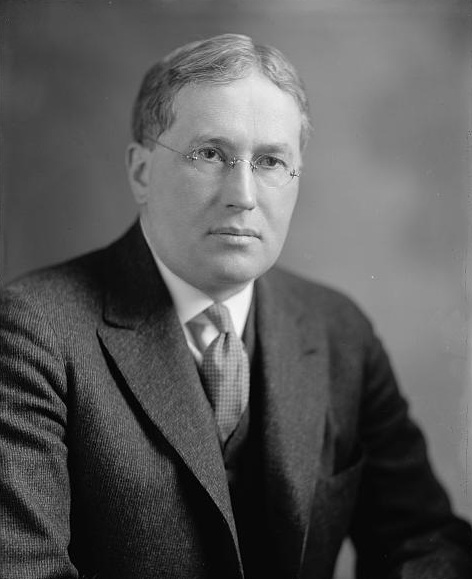
Historical · U.S. House · New York · District 36
John Taber
Former U.S. Representative · New York District 36 · 1923–1963 · Republican
John Taber represented New York's District 36 in the United States House of Representatives (1923–1963) for the Republican party. The page below collects sourced biographical facts, term history, committee roles, and provenance for Taber.
Bioguide ID: T000001
Key facts
- Full name
- John Taber
- State
- New York
- District
- District 36
- Party
- Republican
- House service
- 1923–1963
- First House term
- 1923
- Status
- Left office
- Current term ends
- —
- Born
- 1880
- Bioguide ID
- T000001
- Committee assignments
- —
- Dataset version
- 1.20260605
Biographical narrative
913 words · sourced from the Wikipedia REST extract
John Taber was an American attorney and politician who served as a U.S. Representative from New York for four decades, from 1923 until 1963. A member of the Republican Party, he represented the 36th congressional district, which included parts of the Finger Lakes and Central New York regions. Throughout his lengthy career in the House of Representatives, Taber was known for his role in the Committee on Appropriations and his involvement in various legislative matters, reflecting the interests and needs of his constituents.
Early life and career
John Taber was born on May 5, 1880, in Auburn, New York. He was the son of Franklin P. Taber, an attorney and businessman, and Susan Parker Taber. Growing up in a family with a legal background likely influenced his future career path. He attended the public schools in Auburn and graduated from Auburn High School in 1898. Following his high school education, Taber pursued higher education at Yale University, where he graduated in 1902. He then attended New York Law School, earning his law degree in 1904. His academic achievements laid a strong foundation for his subsequent legal career.
After being admitted to the bar in November 1914, Taber began practicing law in Auburn. His early involvement in local politics began shortly thereafter. In 1905 and 1906, he represented Auburn's second ward on the Cayuga County Board of Supervisors, marking his entry into public service. His commitment to civic engagement continued as he served as a special judge of the county court from 1910 to 1918. This role provided him with valuable judicial experience and further established his reputation within the community.
Taber was actively involved in the Republican Party, serving as a delegate to the Republican National Conventions in 1920, 1924, and 1936. His leadership skills were recognized when he was appointed chairman of the Cayuga County Republican Committee from 1920 to 1925. In 1922, he was also chosen to serve as president of the Auburn Chamber of Commerce, demonstrating his commitment to local economic development and business interests.
House tenure
John Taber's congressional career began when he was elected to the U.S. House of Representatives in 1922, officially taking office on March 4, 1923. He represented New York's 36th congressional district during a period of significant national change, serving through 20 consecutive terms until his retirement in 1963. His tenure spanned multiple decades, during which he witnessed and participated in many pivotal events in American history, including the Great Depression, World War II, and the post-war era.
During his time in the House, Taber was a member of the Committee on Appropriations, where he served as chairman during the 80th and 83rd Congresses. This position placed him in a critical role regarding federal budgetary decisions and funding allocations, allowing him to influence significant financial legislation. His work on the committee was characterized by a focus on fiscal responsibility and government expenditure, reflecting his background as an attorney and businessman.
Taber was not a candidate for renomination to the 88th Congress in 1962, marking the end of his lengthy service in the House. His decision to step down came after a distinguished career that had a lasting impact on his constituents and the legislative process. Following his departure from Congress, he returned to Auburn, where he continued to be involved in local affairs until his death.
Legislative focus and committees
Throughout his congressional career, John Taber was involved in various legislative issues, with a particular focus on fiscal matters and appropriations. His role as chairman of the Committee on Appropriations allowed him to shape the federal budget and influence funding for numerous programs and initiatives. This position was crucial during a time when the nation faced significant economic challenges and required careful management of its financial resources.
Taber’s legislative record includes votes on several key pieces of legislation, reflecting the political climate of his time. Notably, he voted against the Civil Rights Acts of 1957 and 1960, as well as the 24th Amendment to the U.S. Constitution, which aimed to eliminate poll taxes in federal elections. These votes indicate his alignment with certain conservative principles prevalent among some members of the Republican Party during that era.
In 1945, Taber was among the House members who visited the Clinton Engineer Works, a key site for the Manhattan Project. During this visit, he expressed concerns regarding government spending, which surprised prominent military figures involved in the project. His inquiries highlighted his ongoing commitment to scrutinizing government expenditures, a theme consistent throughout his legislative career.
Taber’s long tenure in Congress allowed him to develop a deep understanding of the legislative process and the needs of his constituents. He was known for his ability to navigate complex political landscapes and advocate for funding that benefited his district. His work on appropriations had a direct impact on various sectors, including infrastructure, education, and defense, reflecting the diverse needs of the communities he represented.
John Taber passed away on November 22, 1965, in Auburn, New York. He was interred at Fort Hill Cemetery in his hometown, where he had spent much of his life and career. His legacy as a long-serving U.S. Representative is marked by his contributions to federal appropriations and his engagement with the political issues of his time. His family included his wife, Gertrude Johnson Beard, whom he married in 1929, and their son, Charles Beard Taber. Taber's life and career remain a testament to the role of dedicated public service in American democracy.
Notable legislation
Sponsored and co-sponsored legislation for John Taber is pending operator curation. The biographical narrative above carries the same provenance trail until per-bill rows are written.
Sources
- [1]https://en.wikipedia.org/wiki/John_TaberWikipedia · retrieved 2026-06-05
Notable quotes
Sourced quotes for John Taber are pending operator curation. Narrative-scope provenance remains attached below.
Sources
- [1]https://en.wikipedia.org/wiki/John_TaberWikipedia · retrieved 2026-06-05
Key positions
Curated policy positions for John Taber are pending operator review. The biographical narrative above carries the same provenance trail until per-topic positions are written.
Sources
- [1]https://en.wikipedia.org/wiki/John_TaberWikipedia · retrieved 2026-06-05
Terms served
- 1923–1925U.S. House · Term 1 · Republican
- 1925–1927U.S. House · Term 2 · Republican
- 1927–1929U.S. House · Term 3 · Republican
- 1929–1931U.S. House · Term 4 · Republican
- 1931–1933U.S. House · Term 5 · Republican
- 1933–1935U.S. House · Term 6 · Republican
- 1935–1937U.S. House · Term 7 · Republican
- 1937–1939U.S. House · Term 8 · Republican
- 1939–1941U.S. House · Term 9 · Republican
- 1941–1943U.S. House · Term 10 · Republican
- 1943–1945U.S. House · Term 11 · Republican
- 1945–1947U.S. House · Term 12 · Republican
- 1947–1949U.S. House · Term 13 · Republican
- 1949–1951U.S. House · Term 14 · Republican
- 1951–1953U.S. House · Term 15 · Republican
- 1953–1955U.S. House · Term 16 · Republican
- 1955–1957U.S. House · Term 17 · Republican
- 1957–1959U.S. House · Term 18 · Republican
- 1959–1961U.S. House · Term 19 · Republican
- 1961–1963U.S. House · Term 20 · Republican
Sources & provenance
Every attributable claim above carries a per-section [N] marker that resolves to the corresponding URL below. Each entry records the upstream provider, the canonical URL, and the timestamp at which the source was retrieved by the ingest pipeline.
Key facts
- https://bioguide.congress.gov/search/bio/T000001bioguide · retrieved 2026-06-05
- https://www.govtrack.us/congress/members/410591govtrack · retrieved 2026-06-05
Biographical narrative
- https://en.wikipedia.org/wiki/John_Taberwikipedia · retrieved 2026-06-05
Find your representative
Every U.S. state elects representatives by district. Browse New York’s delegation, the full former-representative roster, or explore the role and term length.
Related on The Candidate
- Preceded by Norman GouldEarlier holder of the New York District 36 House seat · Republican.Open
- Succeeded by Henry Smith IIILater holder of the New York District 36 House seat · Republican.Open
- Abel HuntingtonFormer U.S. Representative · New York District 1 · JacksonOpen
- Alfred ChapinFormer U.S. Representative · New York District 1 · DemocraticOpen
- Cadwallader ColdenFormer U.S. Representative · New York District 1 · FederalistOpen
- Charles FloydFormer U.S. Representative · New York District 1 · DemocraticOpen