
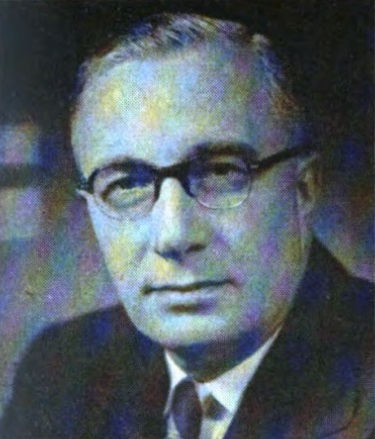
Historical · U.S. House · New York · District 37
Harold Ostertag
Former U.S. Representative · New York District 37 · 1951–1965 · Republican
Harold Ostertag represented New York's District 37 in the United States House of Representatives (1951–1965) for the Republican party. The page below collects sourced biographical facts, term history, committee roles, and provenance for Ostertag.
Bioguide ID: O000121
Key facts
- Full name
- Harold Ostertag
- State
- New York
- District
- District 37
- Party
- Republican
- House service
- 1951–1965
- First House term
- 1951
- Status
- Left office
- Current term ends
- —
- Born
- 1896
- Bioguide ID
- O000121
- Committee assignments
- —
- Dataset version
- 1.20260605
Biographical narrative
800 words · sourced from the Wikipedia REST extract
Harold Ostertag was an American politician who served as a United States Representative for New York's 37th congressional district. A member of the Republican Party, he held office from January 3, 1951, until January 3, 1965, completing a total of seven terms in the U.S. House of Representatives. Throughout his political career, Ostertag was involved in various legislative activities and was recognized for his contributions to the Republican Party, including participation in multiple national conventions.
Early life and career
Harold Charles Ostertag was born on June 22, 1896, in Attica, New York. He received his early education in local public schools before graduating from the Chamberlain Military Institute in Perry, New York, in 1915. Following his education, Ostertag began his professional career with the New York Central Railroad, where he worked from 1917 until 1950. Over the years, he advanced to the position of assistant to the vice president of the traffic department, gaining valuable experience in the transportation sector.
Ostertag's military service began during World War I when he enlisted in the New York Army National Guard's 74th Infantry Regiment. This unit was later federalized as the 55th Pioneer Infantry Regiment, which became part of the 27th Division. During his service, he achieved the rank of Sergeant and completed officer training, ultimately receiving a commission as a Second Lieutenant while stationed in France. His military experience fostered a commitment to veteran affairs, leading him to become active in organizations such as the American Legion and the Veterans of Foreign Wars.
After returning from military service, Ostertag transitioned into politics, aligning himself with the Republican Party. His political career began at the state level when he was elected to the New York State Assembly, representing Wyoming County. He served multiple terms in the Assembly from 1932 to 1950, during which he developed a reputation as a dedicated public servant.
House tenure
Ostertag's tenure in the U.S. House of Representatives began on January 3, 1951, when he was elected as a Republican to the 82nd Congress. He continued to serve through the 88th Congress, which concluded on January 3, 1965. Throughout his time in the House, Ostertag was known for his active participation in legislative matters and his commitment to his constituents in New York's 37th congressional district.
During his congressional career, Ostertag was involved in significant legislative actions, including voting in favor of several key civil rights measures. He supported the Civil Rights Acts of 1957, 1960, and 1964, as well as the 24th Amendment to the U.S. Constitution, which prohibited poll taxes in federal elections. His voting record on these issues reflects a willingness to engage with the pressing social issues of his time.
In addition to his legislative work, Ostertag was a delegate to the Republican National Conventions in 1952, 1956, and 1960. His involvement in these conventions underscored his commitment to the party and his influence within its ranks. Ostertag chose not to seek re-election in 1964, concluding his congressional career after serving seven terms.
Legislative focus and committees
Throughout his time in the House, Ostertag's legislative focus encompassed a range of issues pertinent to his constituents and the broader national landscape. His support for civil rights legislation indicates a recognition of the importance of social justice and equality during a transformative period in American history. By voting for the Civil Rights Acts and the 24th Amendment, he aligned himself with the movement for civil rights, which sought to address systemic discrimination and promote equal access to the electoral process.
In addition to civil rights, Ostertag's background in transportation likely influenced his legislative interests in infrastructure and related policies. His experience with the New York Central Railroad may have provided him with insights into the challenges and opportunities facing transportation systems, which are crucial for economic development and public safety.
Ostertag's participation in various congressional committees would have further shaped his legislative priorities and allowed him to advocate for the interests of his district effectively. While specific committee assignments during his tenure are not detailed, it is common for representatives to serve on committees that align with their professional backgrounds and the needs of their constituents.
After leaving Congress, Ostertag continued to reside in Perry, New York, where he had established his roots. He passed away on May 2, 1985, in Pompano Beach, Florida, and was interred at Forest Hill Cemetery in Attica, New York. His legacy as a public servant is marked by his long-standing commitment to his community and his contributions to the legislative process during a significant era in American history. His wife, Grace, was also active in civic organizations, serving as Grand Matron of the Order of the Eastern Star and as the first vice president of the Congressional Club, reflecting a family dedication to public service and community involvement.
Notable legislation
Sponsored and co-sponsored legislation for Harold Ostertag is pending operator curation. The biographical narrative above carries the same provenance trail until per-bill rows are written.
Sources
- [1]https://en.wikipedia.org/wiki/Harold_C._OstertagWikipedia · retrieved 2026-06-05
Notable quotes
Sourced quotes for Harold Ostertag are pending operator curation. Narrative-scope provenance remains attached below.
Sources
- [1]https://en.wikipedia.org/wiki/Harold_C._OstertagWikipedia · retrieved 2026-06-05
Key positions
Curated policy positions for Harold Ostertag are pending operator review. The biographical narrative above carries the same provenance trail until per-topic positions are written.
Sources
- [1]https://en.wikipedia.org/wiki/Harold_C._OstertagWikipedia · retrieved 2026-06-05
Terms served
- 1951–1953U.S. House · Term 1 · Republican
- 1953–1955U.S. House · Term 2 · Republican
- 1955–1957U.S. House · Term 3 · Republican
- 1957–1959U.S. House · Term 4 · Republican
- 1959–1961U.S. House · Term 5 · Republican
- 1961–1963U.S. House · Term 6 · Republican
- 1963–1965U.S. House · Term 7 · Republican
Sources & provenance
Every attributable claim above carries a per-section [N] marker that resolves to the corresponding URL below. Each entry records the upstream provider, the canonical URL, and the timestamp at which the source was retrieved by the ingest pipeline.
Key facts
- https://bioguide.congress.gov/search/bio/O000121bioguide · retrieved 2026-06-05
- https://www.govtrack.us/congress/members/408376govtrack · retrieved 2026-06-05
Biographical narrative
- https://en.wikipedia.org/wiki/Harold_C._Ostertagwikipedia · retrieved 2026-06-05
Find your representative
Every U.S. state elects representatives by district. Browse New York’s delegation, the full former-representative roster, or explore the role and term length.
Related on The Candidate
- Preceded by Gale StalkerEarlier holder of the New York District 37 House seat · Republican.Open
- Abel HuntingtonFormer U.S. Representative · New York District 1 · JacksonOpen
- Alfred ChapinFormer U.S. Representative · New York District 1 · DemocraticOpen
- Cadwallader ColdenFormer U.S. Representative · New York District 1 · FederalistOpen
- Charles FloydFormer U.S. Representative · New York District 1 · DemocraticOpen
- Republican PartyFederal candidates and office holders on the Republican line.Open