
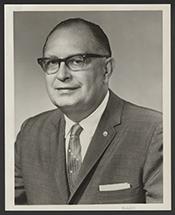
Historical · U.S. House · New York · District 37
Thaddeus Dulski
Former U.S. Representative · New York District 37 · 1959–1975 · Democratic
Thaddeus Dulski represented New York's District 37 in the United States House of Representatives (1959–1975) for the Democratic party. The page below collects sourced biographical facts, term history, committee roles, and provenance for Dulski.
Bioguide ID: D000523
Key facts
- Full name
- Thaddeus Dulski
- State
- New York
- District
- District 37
- Party
- Democratic
- House service
- 1959–1975
- First House term
- 1959
- Status
- Left office
- Current term ends
- —
- Born
- 1915
- Bioguide ID
- D000523
- Committee assignments
- —
- Dataset version
- 1.20260605
Biographical narrative
990 words · sourced from the Wikipedia REST extract
Thaddeus J. Dulski was an American politician who served as a U.S. Representative for New York's 37th congressional district from 1959 until 1974. A member of the Democratic Party, Dulski's political career spanned over three decades, during which he was involved in various legislative efforts and held significant positions within the House of Representatives. His tenure is noted for his role in transforming the federal Post Office Department into the U.S. Postal Service, among other contributions. Dulski's life and career reflect a commitment to public service and a deep connection to his hometown of Buffalo, New York.
Early life and career
Thaddeus Joseph Dulski was born on September 27, 1915, in Buffalo, New York. He received his early education at Buffalo's Technical High School, where he likely developed foundational skills that would serve him throughout his career. Following high school, Dulski pursued further education at Canisius College and the University at Buffalo. These institutions provided him with a solid academic background that complemented his later professional endeavors.
Before entering politics, Dulski built a career as a tax consultant and accountant. His expertise in financial matters would later inform his work in public office. Dulski's professional life was interrupted by World War II, during which he served in the United States Navy. His military service contributed to his understanding of national issues and public service, shaping his future political aspirations.
After the war, Dulski returned to public life, working for the Bureau of Internal Revenue and the Office of Price Stabilization from 1940 to 1947. These roles provided him with valuable experience in government operations and fiscal policy. In 1953, he began his political career by being elected to the Buffalo City Council, where he represented the Walden District for two terms. His work on the council demonstrated his commitment to local governance and community issues. In 1957, he was elected as a councilman at large, further solidifying his position in Buffalo's political landscape.
House tenure
Dulski's congressional career began when he was elected to the U.S. House of Representatives in 1959. He represented New York's 37th congressional district as a Democrat, a role he maintained until his resignation on December 31, 1974. Over the course of his eight terms in the House, Dulski became known for his dedication to his constituents and his involvement in various legislative initiatives.
During his time in Congress, Dulski served on the Post Office and Civil Service Committee, where he eventually became chairman in 1967. This position allowed him to influence significant legislation related to postal services and civil service matters. One of his notable contributions was his involvement in the legislative efforts to reform the federal Post Office Department, leading to the establishment of the U.S. Postal Service. This transformation was a critical development in the modernization of postal services in the United States, reflecting Dulski's commitment to improving government efficiency and service delivery.
Throughout his tenure, Dulski was known for his ability to navigate complex legislative processes and build bipartisan support for his initiatives. His work on the Post Office and Civil Service Committee positioned him as a key player in discussions surrounding postal reform and civil service issues, allowing him to advocate for policies that benefited both his constituents and the broader public.
Dulski's congressional career was marked by a focus on issues that directly impacted the lives of everyday Americans. He worked to address concerns related to postal services, government efficiency, and civil service reform. His leadership on the Post Office and Civil Service Committee was instrumental in shaping policies that would have lasting effects on the postal system and the civil service workforce.
Legislative focus and committees
Throughout his time in the House of Representatives, Thaddeus Dulski's legislative focus was primarily centered on postal services and civil service reform. His role as chairman of the Post Office and Civil Service Committee allowed him to spearhead significant changes within these areas. Dulski's efforts were aimed at modernizing the postal system, improving its efficiency, and ensuring that it met the needs of the American public.
The transformation of the federal Post Office Department into the U.S. Postal Service was one of Dulski's most notable achievements. This reform was crucial in adapting the postal system to the changing needs of society, particularly as communication and commerce evolved in the mid-20th century. Dulski's leadership in this area demonstrated his commitment to enhancing government services and ensuring that they were responsive to the demands of a growing and dynamic population.
In addition to his work on postal reform, Dulski's tenure on the Post Office and Civil Service Committee involved addressing various civil service issues. He advocated for policies that aimed to improve the working conditions and rights of civil servants, recognizing the importance of a motivated and well-supported workforce in delivering public services effectively.
Dulski's legislative contributions were characterized by a focus on practicality and a desire to improve the lives of his constituents. His ability to work collaboratively with colleagues across party lines was instrumental in advancing his initiatives and securing support for his legislative goals. This collaborative approach was particularly important in an era marked by significant political challenges and changing public expectations regarding government services.
After leaving Congress in 1974, Dulski continued to serve the public as a special assistant to New York Governor Hugh Carey, further demonstrating his commitment to public service. He retired in 1983 and passed away on October 11, 1988, due to leukemia. His funeral was held at Queen of Peace Catholic Church in Buffalo, and he was laid to rest at Mount Calvary Cemetery in Cheektowaga, New York.
Dulski's legacy includes the Thaddeus J. Dulski Building, a federal office building in Buffalo, which was named in his honor. Although the building was vacated by the government in 2005, its redevelopment as The Avant serves as a reminder of Dulski's contributions to the community and his lasting impact on public service in Buffalo and beyond.
Notable legislation
Sponsored and co-sponsored legislation for Thaddeus Dulski is pending operator curation. The biographical narrative above carries the same provenance trail until per-bill rows are written.
Sources
- [1]https://en.wikipedia.org/wiki/Thaddeus_J._DulskiWikipedia · retrieved 2026-06-05
Notable quotes
Sourced quotes for Thaddeus Dulski are pending operator curation. Narrative-scope provenance remains attached below.
Sources
- [1]https://en.wikipedia.org/wiki/Thaddeus_J._DulskiWikipedia · retrieved 2026-06-05
Key positions
Curated policy positions for Thaddeus Dulski are pending operator review. The biographical narrative above carries the same provenance trail until per-topic positions are written.
Sources
- [1]https://en.wikipedia.org/wiki/Thaddeus_J._DulskiWikipedia · retrieved 2026-06-05
Terms served
- 1959–1961U.S. House · Term 1 · Democratic
- 1961–1963U.S. House · Term 2 · Democratic
- 1963–1965U.S. House · Term 3 · Democratic
- 1965–1967U.S. House · Term 4 · Democratic
- 1967–1969U.S. House · Term 5 · Democratic
- 1969–1971U.S. House · Term 6 · Democratic
- 1971–1973U.S. House · Term 7 · Democratic
- 1973–1975U.S. House · Term 8 · Democratic
Sources & provenance
Every attributable claim above carries a per-section [N] marker that resolves to the corresponding URL below. Each entry records the upstream provider, the canonical URL, and the timestamp at which the source was retrieved by the ingest pipeline.
Key facts
- https://bioguide.congress.gov/search/bio/D000523bioguide · retrieved 2026-06-05
- https://www.govtrack.us/congress/members/403633govtrack · retrieved 2026-06-05
Biographical narrative
- https://en.wikipedia.org/wiki/Thaddeus_J._Dulskiwikipedia · retrieved 2026-06-05
Find your representative
Every U.S. state elects representatives by district. Browse New York’s delegation, the full former-representative roster, or explore the role and term length.
Related on The Candidate
- Preceded by William ColeEarlier holder of the New York District 37 House seat · Republican.Open
- Abel HuntingtonFormer U.S. Representative · New York District 1 · JacksonOpen
- Alfred ChapinFormer U.S. Representative · New York District 1 · DemocraticOpen
- Cadwallader ColdenFormer U.S. Representative · New York District 1 · FederalistOpen
- Charles FloydFormer U.S. Representative · New York District 1 · DemocraticOpen
- Democratic PartyFederal candidates and office holders on the Democratic line.Open