
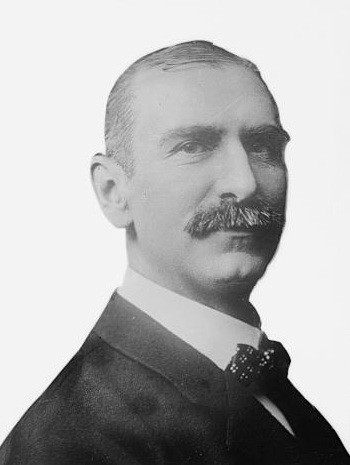
Historical · U.S. House · New York · District 38
Thomas Dunn
Former U.S. Representative · New York District 38 · 1913–1923 · Republican
Thomas Dunn represented New York's District 38 in the United States House of Representatives (1913–1923) for the Republican party. The page below collects sourced biographical facts, term history, committee roles, and provenance for Dunn.
Bioguide ID: D000553
Key facts
- Full name
- Thomas Dunn
- State
- New York
- District
- District 38
- Party
- Republican
- House service
- 1913–1923
- First House term
- 1913
- Status
- Left office
- Current term ends
- —
- Born
- 1853
- Bioguide ID
- D000553
- Committee assignments
- —
- Dataset version
- 1.20260606
Biographical narrative
1,001 words · sourced from the Wikipedia REST extract
Thomas Dunn was an American businessman and politician who served as a U.S. Representative for New York's 38th congressional district. A member of the Republican Party, Dunn's political career spanned a decade, during which he was elected to five consecutive terms in the House of Representatives. His tenure in Congress lasted from 1913 until 1923, marking a significant period in his life that followed a successful career in business and earlier political roles. Dunn's contributions to both the business world and the political landscape of New York are noteworthy, reflecting the dynamic interplay between commerce and governance in the early 20th century.
Early life and career
Thomas Byrne Dunn was born on March 16, 1853, in Providence, Rhode Island. His family relocated to Rochester, New York, in 1858, when he was just five years old. This move to Rochester would play a pivotal role in shaping Dunn's future, as he would go on to establish himself as a prominent figure in both the local business community and the political arena.
Dunn's early life in Rochester laid the foundation for his entrepreneurial spirit. He founded the T. B. Dunn Company, a business that specialized in manufacturing perfumes and extracts. Under his leadership, the company thrived, and Dunn became known for his innovative contributions to the industry. One of his notable inventions was a breath freshener called Sen-Sen, which gained popularity and further solidified his reputation as a businessman. This product not only showcased his ingenuity but also reflected the consumer trends of the time, as personal hygiene and fresh breath became increasingly important to the public.
In addition to his business ventures, Dunn's political ambitions began to take shape in the early 1900s. He was elected to the New York State Senate, representing the 45th district, in 1907 and 1908. This experience in state politics provided him with valuable insights into governance and public service, paving the way for his future endeavors at the federal level. Following his time in the state senate, Dunn served as the New York State Treasurer from 1909 to 1910. He was elected to this position during the New York state election of 1908, running on the Republican ticket. His tenure as state treasurer allowed him to further develop his understanding of financial matters and public administration, skills that would prove beneficial during his congressional career.
House tenure
Dunn's congressional career began when he was elected to the 63rd United States Congress, with his first term commencing on March 4, 1913. He was subsequently re-elected to the 64th, 65th, 66th, and 67th Congresses, serving a total of five terms in the House of Representatives until March 3, 1923. His long tenure in Congress was marked by a commitment to representing the interests of his constituents in New York's 38th congressional district.
During his time in the House, Dunn participated in various legislative activities and discussions that were significant to the era. The early 20th century was a time of considerable change in the United States, characterized by social reform movements, economic shifts, and the aftermath of World War I. Dunn's role as a congressman placed him at the center of these developments, allowing him to engage with pressing issues of the day.
In addition to his legislative responsibilities, Dunn was also involved in national party politics. He served as an alternate delegate to the 1920 Republican National Convention, where he participated in the selection of the party's presidential nominee. This involvement in national politics highlighted his standing within the Republican Party and his influence in shaping party policies and strategies during a transformative period in American history.
Legislative focus and committees
Throughout his congressional tenure, Dunn's legislative focus reflected the interests and concerns of his constituents, as well as the broader national context. While specific details regarding the bills he sponsored or voted on are not provided, it can be inferred that his background in business and finance likely influenced his approach to economic and fiscal policies. As a businessman, Dunn would have been attuned to the needs of the commercial sector, which may have guided his legislative priorities.
Dunn's experience as New York State Treasurer also suggests that he may have had a particular interest in financial legislation, including matters related to taxation, budgeting, and public spending. His understanding of state finances and economic development would have been valuable assets in his role as a U.S. Representative, especially during a time when the nation was grappling with the economic implications of World War I and its aftermath.
In addition to economic issues, Dunn's legislative focus may have encompassed social issues that were prominent during his time in office. The early 20th century saw the rise of various reform movements, including those advocating for labor rights, women's suffrage, and public health initiatives. While specific details about his positions on these matters are not available, it is reasonable to assume that, as a member of Congress, he would have engaged with these significant societal changes.
After completing his five terms in the House, Dunn's political career came to an end on March 3, 1923. Following his departure from Congress, he continued to be involved in his community and maintained his connections within the Republican Party. Dunn passed away on July 2, 1924, in Rochester, Monroe County, New York. His contributions to both the business and political spheres were commemorated with his interment in a family mausoleum at Mount Hope Cemetery in Rochester. A notable feature of the mausoleum is a Tiffany glass window titled "The Sunset Scene," which is now displayed at the Memorial Art Gallery in Rochester, serving as a lasting tribute to his legacy.
In summary, Thomas Dunn's life and career reflect a blend of entrepreneurship and public service. His journey from a businessman in Rochester to a U.S. Representative illustrates the interconnectedness of commerce and governance during a pivotal era in American history. Through his various roles, Dunn left an indelible mark on his community and the political landscape of New York.
Notable legislation
Sponsored and co-sponsored legislation for Thomas Dunn is pending operator curation. The biographical narrative above carries the same provenance trail until per-bill rows are written.
Sources
- [1]https://en.wikipedia.org/wiki/Thomas_B._DunnWikipedia · retrieved 2026-06-06
Notable quotes
Sourced quotes for Thomas Dunn are pending operator curation. Narrative-scope provenance remains attached below.
Sources
- [1]https://en.wikipedia.org/wiki/Thomas_B._DunnWikipedia · retrieved 2026-06-06
Key positions
Curated policy positions for Thomas Dunn are pending operator review. The biographical narrative above carries the same provenance trail until per-topic positions are written.
Sources
- [1]https://en.wikipedia.org/wiki/Thomas_B._DunnWikipedia · retrieved 2026-06-06
Terms served
- 1913–1915U.S. House · Term 1 · Republican
- 1915–1917U.S. House · Term 2 · Republican
- 1917–1919U.S. House · Term 3 · Republican
- 1919–1921U.S. House · Term 4 · Republican
- 1921–1923U.S. House · Term 5 · Republican
Sources & provenance
Every attributable claim above carries a per-section [N] marker that resolves to the corresponding URL below. Each entry records the upstream provider, the canonical URL, and the timestamp at which the source was retrieved by the ingest pipeline.
Key facts
- https://bioguide.congress.gov/search/bio/D000553bioguide · retrieved 2026-06-06
- https://www.govtrack.us/congress/members/403660govtrack · retrieved 2026-06-06
Biographical narrative
- https://en.wikipedia.org/wiki/Thomas_B._Dunnwikipedia · retrieved 2026-06-06
Find your representative
Every U.S. state elects representatives by district. Browse New York’s delegation, the full former-representative roster, or explore the role and term length.
Related on The Candidate
- Succeeded by Meyer JacobsteinLater holder of the New York District 38 House seat · Democratic.Open
- Abel HuntingtonFormer U.S. Representative · New York District 1 · JacksonOpen
- Alfred ChapinFormer U.S. Representative · New York District 1 · DemocraticOpen
- Cadwallader ColdenFormer U.S. Representative · New York District 1 · FederalistOpen
- Charles FloydFormer U.S. Representative · New York District 1 · DemocraticOpen
- Republican PartyFederal candidates and office holders on the Republican line.Open