
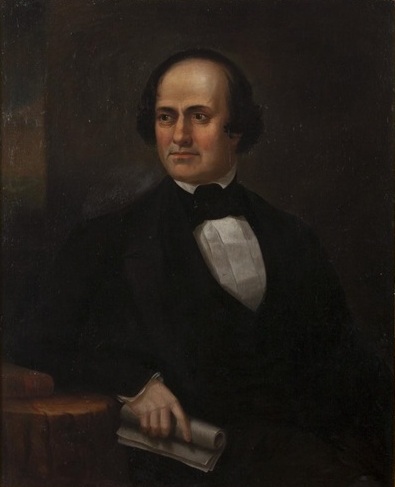
Historical · U.S. House · New York · District 4
Aaron Ward
Former U.S. Representative · New York District 4 · 1825–1843 · Democratic
Aaron Ward represented New York's District 4 in the United States House of Representatives (1825–1843) for the Democratic party. The page below collects sourced biographical facts, term history, committee roles, and provenance for Ward.
Bioguide ID: W000125
Key facts
- Full name
- Aaron Ward
- State
- New York
- District
- District 4
- Party
- Democratic
- House service
- 1825–1843
- First House term
- 1825
- Status
- Left office
- Current term ends
- —
- Born
- 1790
- Bioguide ID
- W000125
- Committee assignments
- —
- Dataset version
- 1.20260606
Biographical narrative
859 words · sourced from the Wikipedia REST extract
Aaron Ward was a prominent American lawyer and politician who served as a U.S. Representative from New York's 4th congressional district during the early to mid-19th century. A member of the Democratic Party, Ward's congressional career spanned multiple terms and reflected the political shifts of his time. He was born on July 5, 1790, in Sing Sing, Westchester County, New York, and his life was marked by a commitment to public service, both in the military and in various legal and political roles.
Early life and career
Aaron Ward was born into a family with a strong local presence; his father, Moses Ward, was a notable figure in their community. He received his early education at Mount Pleasant Academy, where he laid the groundwork for his future studies in law. Following his preparatory education, Ward pursued legal studies, which culminated in his admission to the bar. He began practicing law in Sing Sing, where he would establish his career.
Ward's involvement in public service began with his military service during the War of 1812. He was commissioned as a lieutenant in the 29th Regiment of Infantry at the war's onset and later rose to the rank of captain in 1814. His military career continued after the war, as he remained active in the State Militia, ultimately achieving the rank of major general in 1830. This military background not only shaped his leadership skills but also contributed to his public persona.
In addition to his military service, Ward held the position of District Attorney for Westchester County from 1819 to 1822. This role allowed him to gain significant legal experience and visibility within the community. On January 19, 1820, he married Mary L. Watson, who was the daughter of Elkanah Watson, further solidifying his connections within the region.
House tenure
Aaron Ward's political career in the U.S. House of Representatives began with his election as an Adams man to the 19th Congress, where he served from March 4, 1825, to March 3, 1829. He was subsequently re-elected to the 20th Congress, continuing his service until 1829. After a brief hiatus, he returned to Congress as a Jacksonian, serving in the 22nd, 23rd, and 24th Congresses from March 4, 1831, to March 3, 1837. His final term in the House began on March 4, 1841, as a Democrat, and concluded on March 3, 1843. Throughout his six terms in office, Ward was involved in various legislative activities that reflected the evolving political landscape of the United States during that period.
Ward's tenure in Congress was marked by the political realignments of the time, as he transitioned from the Adams faction to the Jacksonian movement and finally to the Democratic Party. This adaptability showcased his ability to navigate the shifting political currents of the early 19th century. His congressional service coincided with significant national events, including debates over issues such as states' rights, economic policy, and the expansion of the United States.
Legislative focus and committees
While specific details regarding the bills and legislative initiatives Ward championed during his time in Congress are not extensively documented, it is known that his political affiliations influenced his legislative priorities. As a member of the Democratic Party, he would have been aligned with the party's focus on issues such as agrarian interests, states' rights, and opposition to certain federal policies that were perceived as overreaching.
Ward's experience as a lawyer and District Attorney likely informed his perspectives on legal and judicial matters, which may have influenced his contributions to discussions on law and governance. His military background also suggests a potential interest in issues related to national defense and veterans' affairs, although specific legislative actions in these areas are not detailed in the available records.
In addition to his congressional duties, Ward participated in broader civic activities. He was a delegate to the New York State Constitutional Convention of 1846, where he contributed to discussions on the state's governance and legal framework. His involvement in this convention indicates his commitment to public service beyond his congressional role.
After his congressional career, Ward continued to engage in public life. In 1855, he ran for the position of Secretary of State of New York on the Hard ticket but was not successful in that election. His community involvement included serving as the first President of Dale Cemetery in Ossining, New York, and acting as a trustee of Mount Pleasant Academy, reflecting his ongoing dedication to local institutions.
Ward passed away on March 2, 1867, in Georgetown, Washington, D.C., and was laid to rest at Dale Cemetery. His legacy includes not only his political service but also his contributions to the legal profession and local governance. His family continued to be active in public life, with his daughter Josephine A. Ward marrying Senator John Renshaw Thomson and later Maryland Governor Thomas Swann.
In summary, Aaron Ward's life and career exemplify the multifaceted roles of a 19th-century American politician, lawyer, and military officer. His service in the U.S. House of Representatives, coupled with his local engagements and family connections, underscores the interconnected nature of political, legal, and civic life during a transformative period in American history.
Notable legislation
Sponsored and co-sponsored legislation for Aaron Ward is pending operator curation. The biographical narrative above carries the same provenance trail until per-bill rows are written.
Sources
- [1]https://en.wikipedia.org/wiki/Aaron_Ward_(representative)Wikipedia · retrieved 2026-06-06
Notable quotes
Sourced quotes for Aaron Ward are pending operator curation. Narrative-scope provenance remains attached below.
Sources
- [1]https://en.wikipedia.org/wiki/Aaron_Ward_(representative)Wikipedia · retrieved 2026-06-06
Key positions
Curated policy positions for Aaron Ward are pending operator review. The biographical narrative above carries the same provenance trail until per-topic positions are written.
Sources
- [1]https://en.wikipedia.org/wiki/Aaron_Ward_(representative)Wikipedia · retrieved 2026-06-06
Terms served
- 1825–1827U.S. House · Term 1 · Adams
- 1827–1829U.S. House · Term 2 · Adams
- 1831–1833U.S. House · Term 3 · Jackson
- 1833–1835U.S. House · Term 4 · Jackson
- 1835–1837U.S. House · Term 5 · Jackson
- 1841–1843U.S. House · Term 6 · Democratic
Sources & provenance
Every attributable claim above carries a per-section [N] marker that resolves to the corresponding URL below. Each entry records the upstream provider, the canonical URL, and the timestamp at which the source was retrieved by the ingest pipeline.
Key facts
- https://bioguide.congress.gov/search/bio/W000125bioguide · retrieved 2026-06-06
- https://www.govtrack.us/congress/members/411300govtrack · retrieved 2026-06-06
Biographical narrative
- https://en.wikipedia.org/wiki/Aaron_Ward_(representative)wikipedia · retrieved 2026-06-06
Find your representative
Every U.S. state elects representatives by district. Browse New York’s delegation, the full former-representative roster, or explore the role and term length.
Related on The Candidate
- Preceded by Joel FrostEarlier holder of the New York District 4 House seat · Crawford Republican.Open
- Succeeded by Walter UnderhillLater holder of the New York District 4 House seat · Whig.Open
- Abel HuntingtonFormer U.S. Representative · New York District 1 · JacksonOpen
- Alfred ChapinFormer U.S. Representative · New York District 1 · DemocraticOpen
- Cadwallader ColdenFormer U.S. Representative · New York District 1 · FederalistOpen
- Charles FloydFormer U.S. Representative · New York District 1 · DemocraticOpen