
Historical · U.S. House · New York · District 4
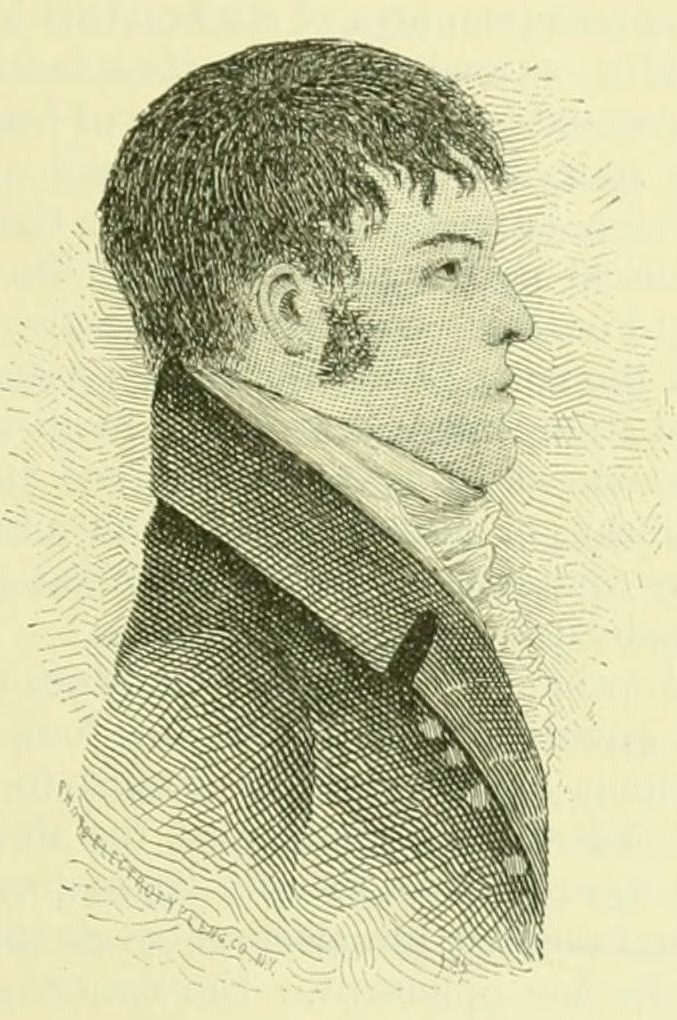
Cornelius Schoonmaker
Former U.S. Representative · New York District 4 · 1791–1793
Cornelius Schoonmaker represented New York's District 4 in the United States House of Representatives (1791–1793). The page below collects sourced biographical facts, term history, committee roles, and provenance for Schoonmaker.
Bioguide ID: S000140
Key facts
- Full name
- Cornelius Schoonmaker
- State
- New York
- District
- District 4
- Party
- —
- House service
- 1791–1793
- First House term
- 1791
- Status
- Left office
- Current term ends
- —
- Born
- —
- Bioguide ID
- S000140
- Committee assignments
- —
- Dataset version
- 1.20260606
Biographical narrative
995 words · sourced from the Wikipedia REST extract
Cornelius Schoonmaker was a notable figure in early American politics, serving as a U.S. Representative for New York's 4th congressional district during the early years of the United States government. His political career was marked by his involvement in both state and national governance, reflecting the complexities of the period following the American Revolutionary War. Schoonmaker's contributions to the political landscape of New York and his role in the formation of the United States are significant, particularly within the context of the late 18th century.
Early life and career
Cornelius Schoonmaker was born in June 1745 in Shawangunk, which is present-day Wallkill, located in Ulster County, New York. His early education was limited, which was not uncommon for individuals of his time and background. Despite this, he pursued a career as a surveyor, a profession that required a practical understanding of mathematics and land measurement, skills that were essential in the rapidly developing American landscape. In addition to surveying, Schoonmaker was engaged in agricultural activities, which were vital to the economy of the region and provided the foundation for his later political career.
During the American Revolutionary War, Schoonmaker was actively involved in local governance and community safety. He served on committees of vigilance and safety, which were crucial in coordinating local responses to British military actions and ensuring the security of communities. His participation in these committees demonstrated his commitment to the revolutionary cause and his leadership within his community.
Schoonmaker's political career began to take shape in the years following the war. He was elected to the New York State Assembly, representing Ulster County from 1777 to 1790. His tenure in the assembly coincided with a transformative period in American history, as the newly independent states were grappling with issues of governance, representation, and civil rights. Schoonmaker's role in the assembly allowed him to influence state legislation during this critical time.
In 1788, he was a delegate to the New York State Convention, where he participated in the ratification of the United States Constitution. This convention was a pivotal moment in American history, as it determined the framework for the new federal government. Schoonmaker's involvement in this process underscored his commitment to the principles of the new nation and his belief in the importance of a unified government.
House tenure
Schoonmaker's congressional career began in April 1790 when he was elected to the 2nd United States Congress. He officially took office on March 4, 1791, and served until March 3, 1793. His election to Congress came during a time when the federal government was still in its infancy, and many foundational policies and structures were being established. As a member of the House of Representatives, Schoonmaker was part of a legislative body tasked with addressing the myriad challenges facing the young nation.
During his time in Congress, Schoonmaker participated in discussions and debates that shaped the early legislative agenda of the United States. Although specific details about the bills he supported or opposed are not documented, his role as a representative would have involved engaging with issues such as taxation, trade, and the establishment of federal authority. The early Congress was characterized by intense debate over the balance of power between the federal government and the states, and Schoonmaker's contributions would have been part of this larger conversation.
After completing his term in the House, Schoonmaker returned to state politics. He was re-elected to the New York State Assembly in 1795, indicating his continued influence and commitment to public service. His return to state politics allowed him to remain engaged with the legislative process and to contribute to the governance of New York during a time of significant change and development.
Legislative focus and committees
While specific details regarding Schoonmaker's legislative focus during his congressional tenure are limited, it is important to contextualize his role within the broader framework of the early U.S. Congress. The period in which he served was marked by the establishment of key governmental functions and the development of policies that would guide the nation for years to come. Members of Congress during this time were often involved in a range of issues, including economic policy, foreign relations, and the establishment of a national identity.
Schoonmaker's background as a surveyor and his experience in local governance likely informed his perspectives on land use, property rights, and agricultural policies. These issues were particularly relevant in a nation that was still largely agrarian and where land ownership was a central aspect of economic stability and personal freedom. His involvement in the New York State Assembly prior to his congressional service would have also provided him with insights into the legislative needs and concerns of his constituents.
In addition to his legislative duties, Schoonmaker's participation in committees would have been an essential aspect of his role as a congressman. Committees in the House of Representatives are responsible for reviewing legislation, conducting hearings, and making recommendations to the full chamber. While the specific committees he served on are not documented, it is reasonable to assume that he would have been involved in discussions relevant to the interests of his district and the emerging national policies of the time.
Schoonmaker's political career came to an end when he completed his term in the House on March 3, 1793. He continued to be active in state politics until his death in February 1796. His contributions to both state and national governance reflect the complexities of the early American political landscape and the challenges faced by those who sought to shape the future of the nation.
Cornelius Schoonmaker passed away in Shawangunk, New York, and was interred in the Old Shawangunk Churchyard at Bruynswick. His legacy continued through his family, notably with his grandson, Marius Schoonmaker, who also became a prominent political figure in the 19th century. Schoonmaker's life and career exemplify the dedication of early American leaders to the principles of democracy and governance during a formative period in the nation's history.
Notable legislation
Sponsored and co-sponsored legislation for Cornelius Schoonmaker is pending operator curation. The biographical narrative above carries the same provenance trail until per-bill rows are written.
Sources
- [1]https://en.wikipedia.org/wiki/Cornelius_C._SchoonmakerWikipedia · retrieved 2026-06-06
Notable quotes
Sourced quotes for Cornelius Schoonmaker are pending operator curation. Narrative-scope provenance remains attached below.
Sources
- [1]https://en.wikipedia.org/wiki/Cornelius_C._SchoonmakerWikipedia · retrieved 2026-06-06
Key positions
Curated policy positions for Cornelius Schoonmaker are pending operator review. The biographical narrative above carries the same provenance trail until per-topic positions are written.
Sources
- [1]https://en.wikipedia.org/wiki/Cornelius_C._SchoonmakerWikipedia · retrieved 2026-06-06
Terms served
- 1791–1793U.S. House · Term 1
Sources & provenance
Every attributable claim above carries a per-section [N] marker that resolves to the corresponding URL below. Each entry records the upstream provider, the canonical URL, and the timestamp at which the source was retrieved by the ingest pipeline.
Key facts
- https://bioguide.congress.gov/search/bio/S000140bioguide · retrieved 2026-06-06
- https://www.govtrack.us/congress/members/409648govtrack · retrieved 2026-06-06
Biographical narrative
- https://en.wikipedia.org/wiki/Cornelius_C._Schoonmakerwikipedia · retrieved 2026-06-06
Find your representative
Every U.S. state elects representatives by district. Browse New York’s delegation, the full former-representative roster, or explore the role and term length.
Related on The Candidate
- Succeeded by Peter Van GaasbeckLater holder of the New York District 4 House seat.Open
- Abel HuntingtonFormer U.S. Representative · New York District 1 · JacksonOpen
- Alfred ChapinFormer U.S. Representative · New York District 1 · DemocraticOpen
- Cadwallader ColdenFormer U.S. Representative · New York District 1 · FederalistOpen
- Charles FloydFormer U.S. Representative · New York District 1 · DemocraticOpen
- Representatives from New YorkEvery former U.S. Representative who has represented New York.Open