
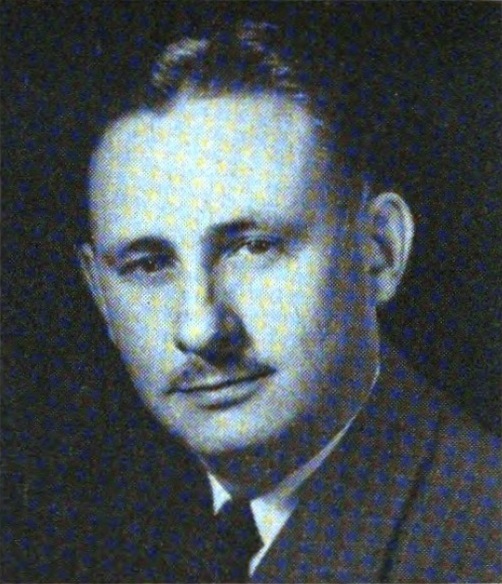
Historical · U.S. House · New York · District 4
Henry Latham
Former U.S. Representative · New York District 4 · 1945–1959 · Republican
Henry Latham represented New York's District 4 in the United States House of Representatives (1945–1959) for the Republican party. The page below collects sourced biographical facts, term history, committee roles, and provenance for Latham.
Bioguide ID: L000108
Key facts
- Full name
- Henry Latham
- State
- New York
- District
- District 4
- Party
- Republican
- House service
- 1945–1959
- First House term
- 1945
- Status
- Left office
- Current term ends
- —
- Born
- 1908
- Bioguide ID
- L000108
- Committee assignments
- —
- Dataset version
- 1.20260605
Biographical narrative
958 words · sourced from the Wikipedia REST extract
Henry Latham was an American attorney, politician, and jurist who served as a U.S. Representative for New York's 4th congressional district from 1945 to 1958. A member of the Republican Party, Latham was known for his conservative views and strong anti-communist stance. Following his tenure in the House of Representatives, he served as a Justice of the New York Supreme Court from 1959 until 1978. His career spanned several decades, during which he was involved in various aspects of public service and law.
Early life and career
Henry Jepson Latham was born on December 10, 1908, in Brooklyn, New York. He completed his secondary education at Richmond Hill High School and subsequently pursued higher education in law. Latham enrolled in the pre-law program at St. John's College before transferring to Brooklyn Law School, where he earned his Bachelor of Laws (LL.B.) degree in 1931. He was admitted to the bar in 1932 and began practicing law in Jamaica, Queens. In 1933, he furthered his legal education by obtaining a Master of Laws (LL.M.) from Brooklyn Law School. His contributions to the field of law were later recognized when he received an honorary Doctor of Laws (LL.D.) degree from the same institution in 1960.
Latham's political career began in earnest in the late 1930s when he ran for the New York State Senate in 1938, though he was not successful in that bid. He subsequently served in the New York State Assembly, representing Queens County's 4th District from 1941 to 1942. His legislative career was interrupted by World War II, during which he enlisted in the United States Navy in 1942. Latham became a pilot and served in the Pacific Theater until February 1945. After the war, he continued his military service in the United States Navy Reserve.
In 1944, Latham successfully ran for the United States House of Representatives while still in military service, marking the beginning of his congressional career. He was elected to represent New York's 4th congressional district, a position he would hold for seven consecutive terms.
House tenure
Henry Latham's tenure in the U.S. House of Representatives began on January 3, 1945, and continued until January 3, 1959. During this period, he served in the 79th through the 85th Congresses. His election to Congress came at a time of significant national change, as the United States was emerging from World War II and entering the Cold War era. Latham's political alignment with the Republican Party positioned him as a conservative voice in the House, where he advocated for a robust national defense and an assertive foreign policy.
Throughout his time in Congress, Latham was reelected six times, reflecting a stable base of support within his district. His legislative actions included voting in favor of the Civil Rights Act of 1957, which aimed to address racial discrimination and protect voting rights. Latham's support for this landmark legislation indicated a willingness to engage with the civil rights movement, despite his overall conservative stance.
In addition to his legislative responsibilities, Latham served on the House Committee on Rules, which plays a crucial role in determining the procedures for legislative debate and the consideration of bills. His position on this committee allowed him to influence the legislative process significantly, particularly in shaping the rules governing how legislation was presented and debated in the House.
Latham's political ideology was characterized by a strong anti-communist sentiment, which was a defining feature of the era. He advocated for increasing the size and capability of the United States Armed Forces, reflecting the broader concerns of the time regarding the spread of communism globally. Latham also supported providing military assistance to Taiwan, known at the time as Formosa, to bolster its defense against the Communist government of China.
Legislative focus and committees
During his time in the House, Henry Latham focused on various issues that aligned with his conservative principles. His legislative agenda included a strong emphasis on national security and military readiness, which was particularly pertinent in the context of the Cold War. Latham's advocacy for a robust military was consistent with the Republican Party's platform during this period, as the United States sought to counter perceived threats from the Soviet Union and other communist regimes.
In addition to his work on military and defense issues, Latham's role on the House Committee on Rules allowed him to engage with a wide range of legislative matters. The committee's responsibilities include establishing the rules for debate on the House floor and determining how bills are considered. Latham's involvement in this committee positioned him as a key player in the legislative process, enabling him to influence the flow of legislation and the priorities of the House.
Latham's voting record and public statements reflected his conservative values, particularly regarding fiscal policy and government spending. He was known for advocating limited government intervention in economic matters and promoting policies that aligned with free-market principles. His conservative stance resonated with constituents in his district, contributing to his electoral success over multiple terms.
After concluding his service in the House of Representatives in 1959, Latham transitioned to a judicial career. He was appointed as a Justice of the New York Supreme Court, where he served until 1978. This role allowed him to continue his public service in a different capacity, applying his legal expertise to the judiciary.
Henry Latham passed away on June 26, 2002, in Southold, New York. His contributions to public service, both as a legislator and a jurist, reflect a significant chapter in the political history of New York and the United States during the mid-20th century. He was laid to rest at Saint Patrick's Cemetery in Southold, marking the end of a long and varied career dedicated to law and public service.
Notable legislation
Sponsored and co-sponsored legislation for Henry Latham is pending operator curation. The biographical narrative above carries the same provenance trail until per-bill rows are written.
Sources
- [1]https://en.wikipedia.org/wiki/Henry_J._LathamWikipedia · retrieved 2026-06-05
Notable quotes
Sourced quotes for Henry Latham are pending operator curation. Narrative-scope provenance remains attached below.
Sources
- [1]https://en.wikipedia.org/wiki/Henry_J._LathamWikipedia · retrieved 2026-06-05
Key positions
Curated policy positions for Henry Latham are pending operator review. The biographical narrative above carries the same provenance trail until per-topic positions are written.
Sources
- [1]https://en.wikipedia.org/wiki/Henry_J._LathamWikipedia · retrieved 2026-06-05
Terms served
- 1945–1947U.S. House · Term 1 · Republican
- 1947–1949U.S. House · Term 2 · Republican
- 1949–1951U.S. House · Term 3 · Republican
- 1951–1953U.S. House · Term 4 · Republican
- 1953–1955U.S. House · Term 5 · Republican
- 1955–1957U.S. House · Term 6 · Republican
- 1957–1959U.S. House · Term 7 · Republican
Sources & provenance
Every attributable claim above carries a per-section [N] marker that resolves to the corresponding URL below. Each entry records the upstream provider, the canonical URL, and the timestamp at which the source was retrieved by the ingest pipeline.
Key facts
- https://bioguide.congress.gov/search/bio/L000108bioguide · retrieved 2026-06-05
- https://www.govtrack.us/congress/members/406615govtrack · retrieved 2026-06-05
Biographical narrative
- https://en.wikipedia.org/wiki/Henry_J._Lathamwikipedia · retrieved 2026-06-05
Find your representative
Every U.S. state elects representatives by district. Browse New York’s delegation, the full former-representative roster, or explore the role and term length.
Related on The Candidate
- Preceded by Thomas CullenEarlier holder of the New York District 4 House seat · Democratic.Open
- Succeeded by Norman LentLater holder of the New York District 4 House seat · Republican.Open
- Abel HuntingtonFormer U.S. Representative · New York District 1 · JacksonOpen
- Alfred ChapinFormer U.S. Representative · New York District 1 · DemocraticOpen
- Cadwallader ColdenFormer U.S. Representative · New York District 1 · FederalistOpen
- Charles FloydFormer U.S. Representative · New York District 1 · DemocraticOpen