
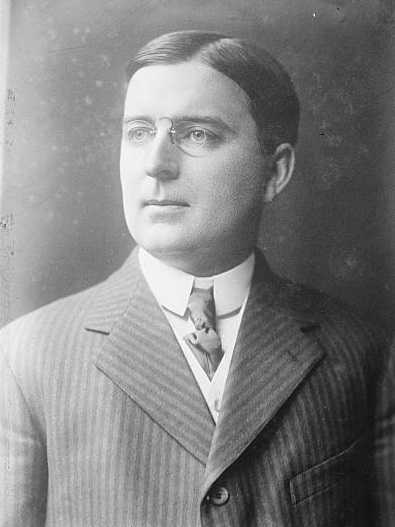
Historical · U.S. House · New York · District 41
Charles Smith
Former U.S. Representative · New York District 41 · 1911–1919 · Democratic
Charles Smith represented New York's District 41 in the United States House of Representatives (1911–1919) for the Democratic party. The page below collects sourced biographical facts, term history, committee roles, and provenance for Smith.
Bioguide ID: S000520
Key facts
- Full name
- Charles Smith
- State
- New York
- District
- District 41
- Party
- Democratic
- House service
- 1911–1919
- First House term
- 1911
- Status
- Left office
- Current term ends
- —
- Born
- 1870
- Bioguide ID
- S000520
- Committee assignments
- —
- Dataset version
- 1.20260606
Biographical narrative
861 words · sourced from the Wikipedia REST extract
Charles Smith was an American politician and newspaperman who served as a U.S. Representative for New York's 41st congressional district from 1911 until 1919. A member of the Democratic Party, Smith's political career spanned four terms in the House of Representatives, during which he held various leadership positions on significant congressional committees. His background in journalism and education informed his public service, and after leaving Congress, he continued to engage in commercial and industrial pursuits until his death in 1939.
Early life and career
Charles Smith was born on September 14, 1870, in Sardinia, New York. He received his early education in local district schools and graduated from Arcade Academy in Arcade, New York, in 1886. Following his education, Smith initially worked in agriculture, engaging in farming activities. He later transitioned to a career in communications, becoming a railroad telegraph operator, which likely provided him with valuable skills in information dissemination.
Smith's foray into journalism began in the early 1890s when he took a position as a reporter for the Buffalo Courier, where he worked from 1890 to 1893. His career in journalism progressed as he became the managing editor of the Buffalo Times in 1894. He also held editorial positions at the Buffalo Evening Enquirer and the Buffalo Morning Courier, further establishing his reputation in the field. His experience in journalism not only honed his writing and communication skills but also provided him with insights into public opinion and the political landscape of the time.
In addition to his work in journalism, Smith was appointed to the Buffalo Board of School Examiners, where he served for two years, including a term as chairman. This role underscored his commitment to education and public service, as he was involved in overseeing the standards for educational institutions in the Buffalo area.
House tenure
Charles Smith's political career in the U.S. House of Representatives began when he was elected as a Democrat to the Sixty-second Congress, with his first term commencing on March 4, 1911. His initial election was notably competitive, as he won by a margin of just one vote. Smith was subsequently re-elected to serve in the three succeeding Congresses, maintaining his position until March 3, 1919.
During his time in Congress, Smith was involved in various legislative activities and held significant roles on several committees. He served as the chairman of the Committee on Foreign Affairs during the Sixty-second Congress, a position that placed him at the forefront of discussions regarding international relations and foreign policy. This role was particularly important during a time when the United States was navigating complex global dynamics leading up to World War I.
In addition to his leadership on the Committee on Foreign Affairs, Smith also chaired the Committee on Expenditures in the Department of Commerce during the Sixty-fourth Congress and the Committee on Patents during the Sixty-fifth Congress. His involvement in these committees reflected his engagement with issues related to commerce, trade, and intellectual property, which were vital to the economic interests of the nation.
Despite his contributions and leadership within Congress, Smith faced challenges in his political career. He was an unsuccessful candidate for re-election in 1918, which marked the end of his tenure in the House of Representatives. His departure from Congress concluded a significant chapter in his political journey, during which he had established himself as a prominent figure in New York politics.
Legislative focus and committees
Throughout his congressional career, Charles Smith's legislative focus encompassed a range of issues, particularly those related to foreign affairs, commerce, and patents. His role as chairman of the Committee on Foreign Affairs allowed him to influence discussions and decisions regarding the United States' international engagements, a critical area of concern during the early 20th century as the country was becoming more involved in global affairs.
As chairman of the Committee on Expenditures in the Department of Commerce, Smith was responsible for overseeing the financial operations and expenditures of the department, ensuring accountability and efficiency in government spending. This role was essential in promoting transparency and responsible fiscal management within the federal government.
Smith's leadership on the Committee on Patents further highlighted his commitment to fostering innovation and protecting intellectual property rights. This focus was particularly relevant in an era marked by rapid industrialization and technological advancement, where the protection of inventions and creative works was becoming increasingly important for economic growth.
After leaving Congress, Smith continued to be active in public service and business. He engaged in various commercial and industrial pursuits in Buffalo, New York, and served as the state Superintendent of Standards and Purchases from 1935 until his death. His work in this role involved overseeing state procurement processes and ensuring that standards were maintained in public purchasing.
Charles Smith passed away on May 21, 1939, in Wilmington, New York. He was interred at Mount Olivet Cemetery in Tonawanda, New York. His legacy includes his contributions to journalism, education, and public service, as well as his role in shaping legislative policies during a transformative period in American history. Smith's life reflects the interconnectedness of media, politics, and community service, illustrating the diverse pathways through which individuals can impact society.
Notable legislation
Sponsored and co-sponsored legislation for Charles Smith is pending operator curation. The biographical narrative above carries the same provenance trail until per-bill rows are written.
Sources
- [1]https://en.wikipedia.org/wiki/Charles_Bennett_SmithWikipedia · retrieved 2026-06-06
Notable quotes
Sourced quotes for Charles Smith are pending operator curation. Narrative-scope provenance remains attached below.
Sources
- [1]https://en.wikipedia.org/wiki/Charles_Bennett_SmithWikipedia · retrieved 2026-06-06
Key positions
Curated policy positions for Charles Smith are pending operator review. The biographical narrative above carries the same provenance trail until per-topic positions are written.
Sources
- [1]https://en.wikipedia.org/wiki/Charles_Bennett_SmithWikipedia · retrieved 2026-06-06
Terms served
- 1911–1913U.S. House · Term 1 · Democratic
- 1913–1915U.S. House · Term 2 · Democratic
- 1915–1917U.S. House · Term 3 · Democratic
- 1917–1919U.S. House · Term 4 · Democratic
Sources & provenance
Every attributable claim above carries a per-section [N] marker that resolves to the corresponding URL below. Each entry records the upstream provider, the canonical URL, and the timestamp at which the source was retrieved by the ingest pipeline.
Key facts
- https://bioguide.congress.gov/search/bio/S000520bioguide · retrieved 2026-06-06
- https://www.govtrack.us/congress/members/410004govtrack · retrieved 2026-06-06
Biographical narrative
- https://en.wikipedia.org/wiki/Charles_Bennett_Smithwikipedia · retrieved 2026-06-06
Find your representative
Every U.S. state elects representatives by district. Browse New York’s delegation, the full former-representative roster, or explore the role and term length.
Related on The Candidate
- Succeeded by Clarence MacGregorLater holder of the New York District 41 House seat · Republican.Open
- Abel HuntingtonFormer U.S. Representative · New York District 1 · JacksonOpen
- Alfred ChapinFormer U.S. Representative · New York District 1 · DemocraticOpen
- Cadwallader ColdenFormer U.S. Representative · New York District 1 · FederalistOpen
- Charles FloydFormer U.S. Representative · New York District 1 · DemocraticOpen
- Democratic PartyFederal candidates and office holders on the Democratic line.Open