
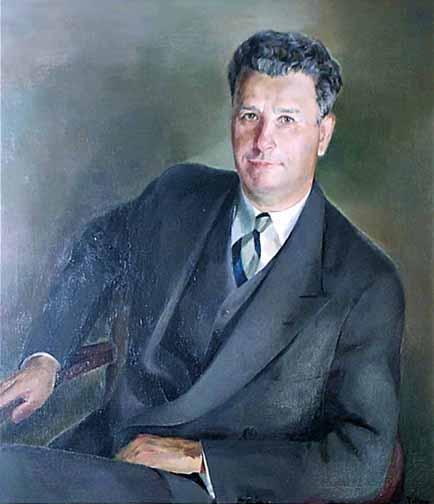
Historical · U.S. House · New York · District 41
Joseph Mruk
Former U.S. Representative · New York District 41 · 1943–1945 · Republican
Joseph Mruk represented New York's District 41 in the United States House of Representatives (1943–1945) for the Republican party. The page below collects sourced biographical facts, term history, committee roles, and provenance for Mruk.
Bioguide ID: M001058
Key facts
- Full name
- Joseph Mruk
- State
- New York
- District
- District 41
- Party
- Republican
- House service
- 1943–1945
- First House term
- 1943
- Status
- Left office
- Current term ends
- —
- Born
- 1903
- Bioguide ID
- M001058
- Committee assignments
- —
- Dataset version
- 1.20260605
Biographical narrative
988 words · sourced from the Wikipedia REST extract
Joseph Mruk was an American businessman and politician who served as a U.S. Representative for New York's 41st congressional district from 1943 to 1945. A member of the Republican Party, Mruk was notable for his political career in Buffalo, New York, where he also served as the city's mayor from 1950 to 1953. His tenure in public office was marked by a focus on local infrastructure and community engagement, reflecting his background in business and his commitment to the needs of his constituents.
Early life and career
Joseph Mruk was born on November 6, 1903, in Buffalo, New York, to a family of Polish descent. Growing up in a culturally rich environment, he attended Public School 44 and Saint John Kanty School before graduating from South Park High School in 1920. Following his education, Mruk embarked on a career in the jewelry business, initially working at various jewelry stores in the Buffalo area. His experience in the industry laid the groundwork for his entrepreneurial endeavors, and in 1926, he opened his own jewelry store, which he successfully operated until the 1970s.
Mruk's early forays into politics began in the 1930s when he sought to secure a position on the Erie County Board of Supervisors in 1933. Although he was unsuccessful in this initial attempt, he persisted in his political ambitions and ran for a seat on the Buffalo Common Council in 1935. After a failed bid, he succeeded in winning a Common Council seat on his second attempt in 1937, serving as a district representative until 1941. His political career continued to progress when he was elected as an at-large member of the council in 1941, a position he held until he resigned in 1942 to pursue a congressional seat.
House tenure
In 1942, Joseph Mruk was elected to the United States House of Representatives as a Republican, representing New York's 41st District. His congressional term began in 1943 and concluded in 1945. During his time in Congress, Mruk was particularly vocal about his concerns regarding the Soviet Union's intentions for post-World War II Poland. His apprehensions were rooted in the geopolitical implications of the war and the potential loss of sovereignty for Poland, which was a significant issue for many Polish-Americans. Mruk's advocacy on this matter prompted assurances from President Franklin D. Roosevelt regarding Poland's future.
In addition to his foreign policy concerns, Mruk took a strong stance against the proposed creation of the Saint Lawrence Seaway, which he believed would adversely affect Buffalo's economy and infrastructure. His opposition to this project, which was supported by many in the Republican leadership, led to tensions within his party. As a result, Mruk faced challenges in maintaining support from party leaders, particularly as they began to endorse his primary opponent, Edward J. Elsaesser, in 1944.
Despite these challenges, Mruk's congressional service was marked by his commitment to representing the interests of his constituents, particularly those of the Polish-American community. His tenure in the House was relatively brief, and he served only one term before returning to local politics and business.
Legislative focus and committees
Throughout his time in Congress, Joseph Mruk's legislative focus was heavily influenced by his background and the concerns of his constituents. His advocacy for Polish sovereignty and skepticism toward Soviet intentions were significant themes during his term, reflecting the broader anxieties of the era regarding post-war Europe and the shifting balance of power. Mruk's efforts to address these issues underscored his dedication to his heritage and the welfare of his community.
In addition to his foreign policy focus, Mruk's opposition to the Saint Lawrence Seaway highlighted his commitment to local economic interests. He believed that the project would detrimentally impact Buffalo, a city with a rich industrial history. This position resonated with many residents who were concerned about the potential economic repercussions of such a large-scale infrastructure project.
After concluding his term in Congress in January 1945, Mruk returned to the management of his jewelry store. His political career did not end there, as he made an unsuccessful bid for mayor of Buffalo later that same year. However, he remained active in local politics and was elected back to the Buffalo Common Council in 1947, where he served until 1950. His experience in local government and his understanding of community needs ultimately paved the way for his election as mayor.
As mayor from 1950 to 1953, Mruk focused on rebuilding Buffalo's infrastructure, which had suffered during the war years. His administration prioritized improvements to streets, bridges, and public parks, as well as the establishment of community programs aimed at enhancing public engagement in education. Notably, he initiated a lighted school house program, which encouraged community involvement in local schools and provided a safer environment for children. His business acumen allowed him to manage the city's budget effectively, often implementing programs without raising local taxes, which was a significant achievement during his tenure.
After leaving the mayor's office, Mruk continued to be involved in public service and local politics. He was an unsuccessful candidate for the U.S. House in 1954 and served on the state Commission on Pensions during the 1950s and 1960s. Despite his political setbacks, he remained a prominent figure in Buffalo's civic life.
In the later years of his life, Mruk closed his jewelry store in the mid-1970s and relocated to Florida, where he lived in retirement with his sister Clara and her husband. He eventually returned to Buffalo in 1988, spending his final years in a nursing home in Lancaster. Joseph Mruk passed away on January 21, 1995, and was laid to rest at Saint Stanislaus Roman Catholic Cemetery in Cheektowaga.
Throughout his life, Mruk remained a lifelong bachelor, and during his time as mayor, his sister took on the role of first lady at public events. His legacy is marked by his contributions to both local governance and the representation of Polish-Americans in the political landscape of Buffalo.
Notable legislation
Sponsored and co-sponsored legislation for Joseph Mruk is pending operator curation. The biographical narrative above carries the same provenance trail until per-bill rows are written.
Sources
- [1]https://en.wikipedia.org/wiki/Joseph_MrukWikipedia · retrieved 2026-06-05
Notable quotes
Sourced quotes for Joseph Mruk are pending operator curation. Narrative-scope provenance remains attached below.
Sources
- [1]https://en.wikipedia.org/wiki/Joseph_MrukWikipedia · retrieved 2026-06-05
Key positions
Curated policy positions for Joseph Mruk are pending operator review. The biographical narrative above carries the same provenance trail until per-topic positions are written.
Sources
- [1]https://en.wikipedia.org/wiki/Joseph_MrukWikipedia · retrieved 2026-06-05
Terms served
- 1943–1945U.S. House · Term 1 · Republican
Sources & provenance
Every attributable claim above carries a per-section [N] marker that resolves to the corresponding URL below. Each entry records the upstream provider, the canonical URL, and the timestamp at which the source was retrieved by the ingest pipeline.
Key facts
- https://bioguide.congress.gov/search/bio/M001058bioguide · retrieved 2026-06-05
- https://www.govtrack.us/congress/members/408024govtrack · retrieved 2026-06-05
Biographical narrative
- https://en.wikipedia.org/wiki/Joseph_Mrukwikipedia · retrieved 2026-06-05
Find your representative
Every U.S. state elects representatives by district. Browse New York’s delegation, the full former-representative roster, or explore the role and term length.
Related on The Candidate
- Preceded by Alfred BeiterEarlier holder of the New York District 41 House seat · Democratic.Open
- Succeeded by Edmund RadwanLater holder of the New York District 41 House seat · Republican.Open
- Abel HuntingtonFormer U.S. Representative · New York District 1 · JacksonOpen
- Alfred ChapinFormer U.S. Representative · New York District 1 · DemocraticOpen
- Cadwallader ColdenFormer U.S. Representative · New York District 1 · FederalistOpen
- Charles FloydFormer U.S. Representative · New York District 1 · DemocraticOpen