
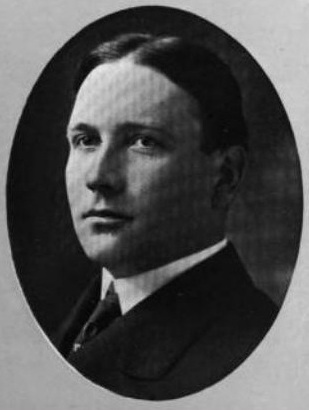
Historical · U.S. House · New York · District 43
Charles Hamilton
Former U.S. Representative · New York District 43 · 1913–1919 · Republican
Charles Hamilton represented New York's District 43 in the United States House of Representatives (1913–1919) for the Republican party. The page below collects sourced biographical facts, term history, committee roles, and provenance for Hamilton.
Bioguide ID: H000104
Key facts
- Full name
- Charles Hamilton
- State
- New York
- District
- District 43
- Party
- Republican
- House service
- 1913–1919
- First House term
- 1913
- Status
- Left office
- Current term ends
- —
- Born
- 1874
- Bioguide ID
- H000104
- Committee assignments
- —
- Dataset version
- 1.20260606
Biographical narrative
803 words · sourced from the Wikipedia REST extract
Charles Hamilton was an American politician who served as a U.S. Representative for New York's 43rd congressional district. A member of the Republican Party, Hamilton's congressional career spanned three terms from 1913 to 1919. He held the position of Minority Whip during his final term, contributing to legislative discussions and party strategy in the House of Representatives. After his tenure in Congress, he returned to his previous pursuits in farming and business.
Early life and career
Charles Hamilton was born on January 23, 1874. He received his early education at Ripley High School, which laid the foundation for his future endeavors. Following high school, Hamilton attended the Fredonia Normal School, now known as the State University of New York at Fredonia, where he furthered his education. He also studied at the Pennsylvania Military College, located in Chester, Pennsylvania, which is now recognized as Widener University. His educational background provided him with a diverse skill set that would later aid him in his political career.
In addition to his academic pursuits, Hamilton was actively engaged in farming, which was a significant aspect of his life. He also ventured into the oil and natural gas industry, indicating a broad interest in various economic sectors. His involvement in these industries likely contributed to his understanding of the economic issues facing his constituents and the nation at large.
Hamilton's political career began at the state level. He was elected to the New York State Assembly, representing Chautauqua County's 2nd District, where he served in 1907 and 1908. This experience in the Assembly provided him with insights into legislative processes and the workings of state government. Following his time in the Assembly, he advanced to the New York State Senate, where he represented the 51st District from 1909 to 1912. During his tenure in the Senate, he participated in the 132nd, 133rd, 134th, and 135th New York State Legislatures, further solidifying his political experience and connections.
House tenure
Hamilton's transition to the U.S. House of Representatives began when he was elected as a Republican to the 63rd Congress, which commenced on March 4, 1913. He successfully secured re-election for two additional terms, serving in the 64th and 65th Congresses before concluding his House tenure on March 3, 1919. Throughout his time in Congress, Hamilton was involved in various legislative matters and contributed to discussions on national policy.
During his final term, Hamilton held the position of Minority Whip, a role that involved assisting the party leadership in managing the legislative agenda and ensuring party members were present for important votes. This position underscored his influence within the Republican Party and highlighted his responsibilities in coordinating party strategy in the House.
Hamilton chose not to seek re-election in 1918, concluding his congressional career after three terms. His decision to step away from politics allowed him to return to his earlier pursuits in farming and business, where he continued to apply his skills and knowledge gained during his time in public office.
Legislative focus and committees
While specific details regarding the legislation Hamilton supported or the committees he served on during his time in Congress are not extensively documented, it is evident that his background in agriculture and business likely influenced his legislative priorities. As a representative from a rural district, he may have been particularly attuned to the needs and concerns of farmers and business owners.
Hamilton's experience in the oil and natural gas sectors may have also shaped his perspectives on energy policy and economic development. His involvement in these industries could have provided him with a unique understanding of the regulatory and economic challenges faced by these sectors, which were increasingly relevant during the early 20th century.
In addition to his focus on agricultural and economic issues, Hamilton's role as Minority Whip would have required him to engage with a wide range of legislative topics. This position would have necessitated collaboration with colleagues from both parties, as well as an understanding of the broader political landscape. His ability to navigate these dynamics would have been crucial in advocating for his constituents' interests while also aligning with party goals.
After leaving Congress, Hamilton returned to his previous endeavors, indicating a preference for a life outside of the political spotlight. He continued to engage in farming and business until his passing on January 3, 1942, in Miami Beach, Florida. Following his death, he was laid to rest at Quincy Rural Cemetery in Ripley, New York, marking the end of a life dedicated to public service and economic pursuits.
Hamilton's career reflects the trajectory of many early 20th-century politicians who balanced local interests with national concerns, navigating the complexities of governance during a transformative period in American history. His legislative contributions, while not extensively documented, were likely influenced by his diverse background and commitment to his constituents.
Notable legislation
Sponsored and co-sponsored legislation for Charles Hamilton is pending operator curation. The biographical narrative above carries the same provenance trail until per-bill rows are written.
Sources
- [1]https://en.wikipedia.org/wiki/Charles_Mann_HamiltonWikipedia · retrieved 2026-06-06
Notable quotes
Sourced quotes for Charles Hamilton are pending operator curation. Narrative-scope provenance remains attached below.
Sources
- [1]https://en.wikipedia.org/wiki/Charles_Mann_HamiltonWikipedia · retrieved 2026-06-06
Key positions
Curated policy positions for Charles Hamilton are pending operator review. The biographical narrative above carries the same provenance trail until per-topic positions are written.
Sources
- [1]https://en.wikipedia.org/wiki/Charles_Mann_HamiltonWikipedia · retrieved 2026-06-06
Terms served
- 1913–1915U.S. House · Term 1 · Republican
- 1915–1917U.S. House · Term 2 · Republican
- 1917–1919U.S. House · Term 3 · Republican
Sources & provenance
Every attributable claim above carries a per-section [N] marker that resolves to the corresponding URL below. Each entry records the upstream provider, the canonical URL, and the timestamp at which the source was retrieved by the ingest pipeline.
Key facts
- https://bioguide.congress.gov/search/bio/H000104bioguide · retrieved 2026-06-06
- https://www.govtrack.us/congress/members/404986govtrack · retrieved 2026-06-06
Biographical narrative
- https://en.wikipedia.org/wiki/Charles_Mann_Hamiltonwikipedia · retrieved 2026-06-06
Find your representative
Every U.S. state elects representatives by district. Browse New York’s delegation, the full former-representative roster, or explore the role and term length.
Related on The Candidate
- Succeeded by Daniel ReedLater holder of the New York District 43 House seat · Republican.Open
- Abel HuntingtonFormer U.S. Representative · New York District 1 · JacksonOpen
- Alfred ChapinFormer U.S. Representative · New York District 1 · DemocraticOpen
- Cadwallader ColdenFormer U.S. Representative · New York District 1 · FederalistOpen
- Charles FloydFormer U.S. Representative · New York District 1 · DemocraticOpen
- Republican PartyFederal candidates and office holders on the Republican line.Open