
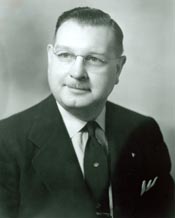
Historical · U.S. House · New York · District 5
Albert Bosch
Former U.S. Representative · New York District 5 · 1953–1961 · Republican
Albert Bosch represented New York's District 5 in the United States House of Representatives (1953–1961) for the Republican party. The page below collects sourced biographical facts, term history, committee roles, and provenance for Bosch.
Bioguide ID: B000646
Key facts
- Full name
- Albert Bosch
- State
- New York
- District
- District 5
- Party
- Republican
- House service
- 1953–1961
- First House term
- 1953
- Status
- Left office
- Current term ends
- —
- Born
- 1908
- Bioguide ID
- B000646
- Committee assignments
- —
- Dataset version
- 1.20260605
Biographical narrative
877 words · sourced from the Wikipedia REST extract
Albert Bosch was an American politician and jurist who served as a Republican member of the United States House of Representatives for New York's 5th congressional district from 1953 until 1960. Following his congressional tenure, he held a judicial position on the New York Supreme Court from 1962 until his retirement in 1974. Bosch's career spanned several decades, during which he was involved in both legislative and judicial capacities, contributing to the governance and legal framework of New York.
Early life and career
Albert Henry Bosch was born on October 30, 1908, in New York City to parents Henry and Margaretha (Hamburger) Bosch. He grew up in an environment that emphasized education, attending public schools in New York City. Bosch pursued higher education at St. John's University School of Law, where he earned his Bachelor of Laws (LL.B) degree in 1933. His legal career began shortly after he graduated; he was admitted to the bar in 1938 and commenced practicing law in New York City.
In addition to his legal practice, Bosch was involved in various financial and community organizations. He became a trustee of the Hamburg Savings Bank located in Ridgewood, New York, which underscored his engagement with local financial institutions. His legal credentials allowed him to practice before significant governmental bodies, including the Treasury Department and the Supreme Court of the United States, enhancing his professional stature within the legal community.
On July 19, 1936, Bosch married Theresa Hoenig, and together they navigated the challenges and opportunities of mid-20th-century America. Their partnership coincided with Bosch's burgeoning legal career, which laid the groundwork for his future political aspirations.
House tenure
Bosch's political career commenced when he was elected as a Republican to the Eighty-third Congress in 1952, representing New York's 5th congressional district. His first term in the House of Representatives began on January 3, 1953. Over the course of his political career, Bosch was re-elected to three additional terms, serving in the House until his resignation on December 31, 1960.
During his time in Congress, Bosch participated in significant legislative discussions and decisions. Notably, he voted in favor of the Civil Rights Acts of 1957 and 1960, which aimed to address racial discrimination and protect voting rights. His support for these landmark pieces of legislation reflected the evolving political landscape of the United States during the Civil Rights Movement.
Bosch's tenure in the House was marked by his involvement in various issues pertinent to his constituents and the nation. His legislative activities contributed to the broader discourse on civil rights, social justice, and governance during a transformative period in American history. After serving four terms, Bosch chose to resign from Congress at the end of 1960, transitioning into a judicial role that would define the next phase of his career.
Legislative focus and committees
Throughout his congressional tenure, Bosch was engaged in a range of legislative issues that reflected the priorities of his constituents and the Republican Party. His support for civil rights legislation indicated a commitment to addressing social inequalities, a significant concern during the 1950s and 1960s. The Civil Rights Acts of 1957 and 1960 were pivotal in the ongoing struggle for racial equality in the United States, and Bosch's votes in favor of these acts positioned him within the broader movement advocating for civil rights.
In addition to civil rights, Bosch's legislative focus likely included issues relevant to his district and the state of New York. While specific committee assignments during his tenure are not detailed, members of Congress typically serve on various committees that align with their interests and the needs of their constituents. These committees play a crucial role in shaping legislation, conducting hearings, and overseeing federal agencies, thereby influencing a wide array of policy areas.
After concluding his congressional service, Bosch transitioned to a judicial career, which began with his election as a judge of the Queens County Court. He served in this capacity from December 31, 1960, until September 1, 1962. Subsequently, he was elected as a justice of the New York Supreme Court for the eleventh judicial district, a position he held until his retirement on December 31, 1974. This judicial role allowed Bosch to continue his public service, contributing to the legal system and upholding the rule of law in New York.
Bosch's post-congressional career was marked by his involvement in various community and civic organizations. He was active in the Steuben Society, a group that promotes German-American heritage, and served as its national chairman on two occasions. His participation in such organizations reflected his commitment to community engagement and cultural heritage. Additionally, he was a member of the Bushwick Club, a business association that further connected him to the local community.
After retiring from the bench, Bosch lived for nearly three decades, during which he relocated several times. Initially residing in Jamaica Estates, he moved to Whiting, New Jersey, in 1976. Following the death of his wife, Theresa, in 1995, he moved to Amityville, Suffolk County, Long Island, New York, where he spent the remainder of his life. Albert Bosch passed away on November 21, 2005, at the age of 97. He is interred at Maple Grove Cemetery, leaving behind a legacy of public service through both his legislative and judicial contributions.
Notable legislation
Sponsored and co-sponsored legislation for Albert Bosch is pending operator curation. The biographical narrative above carries the same provenance trail until per-bill rows are written.
Sources
- [1]https://en.wikipedia.org/wiki/Albert_H._BoschWikipedia · retrieved 2026-06-05
Notable quotes
Sourced quotes for Albert Bosch are pending operator curation. Narrative-scope provenance remains attached below.
Sources
- [1]https://en.wikipedia.org/wiki/Albert_H._BoschWikipedia · retrieved 2026-06-05
Key positions
Curated policy positions for Albert Bosch are pending operator review. The biographical narrative above carries the same provenance trail until per-topic positions are written.
Sources
- [1]https://en.wikipedia.org/wiki/Albert_H._BoschWikipedia · retrieved 2026-06-05
Terms served
- 1953–1955U.S. House · Term 1 · Republican
- 1955–1957U.S. House · Term 2 · Republican
- 1957–1959U.S. House · Term 3 · Republican
- 1959–1961U.S. House · Term 4 · Republican
Sources & provenance
Every attributable claim above carries a per-section [N] marker that resolves to the corresponding URL below. Each entry records the upstream provider, the canonical URL, and the timestamp at which the source was retrieved by the ingest pipeline.
Key facts
- https://bioguide.congress.gov/search/bio/B000646bioguide · retrieved 2026-06-05
- https://www.govtrack.us/congress/members/401610govtrack · retrieved 2026-06-05
Biographical narrative
- https://en.wikipedia.org/wiki/Albert_H._Boschwikipedia · retrieved 2026-06-05
Find your representative
Every U.S. state elects representatives by district. Browse New York’s delegation, the full former-representative roster, or explore the role and term length.
Related on The Candidate
- Preceded by Robert RossEarlier holder of the New York District 5 House seat · Republican.Open
- Succeeded by John WydlerLater holder of the New York District 5 House seat · Republican.Open
- Abel HuntingtonFormer U.S. Representative · New York District 1 · JacksonOpen
- Alfred ChapinFormer U.S. Representative · New York District 1 · DemocraticOpen
- Cadwallader ColdenFormer U.S. Representative · New York District 1 · FederalistOpen
- Charles FloydFormer U.S. Representative · New York District 1 · DemocraticOpen