
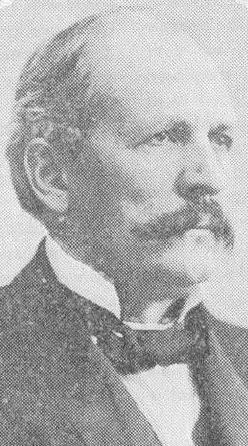
Historical · U.S. House · New York · District 5
George Waldo
Former U.S. Representative · New York District 5 · 1905–1909 · Republican
George Waldo represented New York's District 5 in the United States House of Representatives (1905–1909) for the Republican party. The page below collects sourced biographical facts, term history, committee roles, and provenance for Waldo.
Bioguide ID: W000036
Key facts
- Full name
- George Waldo
- State
- New York
- District
- District 5
- Party
- Republican
- House service
- 1905–1909
- First House term
- 1905
- Status
- Left office
- Current term ends
- —
- Born
- 1851
- Bioguide ID
- W000036
- Committee assignments
- —
- Dataset version
- 1.20260606
Biographical narrative
946 words · sourced from the Wikipedia REST extract
George Waldo was a Republican politician who served as a U.S. Representative for New York's 5th congressional district from 1905 to 1909. Born in Brooklyn, New York, in 1851, he had a diverse educational background and a varied career that included law practice and public service. His tenure in the U.S. House of Representatives was marked by his involvement in local and state politics prior to his election to Congress. After leaving office, he continued to practice law and eventually relocated to California, where he lived until his death in 1942.
Early life and career
George Waldo was born on January 11, 1851, in Brooklyn, New York. He received his early education in public schools located in both Scotland, Connecticut, and Brooklyn, New York. His academic journey included attendance at Doctor Fitch's Academy in South Windham, Connecticut, and Natchaug High School in Willimantic, Connecticut. Waldo pursued higher education at Cornell University in Ithaca, New York, where he studied for two years, ultimately becoming part of the class of 1872.
Following his time at Cornell, Waldo turned his focus to the study of law, which he undertook in New York City. He was admitted to the bar in Poughkeepsie, New York, in 1876, marking the beginning of his legal career. Initially, he practiced law in New York City until 1883, when he moved to Ulysses, Nebraska. During his time in Nebraska, he served as the village attorney for several years and was actively involved in local governance. He also held a position on the board of trustees and served as a school director for Ulysses High School for four years, demonstrating his commitment to education and community service.
In 1889, Waldo returned to New York City, where he continued his legal practice. His political career began to take shape when he was elected to the New York State Assembly in 1896, representing Kings County's 18th District. His involvement in state politics laid the groundwork for his later congressional ambitions. Additionally, he served as commissioner of records for Kings County from 1899 to 1904, further solidifying his role in public service. His political engagement included participation as a delegate to the Republican National Convention in 1900, where he contributed to the party's platform and direction.
House tenure
George Waldo's congressional career began when he was elected as a Republican to the Fifty-ninth Congress, which commenced on March 4, 1905. He was subsequently re-elected to the Sixtieth Congress, serving until March 3, 1909. During his time in the House of Representatives, Waldo participated in various legislative activities and contributed to discussions on issues pertinent to his constituents and the nation. His service in Congress coincided with a period of significant change in American society, as the early 20th century was marked by industrial growth, urbanization, and various social reforms.
While specific details regarding the legislation he supported or the committees he served on during his congressional tenure are not provided, it is understood that members of Congress typically engage in a range of activities, including drafting bills, participating in debates, and representing the interests of their constituents. Waldo's background in law and local governance likely informed his approach to legislative matters, as he sought to address the needs and concerns of the people in his district.
Waldo's congressional career was relatively brief, as he chose not to seek renomination in 1908. After completing his second term, he returned to the practice of law in New York City. His decision to step away from the political arena may have been influenced by various factors, including personal aspirations or changing political dynamics within the Republican Party.
Legislative focus and committees
While specific details about George Waldo's legislative focus and committee assignments during his time in Congress are not documented, it is common for representatives to concentrate on issues relevant to their constituents and their own areas of expertise. Given Waldo's legal background and his previous experience in local and state government, it is likely that he addressed matters related to law, education, and local governance during his congressional tenure.
As a member of the House of Representatives, Waldo would have participated in discussions and decisions that shaped national policy, although the specifics of his contributions remain less defined. The early 20th century was a time of significant legislative activity, with issues such as labor rights, women's suffrage, and economic reform gaining prominence. Representatives often aligned themselves with broader party goals while also advocating for the interests of their districts.
After leaving Congress, Waldo continued his legal practice, which he maintained until he relocated to California in 1913. He settled in Pasadena, California, in 1918, where he continued to engage in the legal profession. His move to California marked a new chapter in his life, away from the political landscape of New York.
George Waldo passed away on June 16, 1942, in Pasadena, California. His remains were cremated, and his ashes were deposited in the New Cemetery in Scotland, Connecticut. His legacy includes not only his contributions to the legal and political spheres but also the naming of the World War II Liberty Ship SS George E. Waldo in his honor, reflecting the lasting impact of his service and the recognition of his contributions to American society.
In summary, George Waldo's life and career encapsulate a journey through education, law, and politics, marked by his service as a U.S. Representative and his commitment to public service at various levels of government. His experiences in both New York and Nebraska provided him with a unique perspective that he brought to his role in Congress, even as he ultimately chose to return to the legal profession after his time in office.
Notable legislation
Sponsored and co-sponsored legislation for George Waldo is pending operator curation. The biographical narrative above carries the same provenance trail until per-bill rows are written.
Sources
- [1]https://en.wikipedia.org/wiki/George_E._WaldoWikipedia · retrieved 2026-06-06
Notable quotes
Sourced quotes for George Waldo are pending operator curation. Narrative-scope provenance remains attached below.
Sources
- [1]https://en.wikipedia.org/wiki/George_E._WaldoWikipedia · retrieved 2026-06-06
Key positions
Curated policy positions for George Waldo are pending operator review. The biographical narrative above carries the same provenance trail until per-topic positions are written.
Sources
- [1]https://en.wikipedia.org/wiki/George_E._WaldoWikipedia · retrieved 2026-06-06
Terms served
- 1905–1907U.S. House · Term 1 · Republican
- 1907–1909U.S. House · Term 2 · Republican
Sources & provenance
Every attributable claim above carries a per-section [N] marker that resolves to the corresponding URL below. Each entry records the upstream provider, the canonical URL, and the timestamp at which the source was retrieved by the ingest pipeline.
Key facts
- https://bioguide.congress.gov/search/bio/W000036bioguide · retrieved 2026-06-06
- https://www.govtrack.us/congress/members/411216govtrack · retrieved 2026-06-06
Biographical narrative
- https://en.wikipedia.org/wiki/George_E._Waldowikipedia · retrieved 2026-06-06
Find your representative
Every U.S. state elects representatives by district. Browse New York’s delegation, the full former-representative roster, or explore the role and term length.
Related on The Candidate
- Preceded by Edward BassettEarlier holder of the New York District 5 House seat · Democratic.Open
- Succeeded by Richard YoungLater holder of the New York District 5 House seat · Republican.Open
- Abel HuntingtonFormer U.S. Representative · New York District 1 · JacksonOpen
- Alfred ChapinFormer U.S. Representative · New York District 1 · DemocraticOpen
- Cadwallader ColdenFormer U.S. Representative · New York District 1 · FederalistOpen
- Charles FloydFormer U.S. Representative · New York District 1 · DemocraticOpen