
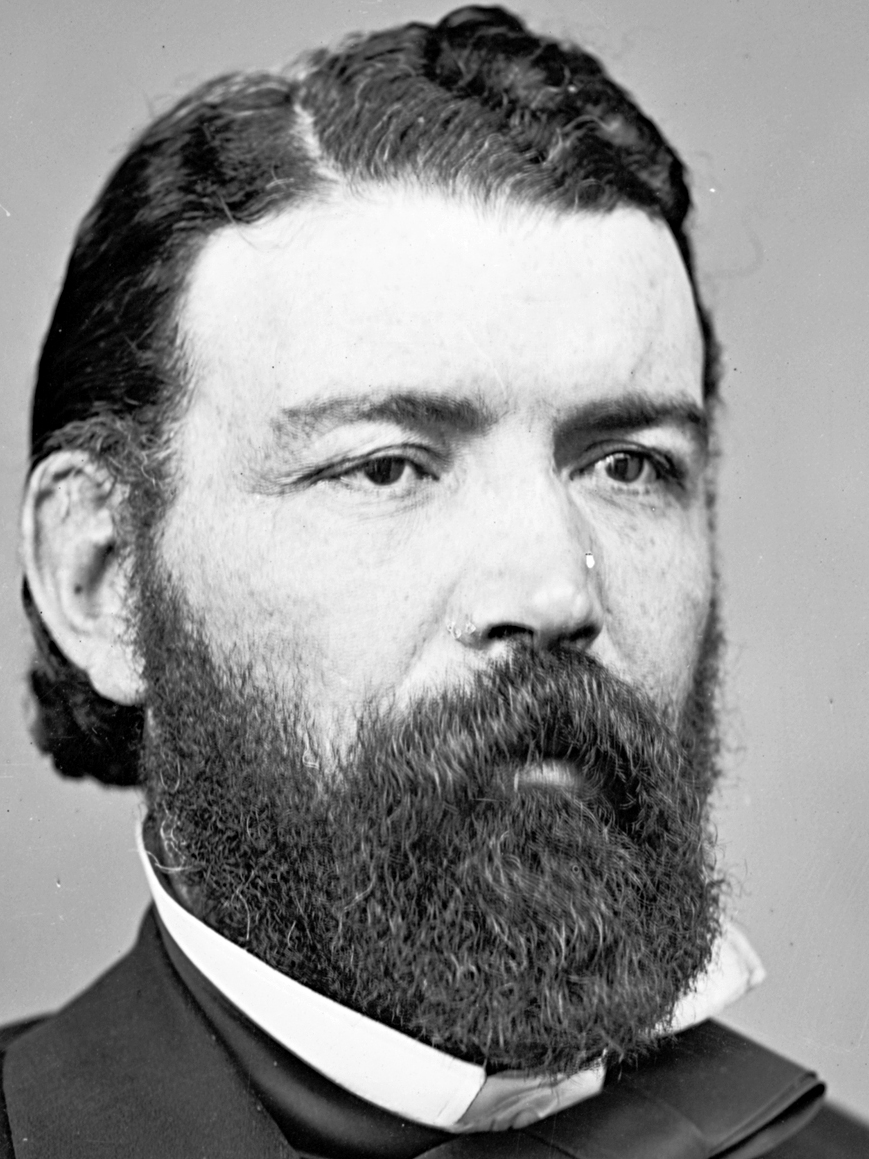
Historical · U.S. House · New York · District 5
John Morrissey
Former U.S. Representative · New York District 5 · 1867–1871 · Democratic
John Morrissey represented New York's District 5 in the United States House of Representatives (1867–1871) for the Democratic party. The page below collects sourced biographical facts, term history, committee roles, and provenance for Morrissey.
Bioguide ID: M001001
Key facts
- Full name
- John Morrissey
- State
- New York
- District
- District 5
- Party
- Democratic
- House service
- 1867–1871
- First House term
- 1867
- Status
- Left office
- Current term ends
- —
- Born
- 1831
- Bioguide ID
- M001001
- Committee assignments
- —
- Dataset version
- 1.20260606
Biographical narrative
1,000 words · sourced from the Wikipedia REST extract
John Morrissey was a notable figure in American history, recognized for his multifaceted career as a politician, bare-knuckle boxing champion, and gambler. Born on February 12, 1831, in Templemore, County Tipperary, Ireland, Morrissey emigrated to the United States with his family in the early 1830s. He became a U.S. Representative for New York's 5th congressional district, serving from 1867 until 1871. His political career was marked by his affiliation with the Democratic Party and his connections to Tammany Hall, a powerful political organization in New York City. After his tenure in the House of Representatives, he continued his political involvement as a Democratic State Senator from 1876 until his death in 1878.
Early life and career
John Morrissey was born into a large family in Ireland, where his father, Timothy Morrissey, worked as a laborer to support his wife and their seven daughters, alongside John. The family emigrated to the United States when John was a toddler, settling in or near Troy, New York. Morrissey received little formal education during his childhood, which was not uncommon for children of immigrant families at the time. By the age of 12, he began working in a wallpaper factory, which marked the beginning of his early labor experiences. He later took on jobs in an ironworks and a stove foundry, reflecting the industrial nature of the era.
As a teenager, Morrissey became involved in local gang conflicts in Troy, particularly between the "Down-Town" and "Up-Town" factions. His participation in these factional fights helped him gain notoriety and establish himself as a prominent figure in the local community. By the age of 17, he had moved to New York City, where he initially worked as a deckhand on a steamer that traveled between Albany and New York. It was during this time that he married Sarah Smith, the daughter of a ship's captain, around 1849.
Morrissey's nickname, "Old Smoke," is said to have originated from a particularly intense fight with another fighter named Thomas McCann. During this altercation, Morrissey was reportedly pinned on burning coals, yet he managed to fight back and defeat McCann. This incident not only contributed to his reputation as a tough fighter but also solidified his identity within the boxing community.
In 1851, seeking greater fortune, Morrissey traveled to California during the Gold Rush. Although he did not strike it rich as a gold miner, he found success as a gambler, leveraging his skills to win money from prospectors. His experiences in California laid the groundwork for his later endeavors in professional boxing.
House tenure
Morrissey's transition from a professional gambler and boxer to a politician began in the mid-19th century when he became involved in Democratic politics in New York City. His connections to Tammany Hall, a powerful political machine known for its influence in local and state politics, played a significant role in his political ascent. Morrissey was elected to the U.S. House of Representatives, where he served two terms from 1867 until 1871. His tenure in Congress came during a tumultuous period in American history, marked by the aftermath of the Civil War and significant social and political changes.
During his time in the House, Morrissey was known for his alignment with the Democratic Party and his support for various initiatives that aligned with the party's platform. His political career was characterized by his ability to navigate the complex landscape of 19th-century American politics, which included managing relationships with various factions within the Democratic Party and dealing with the challenges posed by rival political groups.
Morrissey's time in Congress ended in 1871, but his political career did not conclude there. After a period of estrangement from Tammany Hall, he re-emerged in the political arena as a Democratic State Senator for New York from 1876 until his death in 1878. This later phase of his career was marked by his anti-Tammany stance, reflecting a shift in his political alliances and priorities.
Legislative focus and committees
While specific details regarding Morrissey's legislative accomplishments during his time in the House of Representatives are not extensively documented, his affiliation with the Democratic Party and Tammany Hall suggests that he likely focused on issues pertinent to his constituents and aligned with the party's platform. The political climate of the time was heavily influenced by the Reconstruction era, and Morrissey's legislative priorities may have included matters related to civil rights, economic development, and labor issues, which were significant concerns for many Americans in the post-war period.
Morrissey's background as a boxer and gambler may have also influenced his political style and approach to governance. His experiences in the rough-and-tumble world of professional boxing likely shaped his understanding of power dynamics and negotiation, skills that would have been valuable in the political arena. His ability to connect with constituents, particularly those from working-class backgrounds, may have stemmed from his own experiences as a laborer and fighter.
Throughout his congressional career, Morrissey was involved in various committees, although specific committee assignments are not detailed in the available records. Given his political affiliations and the issues of the day, it is reasonable to infer that he participated in committees that addressed economic and labor-related matters, as well as those focusing on urban development and social issues.
Morrissey's political journey reflects the complexities of 19th-century American politics, particularly in New York City, where Tammany Hall wielded significant influence. His eventual break from the organization and subsequent election as a state senator indicate a dynamic political landscape and the shifting allegiances that characterized the era.
In summary, John Morrissey's life and career encapsulate a unique blend of athletic prowess, political ambition, and personal resilience. His journey from an immigrant laborer to a U.S. Congressman and later a state senator illustrates the opportunities and challenges faced by individuals in the rapidly changing landscape of 19th-century America. His legacy is marked by his contributions to both the world of boxing and the political sphere, leaving an indelible mark on the history of New York and the nation.
Notable legislation
Sponsored and co-sponsored legislation for John Morrissey is pending operator curation. The biographical narrative above carries the same provenance trail until per-bill rows are written.
Sources
- [1]https://en.wikipedia.org/wiki/John_MorrisseyWikipedia · retrieved 2026-06-06
Notable quotes
Sourced quotes for John Morrissey are pending operator curation. Narrative-scope provenance remains attached below.
Sources
- [1]https://en.wikipedia.org/wiki/John_MorrisseyWikipedia · retrieved 2026-06-06
Key positions
Curated policy positions for John Morrissey are pending operator review. The biographical narrative above carries the same provenance trail until per-topic positions are written.
Sources
- [1]https://en.wikipedia.org/wiki/John_MorrisseyWikipedia · retrieved 2026-06-06
Terms served
- 1867–1869U.S. House · Term 1 · Democratic
- 1869–1871U.S. House · Term 2 · Democratic
Sources & provenance
Every attributable claim above carries a per-section [N] marker that resolves to the corresponding URL below. Each entry records the upstream provider, the canonical URL, and the timestamp at which the source was retrieved by the ingest pipeline.
Key facts
- https://bioguide.congress.gov/search/bio/M001001bioguide · retrieved 2026-06-06
- https://www.govtrack.us/congress/members/407969govtrack · retrieved 2026-06-06
Biographical narrative
- https://en.wikipedia.org/wiki/John_Morrisseywikipedia · retrieved 2026-06-06
Find your representative
Every U.S. state elects representatives by district. Browse New York’s delegation, the full former-representative roster, or explore the role and term length.
Related on The Candidate
- Preceded by Nelson TaylorEarlier holder of the New York District 5 House seat · Democratic.Open
- Succeeded by William RobertsLater holder of the New York District 5 House seat · Democratic.Open
- Abel HuntingtonFormer U.S. Representative · New York District 1 · JacksonOpen
- Alfred ChapinFormer U.S. Representative · New York District 1 · DemocraticOpen
- Cadwallader ColdenFormer U.S. Representative · New York District 1 · FederalistOpen
- Charles FloydFormer U.S. Representative · New York District 1 · DemocraticOpen