
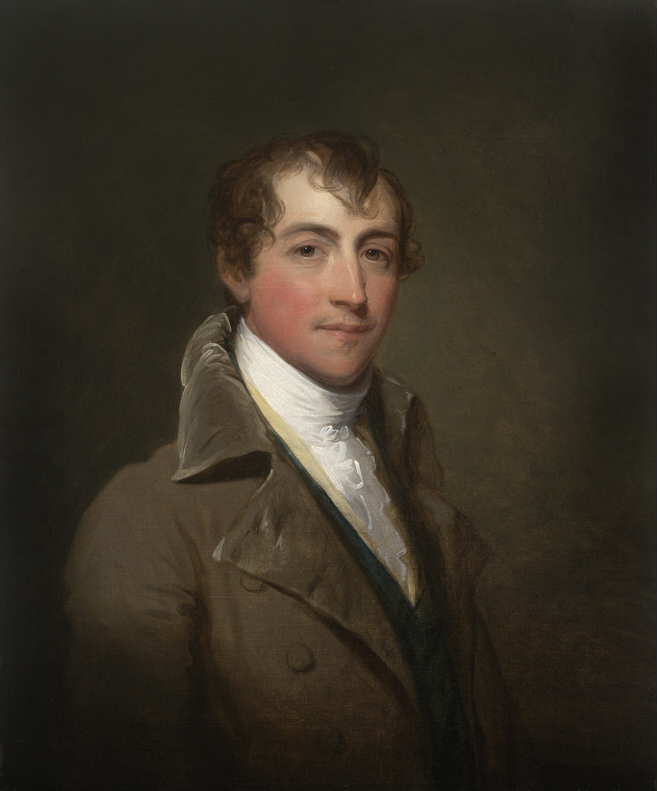
Historical · U.S. House · New York · District 5
Philip Schuyler
Former U.S. Representative · New York District 5 · 1817–1819 · Federalist
Philip Schuyler represented New York's District 5 in the United States House of Representatives (1817–1819) for the Federalist party. The page below collects sourced biographical facts, term history, committee roles, and provenance for Schuyler.
Bioguide ID: S000153
Key facts
- Full name
- Philip Schuyler
- State
- New York
- District
- District 5
- Party
- Federalist
- House service
- 1817–1819
- First House term
- 1817
- Status
- Left office
- Current term ends
- —
- Born
- 1768
- Bioguide ID
- S000153
- Committee assignments
- —
- Dataset version
- 1.20260606
Biographical narrative
1,012 words · sourced from the Wikipedia REST extract
Philip Schuyler was an American politician who served as a U.S. Representative for New York's 5th congressional district. A member of the Federalist Party, he held office in the House of Representatives from 1817 until 1819. Born into a prominent family with deep roots in American history, Schuyler's life and career were shaped by his lineage and the socio-political landscape of his time. He was the son of Revolutionary War General Philip Schuyler and Catherine Van Rensselaer, and he was part of a family that included notable figures such as his sisters Angelica Schuyler, Elizabeth Schuyler Hamilton, and Margarita Schuyler Van Rensselaer. His connections to influential families in New York, including the Van Cortlandts and Livingstons, further underscored his status in early American society.
Early life and career
Philip Jeremiah Schuyler was born on January 21, 1768, into a distinguished family in New York. His father, General Philip Schuyler, was a significant military leader during the American Revolutionary War, while his mother, Catherine Van Rensselaer, was part of a prominent Dutch family in the region. Growing up in such an environment, Schuyler received a private education, which was typical for children of affluent families during that era. This educational background likely provided him with the skills and knowledge that would later serve him in his political career.
In 1796, Schuyler moved to Rhinebeck, New York, where he established a residence known as "The Grove." This estate became a focal point for his activities, as he managed various farms and properties owned by his family and his wife's family throughout upstate New York. His involvement in agriculture and land management reflected the economic practices of the time, as many prominent families engaged in farming as a means of sustaining their wealth and influence.
Schuyler's military career began with his service in the New York Militia, where he achieved the rank of major before resigning in 1799. His military experience was further solidified during the War of 1812, where he served as a colonel. This military background not only contributed to his personal development but also enhanced his standing within the community, as military service was highly regarded in early American society.
In addition to his military service, Schuyler was active in local politics. He served in the New York State Assembly during the 21st and 22nd legislatures, representing Dutchess County and Albany County, respectively. His political career at the state level laid the groundwork for his subsequent election to the U.S. Congress, where he would continue to engage with the political issues of his time.
House tenure
Philip Schuyler was elected as a Federalist to the 15th United States Congress, beginning his term on March 4, 1817. His tenure in the House of Representatives lasted until March 3, 1819. As a member of the Federalist Party, Schuyler was part of a political group that advocated for a strong central government and supported policies that favored commerce and industry. The Federalists were particularly influential in the early years of the republic, although their power began to wane in the years following the War of 1812.
During his time in Congress, Schuyler participated in the legislative process at a pivotal moment in American history. The post-war period was characterized by significant changes, including the expansion of the United States and the growing tensions between different political factions. Schuyler's background and connections likely provided him with insights into the needs and concerns of his constituents, as well as the broader national issues facing the country.
Although specific details about his legislative activities are not provided, it can be inferred that Schuyler's contributions would have been shaped by the priorities of the Federalist Party and the interests of his district. His experience in the New York State Assembly would have also informed his approach to governance at the federal level, as he navigated the complexities of national legislation.
After completing his term in the House, Schuyler did not seek re-election, marking the end of his congressional career. His departure from Congress coincided with a broader decline in the influence of the Federalist Party, which struggled to maintain its relevance in the changing political landscape of the early 19th century.
Legislative focus and committees
While specific information regarding Schuyler's committee assignments and legislative focus during his time in the House of Representatives is not detailed in the available records, it is reasonable to assume that, as a Federalist, he would have been involved in discussions and decisions related to economic policy, national defense, and the role of the federal government. The Federalist Party was known for advocating a strong national government and promoting policies that supported commerce and industry, which were critical issues during the post-Revolutionary War era.
Given Schuyler's background in agriculture and land management, he may have also had an interest in legislation related to land use, agriculture, and rural development. His connections to influential families and his experience in local politics would have provided him with a unique perspective on the needs of his constituents, particularly those involved in farming and land ownership.
Schuyler's military service, particularly during the War of 1812, may have also influenced his legislative priorities. Issues related to national security, military funding, and veterans' affairs were significant during this period, and his experience as a colonel could have informed his views on these matters.
After his congressional career, Schuyler returned to his estate in Rhinebeck, where he continued to manage his family's properties and engage with the local community. His legacy includes not only his political contributions but also his role as a member of a prominent family that played a significant part in the early history of the United States. Philip Schuyler passed away on February 21, 1835, and was buried in New York Marble Cemetery, with his remains later moved to Poughkeepsie Rural Cemetery.
In summary, Philip Schuyler's life and career reflect the complexities of early American politics and society. His connections to influential families, military service, and political involvement in both state and federal government illustrate the multifaceted nature of his contributions to the nation.
Notable legislation
Sponsored and co-sponsored legislation for Philip Schuyler is pending operator curation. The biographical narrative above carries the same provenance trail until per-bill rows are written.
Sources
- [1]https://en.wikipedia.org/wiki/Philip_Jeremiah_SchuylerWikipedia · retrieved 2026-06-06
Notable quotes
Sourced quotes for Philip Schuyler are pending operator curation. Narrative-scope provenance remains attached below.
Sources
- [1]https://en.wikipedia.org/wiki/Philip_Jeremiah_SchuylerWikipedia · retrieved 2026-06-06
Key positions
Curated policy positions for Philip Schuyler are pending operator review. The biographical narrative above carries the same provenance trail until per-topic positions are written.
Sources
- [1]https://en.wikipedia.org/wiki/Philip_Jeremiah_SchuylerWikipedia · retrieved 2026-06-06
Terms served
- 1817–1819U.S. House · Term 1 · Federalist
Sources & provenance
Every attributable claim above carries a per-section [N] marker that resolves to the corresponding URL below. Each entry records the upstream provider, the canonical URL, and the timestamp at which the source was retrieved by the ingest pipeline.
Key facts
- https://bioguide.congress.gov/search/bio/S000153bioguide · retrieved 2026-06-06
- https://www.govtrack.us/congress/members/409660govtrack · retrieved 2026-06-06
Biographical narrative
- https://en.wikipedia.org/wiki/Philip_Jeremiah_Schuylerwikipedia · retrieved 2026-06-06
Find your representative
Every U.S. state elects representatives by district. Browse New York’s delegation, the full former-representative roster, or explore the role and term length.
Related on The Candidate
- Preceded by Thomas GrosvenorEarlier holder of the New York District 5 House seat · Federalist.Open
- Succeeded by Walter PattersonLater holder of the New York District 5 House seat · Federalist.Open
- Abel HuntingtonFormer U.S. Representative · New York District 1 · JacksonOpen
- Alfred ChapinFormer U.S. Representative · New York District 1 · DemocraticOpen
- Cadwallader ColdenFormer U.S. Representative · New York District 1 · FederalistOpen
- Charles FloydFormer U.S. Representative · New York District 1 · DemocraticOpen