
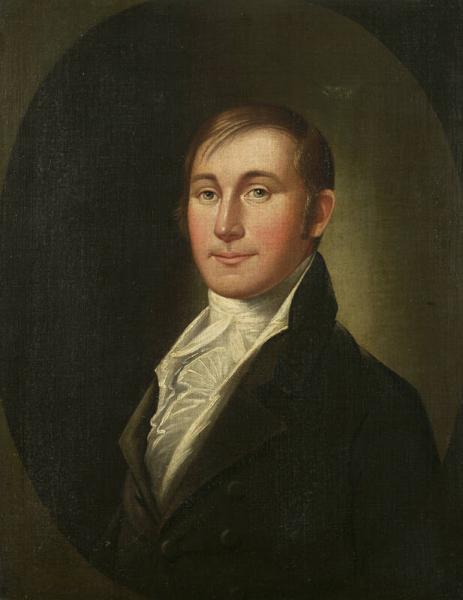
Historical · U.S. House · New York · District 6
Herman Knickerbocker
Former U.S. Representative · New York District 6 · 1809–1811 · Federalist
Herman Knickerbocker represented New York's District 6 in the United States House of Representatives (1809–1811) for the Federalist party. The page below collects sourced biographical facts, term history, committee roles, and provenance for Knickerbocker.
Bioguide ID: K000282
Key facts
- Full name
- Herman Knickerbocker
- State
- New York
- District
- District 6
- Party
- Federalist
- House service
- 1809–1811
- First House term
- 1809
- Status
- Left office
- Current term ends
- —
- Born
- 1779
- Bioguide ID
- K000282
- Committee assignments
- —
- Dataset version
- 1.20260606
Biographical narrative
923 words · sourced from the Wikipedia REST extract
Herman Knickerbocker was a U.S. Representative from New York who served in the early 19th century as a member of the Federalist Party. His tenure in the House of Representatives began in 1809 and concluded in 1811. Born on July 27, 1779, in Albany, New York, Knickerbocker was part of a prominent family with deep roots in the region's history. His career spanned various roles, including military service and local government, before he transitioned into state and federal politics. He is also noted for his connections to the early American literary scene, particularly through his association with Washington Irving.
Early life and career
Herman Knickerbocker was born into a family with a significant historical background in Albany, New York. His father, Johannes Knickerbocker, and grandfather, Colonel Johannes Knickerbocker, played notable roles in the local community, particularly during the American Revolutionary War. The family lineage traces back to Harmen Jansen Knickerbocker, an early settler from Friesland in the Netherlands. This heritage likely influenced Knickerbocker's sense of identity and community engagement.
Knickerbocker pursued his education in preparatory studies before entering the legal profession. He studied law under the guidance of John Vernon Henry and John Bird, gaining admission to the bar in 1803. Following his admission, he commenced his legal practice in Albany, later relocating to Schaghticoke, a nearby town. In Schaghticoke, he earned the nickname "the Prince of Schaghticoke," a title attributed to his reputation for hospitality and generosity. His legal career and community involvement laid the foundation for his future political aspirations.
In addition to his legal work, Knickerbocker was active in the local militia during the early 1800s. He began his military service as the captain of a cavalry troop and was later promoted to major in the 3rd Cavalry Regiment of New York. His involvement in the militia demonstrated his commitment to public service and community defense, which were valued traits during a time when the nation was still solidifying its identity and governance structures.
Knickerbocker's political career began to take shape when he served as the town supervisor of Schaghticoke on multiple occasions, including terms in 1805 to 1806, 1813, and from 1818 to 1826. His local governance experience provided him with insights into the needs and concerns of his constituents, which would later inform his legislative priorities.
House tenure
In 1808, Herman Knickerbocker was elected to the Eleventh Congress as a member of the Federalist Party, representing New York's 6th congressional district. His term in the House of Representatives commenced on March 4, 1809, and concluded on March 3, 1811. During his time in Congress, Knickerbocker focused on addressing the economic challenges faced by his constituents, particularly those stemming from the Embargo Act of 1807, which had significant repercussions for trade and commerce.
Knickerbocker's maiden speech in the House reportedly addressed the adverse effects of the embargo on the local economy, highlighting the financial distress experienced by his constituents. His ability to articulate these concerns resonated with his fellow members, as evidenced by the reaction to his speech. Although he was not a candidate for reelection in 1810, his tenure in Congress was marked by his commitment to representing the interests of his district during a tumultuous period in American history.
In addition to his congressional duties, Knickerbocker's political views evolved over time. He opposed U.S. involvement in the War of 1812, reflecting a cautious approach to military engagement that was characteristic of some Federalist leaders during this era. After his congressional term, he continued his public service by serving in the New York State Assembly in 1816, further solidifying his role in state politics.
Legislative focus and committees
Throughout his congressional career, Herman Knickerbocker's legislative focus was primarily on economic issues, particularly those affecting his constituents in New York. His concerns about the Embargo Act of 1807 were central to his advocacy in the House, as he sought to alleviate the economic hardships that arose from the restrictions on trade. The embargo had been implemented by President Thomas Jefferson's administration as a response to international conflicts, but it faced significant opposition from various sectors of American society, particularly in commercial regions like New York.
Knickerbocker's engagement with these economic issues was indicative of the broader challenges faced by the Federalist Party during this period, as they struggled to maintain influence in the face of growing Democratic-Republican dominance. His ability to articulate the economic plight of his constituents demonstrated his commitment to their welfare and his understanding of the intersection between local and national policies.
In addition to his legislative work, Knickerbocker's involvement in local government and the militia provided him with a comprehensive perspective on the needs of his community. His experiences in these roles likely informed his approach to governance and public service, emphasizing the importance of local engagement in addressing broader political issues.
After leaving Congress, Knickerbocker's political affiliations shifted as he became an adherent of Andrew Jackson in the mid-1820s, ultimately joining the Democratic Party. This transition reflected the evolving political landscape of the time and highlighted Knickerbocker's adaptability to changing political currents.
Herman Knickerbocker's legacy extends beyond his congressional service. He is remembered for his contributions to local governance, military service, and his role in the early political landscape of New York. His connections to prominent figures in American literature, particularly through Washington Irving, further underscore the cultural context in which he operated. Knickerbocker passed away on January 30, 1855, and is interred in the Knickerbocker family cemetery in Schaghticoke, leaving behind a multifaceted legacy in both politics and community service.
Notable legislation
Sponsored and co-sponsored legislation for Herman Knickerbocker is pending operator curation. The biographical narrative above carries the same provenance trail until per-bill rows are written.
Sources
- [1]https://en.wikipedia.org/wiki/Herman_KnickerbockerWikipedia · retrieved 2026-06-06
Notable quotes
Sourced quotes for Herman Knickerbocker are pending operator curation. Narrative-scope provenance remains attached below.
Sources
- [1]https://en.wikipedia.org/wiki/Herman_KnickerbockerWikipedia · retrieved 2026-06-06
Key positions
Curated policy positions for Herman Knickerbocker are pending operator review. The biographical narrative above carries the same provenance trail until per-topic positions are written.
Sources
- [1]https://en.wikipedia.org/wiki/Herman_KnickerbockerWikipedia · retrieved 2026-06-06
Terms served
- 1809–1811U.S. House · Term 1 · Federalist
Sources & provenance
Every attributable claim above carries a per-section [N] marker that resolves to the corresponding URL below. Each entry records the upstream provider, the canonical URL, and the timestamp at which the source was retrieved by the ingest pipeline.
Key facts
- https://bioguide.congress.gov/search/bio/K000282bioguide · retrieved 2026-06-06
- https://www.govtrack.us/congress/members/406439govtrack · retrieved 2026-06-06
Biographical narrative
- https://en.wikipedia.org/wiki/Herman_Knickerbockerwikipedia · retrieved 2026-06-06
Find your representative
Every U.S. state elects representatives by district. Browse New York’s delegation, the full former-representative roster, or explore the role and term length.
Related on The Candidate
- Preceded by Daniel VerplanckEarlier holder of the New York District 6 House seat · Republican.Open
- Succeeded by Asa FitchLater holder of the New York District 6 House seat · Federalist.Open
- Abel HuntingtonFormer U.S. Representative · New York District 1 · JacksonOpen
- Alfred ChapinFormer U.S. Representative · New York District 1 · DemocraticOpen
- Cadwallader ColdenFormer U.S. Representative · New York District 1 · FederalistOpen
- Charles FloydFormer U.S. Representative · New York District 1 · DemocraticOpen