
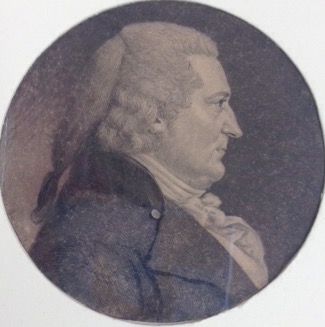
Historical · U.S. House · New York · District 6
Hezekiah Hosmer
Former U.S. Representative · New York District 6 · 1797–1799 · Federalist
Hezekiah Hosmer represented New York's District 6 in the United States House of Representatives (1797–1799) for the Federalist party. The page below collects sourced biographical facts, term history, committee roles, and provenance for Hosmer.
Bioguide ID: H000803
Key facts
- Full name
- Hezekiah Hosmer
- State
- New York
- District
- District 6
- Party
- Federalist
- House service
- 1797–1799
- First House term
- 1797
- Status
- Left office
- Current term ends
- —
- Born
- 1765
- Bioguide ID
- H000803
- Committee assignments
- —
- Dataset version
- 1.20260606
Biographical narrative
975 words · sourced from the Wikipedia REST extract
Hezekiah Hosmer was a notable figure in early American politics, serving as a United States Representative from New York during the late 18th century. A member of the Federalist Party, he was elected to the Fifth Congress, where he participated in significant legislative activities, including impeachment proceedings. Born into a prominent family with a legacy of public service, Hosmer's career was marked by his legal expertise and contributions to local governance. He ultimately served a single term in the House of Representatives, concluding his congressional service in 1799. Following his time in Congress, he continued to engage in local politics and community affairs until his death in 1814.
Early life and career
Hezekiah Hosmer was born on June 7, 1765, into a family with deep roots in public service. His father, Titus Hosmer, was a signatory of the Articles of Confederation representing Connecticut, highlighting a family tradition of political involvement. This background likely influenced Hosmer's own aspirations and career choices. Hezekiah pursued an education in law, which was a common path for many individuals seeking to enter public service during this period. After completing his studies, he was admitted to practice law in the mayor's court of Hudson, New York, a significant step that allowed him to establish a legal career.
In addition to his legal practice, Hosmer held various local government positions. He served as the recorder of Hudson, a role he occupied in the years 1793 and 1794. The position of recorder involved maintaining official records and documents for the city, which was an important function in the administration of local governance. This experience likely provided him with insights into the workings of government and the legal system, further preparing him for his future role in the U.S. Congress.
Hosmer's legal and political career was characterized by a commitment to public service and community engagement. His early experiences in Hudson laid the groundwork for his later political ambitions, as he became more involved in the Federalist Party, which was one of the first political parties in the United States. The Federalists were known for their support of a strong national government and their advocacy for policies that promoted commerce and trade, which were critical issues during the formative years of the nation.
House tenure
Hezekiah Hosmer was elected to the United States House of Representatives as a member of the Federalist Party, beginning his term on March 4, 1797. He served in the Fifth Congress, which was a critical period in the early history of the United States as the nation was still establishing its legislative framework and addressing various domestic and foreign challenges. His tenure in the House lasted until March 3, 1799, marking a significant chapter in his political career.
During his time in Congress, Hosmer was involved in key legislative activities, including his role as one of the impeachment managers appointed by the House of Representatives in 1798. This appointment was part of the proceedings against Tennessee U.S. Senator William Blount, who was accused of conspiring with the British to incite Native American attacks against Spanish Florida. The impeachment of Blount was one of the first significant political trials in the United States, and Hosmer's involvement in this process underscored his active participation in the legislative responsibilities of the House.
Although Hosmer served only one term, his contributions during this period were part of the broader efforts of the Federalist Party to shape the early legislative agenda of the United States. The Federalists were instrumental in establishing policies that would influence the nation's economic development and foreign relations. Hosmer's legal background and understanding of governance likely informed his contributions to discussions and decisions made during his time in office.
After completing his term in Congress, Hosmer returned to local governance and continued to be active in his community. His experience in the House of Representatives and his legal expertise positioned him well for ongoing involvement in public service.
Legislative focus and committees
While specific details regarding Hosmer's committee assignments during his congressional tenure are not documented, his role as an impeachment manager indicates his engagement with significant legislative matters of the time. The impeachment proceedings against Senator Blount were not only a test of the young nation's political institutions but also a reflection of the contentious political climate of the late 18th century. The Federalist Party, to which Hosmer belonged, was often at odds with the Democratic-Republican Party, leading to a dynamic and sometimes tumultuous legislative environment.
As a member of the Federalist Party, Hosmer likely supported policies that favored a strong central government and a robust economic framework. The Federalists advocated for policies that promoted commerce, a national bank, and a strong military, all of which were pivotal issues in the early years of the republic. Although specific legislative initiatives that Hosmer may have championed are not detailed, his alignment with the Federalist agenda suggests a focus on these critical areas.
Following his congressional service, Hosmer returned to Hudson, where he continued to engage in local governance. He resumed his role as recorder of Hudson in the years 1810, 1811, 1813, and 1814, indicating his sustained commitment to public service at the local level. His legal background and experience in Congress likely informed his contributions to local governance, as he worked to address community needs and uphold the rule of law.
Hezekiah Hosmer's life and career exemplify the early political landscape of the United States, characterized by the establishment of governance structures and the active participation of individuals in shaping the nation's future. His contributions to both local and national politics reflect the interconnectedness of these spheres during a formative period in American history. Hosmer passed away in Hudson on June 9, 1814, leaving behind a legacy of public service and a family that continued to engage in significant legal and political roles in subsequent generations.
Notable legislation
Sponsored and co-sponsored legislation for Hezekiah Hosmer is pending operator curation. The biographical narrative above carries the same provenance trail until per-bill rows are written.
Sources
- [1]https://en.wikipedia.org/wiki/Hezekiah_L._HosmerWikipedia · retrieved 2026-06-06
Notable quotes
Sourced quotes for Hezekiah Hosmer are pending operator curation. Narrative-scope provenance remains attached below.
Sources
- [1]https://en.wikipedia.org/wiki/Hezekiah_L._HosmerWikipedia · retrieved 2026-06-06
Key positions
Curated policy positions for Hezekiah Hosmer are pending operator review. The biographical narrative above carries the same provenance trail until per-topic positions are written.
Sources
- [1]https://en.wikipedia.org/wiki/Hezekiah_L._HosmerWikipedia · retrieved 2026-06-06
Terms served
- 1797–1799U.S. House · Term 1 · Federalist
Sources & provenance
Every attributable claim above carries a per-section [N] marker that resolves to the corresponding URL below. Each entry records the upstream provider, the canonical URL, and the timestamp at which the source was retrieved by the ingest pipeline.
Key facts
- https://bioguide.congress.gov/search/bio/H000803bioguide · retrieved 2026-06-06
- https://www.govtrack.us/congress/members/405652govtrack · retrieved 2026-06-06
Biographical narrative
- https://en.wikipedia.org/wiki/Hezekiah_L._Hosmerwikipedia · retrieved 2026-06-06
Find your representative
Every U.S. state elects representatives by district. Browse New York’s delegation, the full former-representative roster, or explore the role and term length.
Related on The Candidate
- Preceded by Ezekiel GilbertEarlier holder of the New York District 6 House seat · Federalist.Open
- Succeeded by John Van NessLater holder of the New York District 6 House seat · Republican.Open
- Abel HuntingtonFormer U.S. Representative · New York District 1 · JacksonOpen
- Alfred ChapinFormer U.S. Representative · New York District 1 · DemocraticOpen
- Cadwallader ColdenFormer U.S. Representative · New York District 1 · FederalistOpen
- Charles FloydFormer U.S. Representative · New York District 1 · DemocraticOpen