
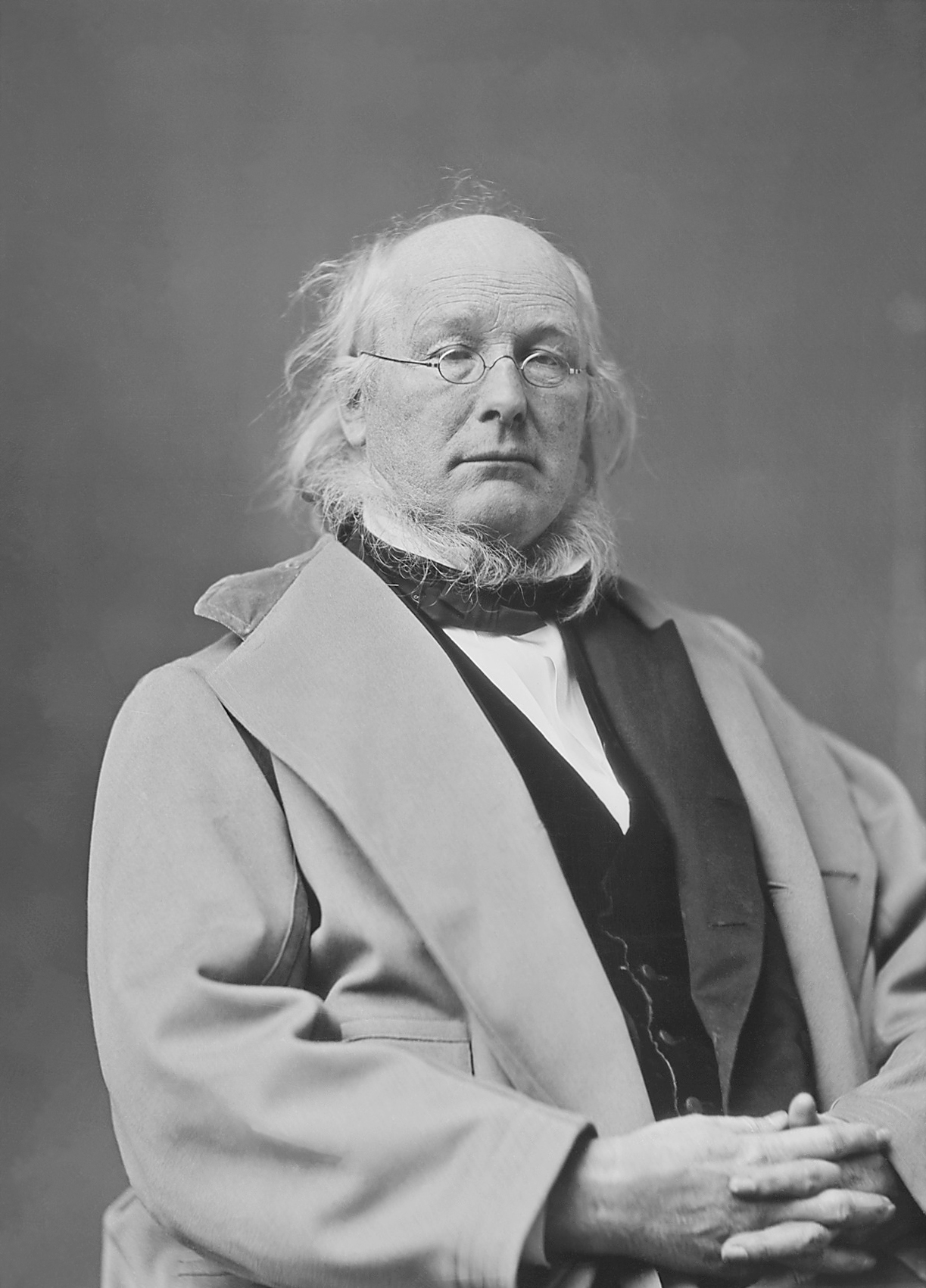
Historical · U.S. House · New York · District 6
Horace Greeley
Former U.S. Representative · New York District 6 · 1847–1849 · Whig
Horace Greeley represented New York's District 6 in the United States House of Representatives (1847–1849) for the Whig party. The page below collects sourced biographical facts, term history, committee roles, and provenance for Greeley.
Bioguide ID: G000405
Key facts
- Full name
- Horace Greeley
- State
- New York
- District
- District 6
- Party
- Whig
- House service
- 1847–1849
- First House term
- 1847
- Status
- Left office
- Current term ends
- —
- Born
- 1811
- Bioguide ID
- G000405
- Committee assignments
- —
- Dataset version
- 1.20260606
Biographical narrative
961 words · sourced from the Wikipedia REST extract
Horace Greeley was a prominent American newspaper editor, publisher, and politician who served as a U.S. Representative from New York's 6th congressional district. A member of the Whig Party, Greeley's tenure in the House of Representatives was brief, lasting from 1847 until 1849. He is best known for founding and editing the influential New-York Tribune, which became one of the highest-circulating newspapers in the United States during his time. Greeley's political career was marked by his advocacy for various social reforms and his involvement in the early Republican Party, as well as his later candidacy for the presidency.
Early life and career
Horace Greeley was born on February 3, 1811, in a rural setting near Amherst, New Hampshire. He was the son of Zaccheus and Mary (Woodburn) Greeley, who struggled financially, moving several times in search of better opportunities. Greeley's early life was marked by hardship, and it is suggested that he experienced a significant health challenge at birth, which may have contributed to his later eccentric behaviors. His paternal lineage traced back to early English settlers in New England, while his maternal ancestors were Scots-Irish immigrants.
Despite the family's financial difficulties, Greeley demonstrated exceptional intelligence and a strong desire for education. He attended local schools and was recognized for his academic abilities. Although neighbors offered to fund his education at Phillips Exeter Academy, his family declined the assistance. In 1820, the Greeley family relocated to Vermont to escape debt, where Horace continued to pursue his education through voracious reading, often utilizing a neighbor's library.
At the age of 15, Greeley began an apprenticeship as a printer with Amos Bliss, the editor of the Northern Spectator in East Poultney, Vermont. This experience laid the foundation for his future career in journalism. After the newspaper ceased operations in 1830, Greeley briefly moved to Erie, Pennsylvania, to join his family. He worked at the Erie Gazette while also exploring opportunities in the newspaper industry.
In late 1831, Greeley moved to New York City, where he sought to establish himself in the competitive world of journalism. Initially, he found only short-term employment but persevered. He worked for the Spirit of the Times and later attempted to launch his own publications, including the New York Morning Post, which ultimately failed. Despite setbacks, he continued to pursue his passion for writing and publishing, launching the thrice-weekly Constitutionalist and the literary magazine The New-Yorker in 1834. The latter achieved a circulation of 9,000 but eventually succumbed to the economic downturn known as the Panic of 1837.
Greeley's early experiences in publishing and his growing involvement in the Whig Party's political activities set the stage for his later prominence as a political figure. His editorial work and advocacy for various causes began to gain him recognition and influence within the political landscape of the time.
House tenure
Greeley's political career in the U.S. House of Representatives began when he was elected to represent New York's 6th congressional district as a member of the Whig Party. His term commenced in 1847 and concluded in 1849. During his brief tenure, Greeley was known for his outspoken nature and his willingness to investigate congressional matters through his newspaper, the New-York Tribune. This approach garnered both support and criticism, as it was not common for a sitting congressman to engage in such public scrutiny of the legislative body.
While in Congress, Greeley focused on issues that aligned with his political beliefs, advocating for policies that reflected the Whig Party's platform. His time in the House was characterized by his commitment to reform and his desire to address the pressing social and economic issues of the day. However, Greeley's congressional career was short-lived, and he did not seek re-election after his term ended in March 1849.
Despite the brevity of his time in the House, Greeley's political activities did not cease. He continued to be an influential figure in American politics, particularly through his editorial work. His newspaper, the New-York Tribune, became a platform for discussing various political issues, and he used it to promote his views on social reforms and the direction of the nation.
Legislative focus and committees
During his time in the House of Representatives, Greeley was primarily focused on issues that resonated with the Whig Party's principles, including economic development, social reform, and the promotion of individual opportunity. His commitment to these ideals was evident in his editorial work, where he championed various causes, including the settlement of the American West, which he viewed as a land of opportunity for the unemployed and young individuals seeking a better life.
Greeley's advocacy extended beyond economic issues; he was also a proponent of radical reforms, including socialism, vegetarianism, agrarianism, feminism, and temperance. His newspaper played a crucial role in popularizing these ideas, and he hired a diverse range of writers and thinkers to contribute to the Tribune, reflecting his belief in the importance of a broad discourse on social issues.
Although Greeley served on no specific committees during his short congressional tenure, his influence was felt through his editorial work and his ability to shape public opinion. His alignment with prominent political figures, such as William H. Seward and Thurlow Weed, helped him navigate the political landscape of the time and contributed to his later involvement in the founding of the Republican Party in 1854.
In summary, Horace Greeley's time in the U.S. House of Representatives was marked by his commitment to reform and his efforts to address the pressing issues of his era. While his congressional career was brief, his legacy as a journalist and political activist continued to shape American discourse long after his departure from the House. Greeley's contributions to journalism and politics remain significant, reflecting his enduring influence on the development of American society.
Notable legislation
Sponsored and co-sponsored legislation for Horace Greeley is pending operator curation. The biographical narrative above carries the same provenance trail until per-bill rows are written.
Sources
- [1]https://en.wikipedia.org/wiki/Horace_GreeleyWikipedia · retrieved 2026-06-06
Notable quotes
Sourced quotes for Horace Greeley are pending operator curation. Narrative-scope provenance remains attached below.
Sources
- [1]https://en.wikipedia.org/wiki/Horace_GreeleyWikipedia · retrieved 2026-06-06
Key positions
Curated policy positions for Horace Greeley are pending operator review. The biographical narrative above carries the same provenance trail until per-topic positions are written.
Sources
- [1]https://en.wikipedia.org/wiki/Horace_GreeleyWikipedia · retrieved 2026-06-06
Terms served
- 1847–1849U.S. House · Term 1 · Whig
Sources & provenance
Every attributable claim above carries a per-section [N] marker that resolves to the corresponding URL below. Each entry records the upstream provider, the canonical URL, and the timestamp at which the source was retrieved by the ingest pipeline.
Key facts
- https://bioguide.congress.gov/search/bio/G000405bioguide · retrieved 2026-06-06
- https://www.govtrack.us/congress/members/404755govtrack · retrieved 2026-06-06
Biographical narrative
- https://en.wikipedia.org/wiki/Horace_Greeleywikipedia · retrieved 2026-06-06
Find your representative
Every U.S. state elects representatives by district. Browse New York’s delegation, the full former-representative roster, or explore the role and term length.
Related on The Candidate
- Preceded by William CampbellEarlier holder of the New York District 6 House seat · American.Open
- Succeeded by James BrooksLater holder of the New York District 6 House seat · Democratic.Open
- Abel HuntingtonFormer U.S. Representative · New York District 1 · JacksonOpen
- Alfred ChapinFormer U.S. Representative · New York District 1 · DemocraticOpen
- Cadwallader ColdenFormer U.S. Representative · New York District 1 · FederalistOpen
- Charles FloydFormer U.S. Representative · New York District 1 · DemocraticOpen