
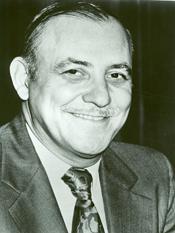
Historical · U.S. House · New York · District 6
Joseph Addabbo
Former U.S. Representative · New York District 6 · 1961–1987 · Democratic
Joseph Addabbo represented New York's District 6 in the United States House of Representatives (1961–1987) for the Democratic party. The page below collects sourced biographical facts, term history, committee roles, and provenance for Addabbo.
Bioguide ID: A000052
Key facts
- Full name
- Joseph Addabbo
- State
- New York
- District
- District 6
- Party
- Democratic
- House service
- 1961–1987
- First House term
- 1961
- Status
- Left office
- Current term ends
- —
- Born
- 1925
- Bioguide ID
- A000052
- Committee assignments
- —
- Dataset version
- 1.20260605
Biographical narrative
978 words · sourced from the Wikipedia REST extract
Joseph P. Addabbo was a prominent American politician who served as a Democratic member of the United States House of Representatives for New York's 6th congressional district from 1961 until his death in 1986. Born on March 17, 1925, in Queens, New York, Addabbo dedicated his life to public service and was known for his significant contributions to legislative discussions, particularly in the area of defense spending. His tenure in Congress spanned 13 terms, during which he became a notable figure in the realm of appropriations and budgetary matters, especially as the chairman of the House Appropriations Subcommittee on Defense in the 1980s.
Early life and career
Joseph Patrick Addabbo was born and raised in Queens, New York, where he spent the entirety of his life. His educational journey culminated in a law degree from St. John's Law School in 1946. Following his graduation, he embarked on a career in law, practicing in Ozone Park, a neighborhood in Queens. His legal background provided him with a foundation for his future political career, equipping him with the skills necessary for navigating the complexities of legislative processes.
Addabbo's entry into politics was marked by his election to the U.S. House of Representatives in 1960. He was chosen as the Democratic nominee to succeed Albert H. Bosch, a Republican who had vacated his seat to pursue a career in the judiciary. Addabbo's political ascent was indicative of the shifting demographics and political landscape of Queens during this period. His election was not only a reflection of his personal ambitions but also of the broader trends within New York City politics, where the Democratic Party was gaining strength.
House tenure
Addabbo's congressional career began in 1961, and he quickly established himself as a dedicated public servant. Over the course of his 13 terms, he became known for his commitment to his constituents and his active participation in legislative affairs. His tenure was characterized by a focus on issues that resonated with the residents of his district, which included a significant Italian-American population.
In 1979, Addabbo was appointed chairman of the House Appropriations Subcommittee on Defense, a position that placed him at the forefront of national discussions regarding military spending. During the early 1980s, he became a vocal critic of President Ronald Reagan's defense budget proposals, which he believed were excessive. Addabbo's role as chairman allowed him to influence defense appropriations significantly, and he often engaged in public debates regarding the allocation of federal funds for military initiatives.
Throughout his time in Congress, Addabbo was known for his efforts to advocate for reduced defense spending. He frequently called for substantial cuts to the administration's budget, arguing that the proposed increases were unwarranted. His proposals often included significant reductions, such as a notable attempt to slash Reagan's defense spending plan by $30 billion in 1983. While many of his initiatives did not succeed in achieving their intended outcomes, Addabbo was able to eliminate funding for specific military projects, including the MX and Pershing II missiles in 1982. His tenure was marked by a commitment to fiscal responsibility and a belief in prioritizing domestic needs over military expenditures.
Despite his strong position within the Democratic Party and his historical electoral success, Addabbo faced challenges in his later campaigns. A significant reapportionment following the 1980 census altered the demographics of his district, leading to an increase in the African American population in Jamaica, Queens. This change posed a challenge to Addabbo, as it shifted the political landscape and introduced new dynamics into his electoral base. The demographic changes resulted in a more competitive political environment, leading to a strong primary challenge from Simeon Golar, a black real estate developer, in 1982. Although Addabbo managed to secure victory in that election, the changing demographics continued to pose challenges in subsequent elections.
Legislative focus and committees
Throughout his congressional career, Joseph P. Addabbo was particularly focused on issues related to defense spending and budgetary concerns. His role as chairman of the House Appropriations Subcommittee on Defense allowed him to shape discussions around military funding and appropriations. He was known for his critical stance on the Reagan administration's defense policies, advocating for a more balanced approach to federal spending that prioritized social programs and domestic needs.
In addition to his work on defense appropriations, Addabbo's legislative focus extended to various other areas that were significant to his constituents. He championed initiatives aimed at improving healthcare access and affordability, reflecting his commitment to public health issues. His advocacy for healthcare reform was recognized as a vital aspect of his legacy, and he was instrumental in promoting policies that aimed to enhance the well-being of his constituents.
Addabbo's contributions to Congress were not limited to his committee work; he was also an active participant in broader legislative discussions. His ability to articulate the concerns of his district and engage with national issues made him a respected figure among his peers. His tenure in Congress was characterized by a dedication to public service, and he worked diligently to represent the interests of his constituents.
Despite facing health challenges in the latter part of his career, Addabbo remained committed to his work in Congress until his passing on April 10, 1986. His death marked the end of a significant chapter in New York politics, and he was remembered for his contributions to the legislative process and his advocacy for the people of his district.
Joseph P. Addabbo's legacy continues to resonate in the political landscape of Queens. His son, Joseph P. Addabbo Jr., followed in his footsteps, serving as a representative in the New York City Council and later in the New York State Senate. Additionally, the Joseph P. Addabbo Family Health Center in Queens stands as a testament to his commitment to healthcare access, named in honor of his efforts to champion affordable healthcare during his time in Congress.
Notable legislation
Sponsored and co-sponsored legislation for Joseph Addabbo is pending operator curation. The biographical narrative above carries the same provenance trail until per-bill rows are written.
Sources
- [1]https://en.wikipedia.org/wiki/Joseph_P._AddabboWikipedia · retrieved 2026-06-05
Notable quotes
Sourced quotes for Joseph Addabbo are pending operator curation. Narrative-scope provenance remains attached below.
Sources
- [1]https://en.wikipedia.org/wiki/Joseph_P._AddabboWikipedia · retrieved 2026-06-05
Key positions
Curated policy positions for Joseph Addabbo are pending operator review. The biographical narrative above carries the same provenance trail until per-topic positions are written.
Sources
- [1]https://en.wikipedia.org/wiki/Joseph_P._AddabboWikipedia · retrieved 2026-06-05
Terms served
- 1961–1963U.S. House · Term 1 · Democratic
- 1963–1965U.S. House · Term 2 · Democratic
- 1965–1967U.S. House · Term 3 · Democratic
- 1967–1969U.S. House · Term 4 · Democratic
- 1969–1971U.S. House · Term 5 · Democratic
- 1971–1973U.S. House · Term 6 · Democratic
- 1973–1975U.S. House · Term 7 · Democratic
- 1975–1977U.S. House · Term 8 · Democratic
- 1977–1979U.S. House · Term 9 · Democratic
- 1979–1981U.S. House · Term 10 · Democratic
- 1981–1983U.S. House · Term 11 · Democratic
- 1983–1985U.S. House · Term 12 · Democratic
- 1985–1987U.S. House · Term 13 · Democratic
Sources & provenance
Every attributable claim above carries a per-section [N] marker that resolves to the corresponding URL below. Each entry records the upstream provider, the canonical URL, and the timestamp at which the source was retrieved by the ingest pipeline.
Key facts
- https://bioguide.congress.gov/search/bio/A000052bioguide · retrieved 2026-06-05
- https://www.govtrack.us/congress/members/400713govtrack · retrieved 2026-06-05
Biographical narrative
- https://en.wikipedia.org/wiki/Joseph_P._Addabbowikipedia · retrieved 2026-06-05
Find your representative
Every U.S. state elects representatives by district. Browse New York’s delegation, the full former-representative roster, or explore the role and term length.
Related on The Candidate
- Preceded by Robert Nodar Jr.Earlier holder of the New York District 6 House seat · Republican.Open
- Succeeded by Floyd FlakeLater holder of the New York District 6 House seat · Democratic.Open
- Abel HuntingtonFormer U.S. Representative · New York District 1 · JacksonOpen
- Alfred ChapinFormer U.S. Representative · New York District 1 · DemocraticOpen
- Cadwallader ColdenFormer U.S. Representative · New York District 1 · FederalistOpen
- Charles FloydFormer U.S. Representative · New York District 1 · DemocraticOpen