
Historical · U.S. House · New York · District 6
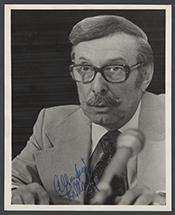
Lester Wolff
Former U.S. Representative · New York District 6 · 1965–1981 · Democratic
Lester Wolff represented New York's District 6 in the United States House of Representatives (1965–1981) for the Democratic party. The page below collects sourced biographical facts, term history, committee roles, and provenance for Wolff.
Bioguide ID: W000680
Key facts
- Full name
- Lester Wolff
- State
- New York
- District
- District 6
- Party
- Democratic
- House service
- 1965–1981
- First House term
- 1965
- Status
- Left office
- Current term ends
- —
- Born
- 1919
- Bioguide ID
- W000680
- Committee assignments
- —
- Dataset version
- 1.20260605
Biographical narrative
967 words · sourced from the Wikipedia REST extract
Lester L. Wolff was a prominent American politician who served as a Democratic member of the United States House of Representatives, representing New York's 6th congressional district. His congressional career spanned from 1965 to 1981, during which he was involved in significant legislative efforts and held various leadership positions. Wolff was known for his active participation in civil rights issues, foreign policy, and his opposition to the Vietnam War. Beyond his political career, he contributed to public discourse through various media and philanthropic endeavors.
Early life and career
Lester Lionel Wolff was born on January 4, 1919, in Manhattan, New York City, to Jewish parents, Hannah and Samuel Wolff. His father worked as a marketer for Ruppert Breweries. Wolff completed his secondary education at George Washington High School in 1935 and went on to earn a degree from New York University in 1939. Following his graduation, he began his career as a lecturer at New York University, a position he held until 1941. He later became a department chair at the City College of New York.
During World War II, Wolff served in the Civil Air Patrol, where he held the rank of squadron commander and was involved in subchasing operations. His early professional life included roles in journalism, where he worked for the Long Island Press and The Bronx Home News. He later founded his own firm that specialized in the food industry and served as the executive director of the New York Conference of Retail Grocers. His media career included producing and hosting a local television program called "Between the Lines" and a celebrity variety show featuring Wendy Barrie. In addition to his professional pursuits, Wolff was active in philanthropy, contributing to organizations such as the United Jewish Appeal and B'nai B'rith.
House tenure
Wolff's political career began in earnest when he was elected to the U.S. House of Representatives in 1964, taking office on January 3, 1965. Initially representing New York's 3rd congressional district, he later served the 6th district following redistricting. Throughout his time in Congress, Wolff was known for his liberal stance and was initially a member of the Republican Party. However, he switched to the Democratic Party, disillusioned by the Republican Party's shift towards conservatism, particularly under the leadership of Barry Goldwater.
During his tenure, Wolff was appointed as chairman of the Asian and Pacific Affairs Committee and the Select Committee on Narcotics Abuse and Control. He was also recognized for his leadership within the Congressional Squadron of the Civil Air Patrol, achieving the rank of colonel. Wolff was an active participant in significant legislative initiatives, including voting for the Voting Rights Act of 1965 and supporting the establishment of Medicare and Medicaid. His commitment to civil rights was evident as he attended the funeral of Martin Luther King Jr. and participated in various civil rights activities.
Wolff's opposition to the Vietnam War was a defining aspect of his congressional career, as he advocated for peace and criticized U.S. military involvement. He was also a proponent of stricter gun control measures. Known for his extensive travel, Wolff frequently engaged in congressional fact-finding tours abroad, which contributed to his understanding of international relations. Notably, he was part of a congressional delegation to China in 1978, where he met with Chinese leader Deng Xiaoping.
In addition to his legislative work, Wolff authored the Taiwan Relations Act, which was signed into law in 1979. He also introduced amendments to the Foreign Assistance Act of 1969 aimed at promoting direct peace talks between Israel and Arab states, and he played a role in the Camp David Accords. Despite his accomplishments, Wolff faced a significant political challenge in 1980 when he was defeated for re-election by Republican candidate John LeBoutillier.
Legislative focus and committees
Throughout his congressional career, Wolff focused on a range of legislative issues, particularly those related to civil rights, foreign policy, and social welfare. His support for the Voting Rights Act of 1965 underscored his commitment to ensuring equal rights for all citizens, while his advocacy for Medicare and Medicaid reflected his dedication to expanding healthcare access.
Wolff's role as chairman of the Asian and Pacific Affairs Committee allowed him to influence U.S. policy towards Asia, particularly during a time of significant geopolitical change. His involvement in the Taiwan Relations Act demonstrated his understanding of the complexities of U.S.-China relations and his commitment to maintaining a constructive relationship with Taiwan.
His opposition to the Vietnam War positioned him as a vocal critic of U.S. military policy, and he sought to promote peace and diplomacy over military intervention. Wolff's advocacy for stricter gun laws indicated his concern for public safety and his belief in the necessity of regulating firearms.
In addition to his legislative achievements, Wolff's extensive travel as a member of Congress allowed him to gain firsthand insights into international issues. His participation in congressional delegations, including the notable trip to China, enhanced his understanding of Asian affairs and contributed to his later work as a consultant and lobbyist.
After leaving Congress, Wolff continued to engage in public service and advocacy. He served as the president of the International Trade and Development Agency and held a directorial position at the Pacific Community Institute at Touro College. His contributions to foreign policy literature included authoring several books, and he hosted a PBS show titled "Ask Congress," which aired for many years.
Wolff's legacy includes his recognition as a significant figure in American politics, particularly for his contributions to civil rights and foreign policy. His life spanned over a century, during which he remained active in public discourse until his death on May 11, 2021. At the time of his passing, he was the oldest living former member of Congress and had made notable contributions to both his community and the nation.
Notable legislation
Sponsored and co-sponsored legislation for Lester Wolff is pending operator curation. The biographical narrative above carries the same provenance trail until per-bill rows are written.
Sources
- [1]https://en.wikipedia.org/wiki/Lester_L._WolffWikipedia · retrieved 2026-06-05
Notable quotes
Sourced quotes for Lester Wolff are pending operator curation. Narrative-scope provenance remains attached below.
Sources
- [1]https://en.wikipedia.org/wiki/Lester_L._WolffWikipedia · retrieved 2026-06-05
Key positions
Curated policy positions for Lester Wolff are pending operator review. The biographical narrative above carries the same provenance trail until per-topic positions are written.
Sources
- [1]https://en.wikipedia.org/wiki/Lester_L._WolffWikipedia · retrieved 2026-06-05
Terms served
- 1965–1967U.S. House · Term 1 · Democratic
- 1967–1969U.S. House · Term 2 · Democratic
- 1969–1971U.S. House · Term 3 · Democratic
- 1971–1973U.S. House · Term 4 · Democratic
- 1973–1975U.S. House · Term 5 · Democratic
- 1975–1977U.S. House · Term 6 · Democratic
- 1977–1979U.S. House · Term 7 · Democratic
- 1979–1981U.S. House · Term 8 · Democratic
Sources & provenance
Every attributable claim above carries a per-section [N] marker that resolves to the corresponding URL below. Each entry records the upstream provider, the canonical URL, and the timestamp at which the source was retrieved by the ingest pipeline.
Key facts
- https://bioguide.congress.gov/search/bio/W000680bioguide · retrieved 2026-06-05
- https://www.govtrack.us/congress/members/411832govtrack · retrieved 2026-06-05
Biographical narrative
- https://en.wikipedia.org/wiki/Lester_L._Wolffwikipedia · retrieved 2026-06-05
Find your representative
Every U.S. state elects representatives by district. Browse New York’s delegation, the full former-representative roster, or explore the role and term length.
Related on The Candidate
- Preceded by Lester HoltzmanEarlier holder of the New York District 6 House seat · Democratic.Open
- Succeeded by John LeBoutillierLater holder of the New York District 6 House seat · Republican.Open
- Abel HuntingtonFormer U.S. Representative · New York District 1 · JacksonOpen
- Alfred ChapinFormer U.S. Representative · New York District 1 · DemocraticOpen
- Cadwallader ColdenFormer U.S. Representative · New York District 1 · FederalistOpen
- Charles FloydFormer U.S. Representative · New York District 1 · DemocraticOpen