
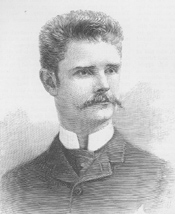
Historical · U.S. House · New York · District 6
Thomas Magner
Former U.S. Representative · New York District 6 · 1889–1895 · Democratic
Thomas Magner represented New York's District 6 in the United States House of Representatives (1889–1895) for the Democratic party. The page below collects sourced biographical facts, term history, committee roles, and provenance for Magner.
Bioguide ID: M000051
Key facts
- Full name
- Thomas Magner
- State
- New York
- District
- District 6
- Party
- Democratic
- House service
- 1889–1895
- First House term
- 1889
- Status
- Left office
- Current term ends
- —
- Born
- 1860
- Bioguide ID
- M000051
- Committee assignments
- —
- Dataset version
- 1.20260606
Biographical narrative
975 words · sourced from the Wikipedia REST extract
Thomas Magner was an American lawyer and politician who served as a U.S. Representative for New York's 6th congressional district from 1889 to 1895. A member of the Democratic Party, Magner's political career spanned three terms in the House of Representatives during a transformative period in American politics. His background as a lawyer and educator informed his legislative priorities and public service. After leaving Congress, he continued to practice law and held a significant position as corporation counsel for the Borough of Brooklyn. Magner's life and career reflect the dynamics of late 19th-century American politics and the evolution of urban governance.
Early life and career
Thomas Magner was born on March 8, 1860, in Brooklyn, New York. Growing up in a vibrant urban environment, he attended local public schools, which provided him with a foundational education. His academic journey continued at St. Xavier College, where he graduated in 1880. Following this, he pursued further studies at Columbia University in New York City, earning his degree in 1882. This educational background not only equipped him with knowledge but also instilled in him a commitment to public service and community engagement.
After completing his education, Magner took on the role of a public school teacher in Brooklyn. This experience in education likely influenced his understanding of the needs and challenges faced by families in his community. His career in education was complemented by his pursuit of a legal career. He studied law and was admitted to the bar in 1883, marking the beginning of his practice as a lawyer in Brooklyn the same year. His legal training would later play a significant role in his political career, as he navigated the complexities of legislation and governance.
In 1888, Magner transitioned into politics when he was elected to the New York State Assembly, representing the 6th district of Kings County. This position allowed him to gain firsthand experience in legislative processes and to advocate for the interests of his constituents. His time in the Assembly set the stage for his subsequent election to the U.S. Congress, where he would serve as a voice for New Yorkers at the national level.
House tenure
Magner's tenure in the U.S. House of Representatives began on March 4, 1889, after he was elected as a Democrat to the 51st Congress. He was subsequently re-elected to the 52nd and 53rd Congresses, serving until March 3, 1895. During this period, he participated in a range of legislative activities and contributed to discussions on various national issues. His three terms in the House coincided with significant developments in American society, including economic changes, labor movements, and debates over immigration and urbanization.
As a member of Congress, Magner represented a diverse constituency in Brooklyn, a borough characterized by its rapid growth and demographic shifts. His role involved addressing the needs and concerns of his constituents, which likely included issues related to labor, housing, and public services. While specific details of his legislative initiatives and voting record are not provided, it can be inferred that his background as a lawyer and educator informed his approach to policymaking.
Magner's time in Congress occurred during a period marked by political realignment and the emergence of new social challenges. The late 19th century was a time of significant change in the United States, with industrialization leading to urban growth and shifts in the workforce. As a representative from New York, Magner would have been at the forefront of these changes, engaging with the complexities of urban governance and the needs of a burgeoning population.
After serving three terms, Magner concluded his congressional career in 1895. His departure from the House marked the end of a significant chapter in his public service, but it did not signify the end of his involvement in civic affairs.
Legislative focus and committees
While specific details regarding the committees on which Magner served or the particular legislation he championed are not available, his background as a lawyer and educator likely influenced his legislative focus. As a representative from a major urban center, he would have been involved in discussions surrounding issues pertinent to urban life, such as labor rights, education, and public infrastructure.
Magner's legal expertise would have been an asset in navigating the complexities of federal legislation and advocating for the interests of his constituents. His experience in the New York State Assembly prior to his congressional service would have provided him with a solid understanding of legislative processes and the importance of collaboration across party lines. This experience may have shaped his approach to governance and his ability to work with colleagues on both sides of the aisle.
After his congressional tenure, Magner returned to the practice of law, continuing to serve his community through legal advocacy. His appointment as corporation counsel for the Borough of Brooklyn from 1913 to 1917 marked a significant role in local government, where he was responsible for providing legal advice and representation to the borough. This position underscored his commitment to public service and his ongoing influence in the legal and political spheres of Brooklyn.
Magner's life came to a close on December 22, 1945, after a prolonged illness. He passed away in the Hotel Bossert in Brooklyn, a location that reflects his deep ties to the borough he represented. Following his death, he was interred in Holy Cross Cemetery, leaving behind a legacy of public service that spanned several decades.
In summary, Thomas Magner's career as a U.S. Representative and his subsequent roles in law and local government illustrate the interconnectedness of legal expertise and political service. His contributions to the legislative landscape during a transformative period in American history highlight the importance of representation and advocacy for urban constituents. Through his work, Magner exemplified the challenges and responsibilities faced by elected officials in addressing the needs of a diverse and growing population.
Notable legislation
Sponsored and co-sponsored legislation for Thomas Magner is pending operator curation. The biographical narrative above carries the same provenance trail until per-bill rows are written.
Sources
- [1]https://en.wikipedia.org/wiki/Thomas_F._MagnerWikipedia · retrieved 2026-06-06
Notable quotes
Sourced quotes for Thomas Magner are pending operator curation. Narrative-scope provenance remains attached below.
Sources
- [1]https://en.wikipedia.org/wiki/Thomas_F._MagnerWikipedia · retrieved 2026-06-06
Key positions
Curated policy positions for Thomas Magner are pending operator review. The biographical narrative above carries the same provenance trail until per-topic positions are written.
Sources
- [1]https://en.wikipedia.org/wiki/Thomas_F._MagnerWikipedia · retrieved 2026-06-06
Terms served
- 1889–1891U.S. House · Term 1 · Democratic
- 1891–1893U.S. House · Term 2 · Democratic
- 1893–1895U.S. House · Term 3 · Democratic
Sources & provenance
Every attributable claim above carries a per-section [N] marker that resolves to the corresponding URL below. Each entry records the upstream provider, the canonical URL, and the timestamp at which the source was retrieved by the ingest pipeline.
Key facts
- https://bioguide.congress.gov/search/bio/M000051bioguide · retrieved 2026-06-06
- https://www.govtrack.us/congress/members/407079govtrack · retrieved 2026-06-06
Biographical narrative
- https://en.wikipedia.org/wiki/Thomas_F._Magnerwikipedia · retrieved 2026-06-06
Find your representative
Every U.S. state elects representatives by district. Browse New York’s delegation, the full former-representative roster, or explore the role and term length.
Related on The Candidate
- Preceded by James BrooksEarlier holder of the New York District 6 House seat · Democratic.Open
- Succeeded by James HoweLater holder of the New York District 6 House seat · Republican.Open
- Abel HuntingtonFormer U.S. Representative · New York District 1 · JacksonOpen
- Alfred ChapinFormer U.S. Representative · New York District 1 · DemocraticOpen
- Cadwallader ColdenFormer U.S. Representative · New York District 1 · FederalistOpen
- Charles FloydFormer U.S. Representative · New York District 1 · DemocraticOpen