
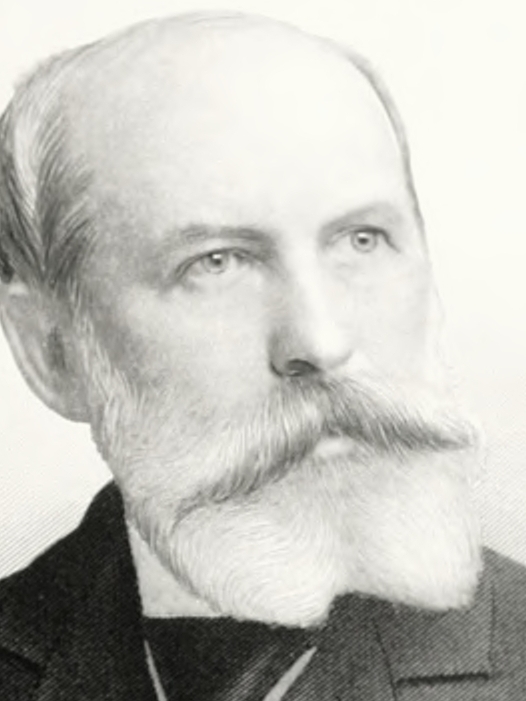
Historical · U.S. House · New York · District 6
Thomas Stewart
Former U.S. Representative · New York District 6 · 1867–1869 · Conservative Republican
Thomas Stewart represented New York's District 6 in the United States House of Representatives (1867–1869) for the Conservative Republican party. The page below collects sourced biographical facts, term history, committee roles, and provenance for Stewart.
Bioguide ID: S000920
Key facts
- Full name
- Thomas Stewart
- State
- New York
- District
- District 6
- Party
- Conservative Republican
- House service
- 1867–1869
- First House term
- 1867
- Status
- Left office
- Current term ends
- —
- Born
- 1824
- Bioguide ID
- S000920
- Committee assignments
- —
- Dataset version
- 1.20260606
Biographical narrative
939 words · sourced from the Wikipedia REST extract
Thomas Stewart was a U.S. Representative from New York, serving in the House of Representatives during the 40th Congress. A member of the Conservative Republican Party, Stewart held office from March 4, 1867, until March 3, 1869. His political career followed a background in law and local governance, reflecting a commitment to public service that began in the mid-19th century. After his term in Congress, he returned to legal practice and engaged in various civic activities, including involvement with the Liberal Republican movement.
Early life and career
Thomas Stewart was born on September 22, 1824, in New York City. His early education and preparatory studies laid the groundwork for his future career in law. After completing his studies, Stewart pursued a legal education and was admitted to the bar in 1847. This marked the beginning of his professional life as a practicing attorney in New York City, where he would build a reputation in the legal community.
Stewart's commitment to public service became evident early in his career. In 1854, he took on a significant role as a member of the board of education, contributing to the governance of educational institutions in the city. This position allowed him to influence educational policies and advocate for the needs of students and schools in New York City. His involvement in local governance continued when he was elected to the New York State Assembly, representing the 7th District of New York County in 1865 and 1866. During his time in the Assembly, Stewart engaged with various legislative issues pertinent to his constituents and the broader state.
In addition to his legislative work, Stewart was active in the Republican Party, serving on the New York State Committee from 1866 to 1868. His political affiliations during this period reflected the shifting dynamics of American politics, particularly in the wake of the Civil War. The Republican Party was a dominant force in national politics, advocating for issues such as civil rights and economic development. Stewart's involvement in the party positioned him as a key figure in local Republican politics, and it set the stage for his eventual election to the U.S. Congress.
House tenure
Stewart's congressional career began when he was elected as a Conservative Republican to the 40th Congress. He successfully defeated candidates from both the Radical Republican and Democratic parties, indicating a competitive political landscape. His term in the House of Representatives lasted from March 4, 1867, to March 3, 1869. During this time, Stewart participated in the legislative process and contributed to discussions on various national issues.
One notable aspect of Stewart's tenure was his vote against the impeachment of President Andrew Johnson. This decision reflected his political beliefs and the complex dynamics of the post-Civil War era. The impeachment of Johnson was a significant event in American history, stemming from conflicts between the president and Congress over Reconstruction policies. Stewart's stance on this issue may have been influenced by his Conservative Republican affiliation, which often aligned with more moderate positions during a time of intense political polarization.
Despite his active participation in Congress, Stewart did not seek reelection in 1868, concluding his single term in the House. The reasons for his decision not to run again are not detailed in the available records, but it was not uncommon for politicians of the era to step back after a single term, especially in the context of shifting political alliances and personal considerations.
Legislative focus and committees
During his time in Congress, Stewart was involved in various legislative matters, although specific details about his committee assignments or the bills he supported are not extensively documented. His background in law and experience in local governance likely informed his legislative priorities, focusing on issues relevant to his constituents and the broader national context.
Following his departure from Congress, Stewart returned to his legal practice in New York City. His legal career continued to evolve as he engaged with the changing political landscape of the late 19th century. In 1872, he became involved with the Liberal Republican movement, which emerged as a faction within the Republican Party advocating for reforms and a more progressive agenda. Stewart served as the chairman of the party's New York City general committee, reflecting his ongoing commitment to political engagement and reform.
In addition to his political activities, Stewart was appointed to the New York City Park Commission from 1874 to 1876. This role allowed him to contribute to the development and management of public parks in the city, further demonstrating his dedication to civic service and community improvement.
Stewart's later years were marked by continued involvement in legal and civic matters. He remained a respected figure in New York City until his death on January 9, 1904. His contributions to public service, both as an attorney and a politician, left a lasting impact on the community he served. After his passing, he was interred at Center Cemetery in New Milford, Connecticut, where he was laid to rest alongside his family.
Stewart's family life included his marriage in 1854 to Harriet Allen Taylor, the daughter of a prominent physician and politician in Connecticut. Together, they had two sons, George Taylor Stewart and Thomas E. Stewart, Jr. His family connections and personal relationships likely influenced his perspectives and commitments throughout his life.
In summary, Thomas Stewart's career as a U.S. Representative and his involvement in local governance and civic initiatives reflect a life dedicated to public service. His experiences in law, education, and politics illustrate the complexities of American political life during the 19th century, particularly in the context of Reconstruction and the evolving role of the Republican Party.
Notable legislation
Sponsored and co-sponsored legislation for Thomas Stewart is pending operator curation. The biographical narrative above carries the same provenance trail until per-bill rows are written.
Sources
- [1]https://en.wikipedia.org/wiki/Thomas_E._StewartWikipedia · retrieved 2026-06-06
Notable quotes
Sourced quotes for Thomas Stewart are pending operator curation. Narrative-scope provenance remains attached below.
Sources
- [1]https://en.wikipedia.org/wiki/Thomas_E._StewartWikipedia · retrieved 2026-06-06
Key positions
Curated policy positions for Thomas Stewart are pending operator review. The biographical narrative above carries the same provenance trail until per-topic positions are written.
Sources
- [1]https://en.wikipedia.org/wiki/Thomas_E._StewartWikipedia · retrieved 2026-06-06
Terms served
- 1867–1869U.S. House · Term 1 · Conservative Republican
Sources & provenance
Every attributable claim above carries a per-section [N] marker that resolves to the corresponding URL below. Each entry records the upstream provider, the canonical URL, and the timestamp at which the source was retrieved by the ingest pipeline.
Key facts
- https://bioguide.congress.gov/search/bio/S000920bioguide · retrieved 2026-06-06
- https://www.govtrack.us/congress/members/410380govtrack · retrieved 2026-06-06
Biographical narrative
- https://en.wikipedia.org/wiki/Thomas_E._Stewartwikipedia · retrieved 2026-06-06
Find your representative
Every U.S. state elects representatives by district. Browse New York’s delegation, the full former-representative roster, or explore the role and term length.
Related on The Candidate
- Preceded by Henry RaymondEarlier holder of the New York District 6 House seat · Republican.Open
- Succeeded by Charles TurnerLater holder of the New York District 6 House seat · Democratic.Open
- Abel HuntingtonFormer U.S. Representative · New York District 1 · JacksonOpen
- Alfred ChapinFormer U.S. Representative · New York District 1 · DemocraticOpen
- Cadwallader ColdenFormer U.S. Representative · New York District 1 · FederalistOpen
- Charles FloydFormer U.S. Representative · New York District 1 · DemocraticOpen