
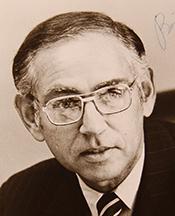
Historical · U.S. House · New York · District 7
Benjamin Rosenthal
Former U.S. Representative · New York District 7 · 1961–1985 · Democratic
Benjamin Rosenthal represented New York's District 7 in the United States House of Representatives (1961–1985) for the Democratic party. The page below collects sourced biographical facts, term history, committee roles, and provenance for Rosenthal.
Bioguide ID: R000442
Key facts
- Full name
- Benjamin Rosenthal
- State
- New York
- District
- District 7
- Party
- Democratic
- House service
- 1961–1985
- First House term
- 1961
- Status
- Left office
- Current term ends
- —
- Born
- 1923
- Bioguide ID
- R000442
- Committee assignments
- —
- Dataset version
- 1.20260605
Biographical narrative
992 words · sourced from the Wikipedia REST extract
Benjamin S. Rosenthal was a prominent American politician who served as a Democratic U.S. Representative for New York's 7th congressional district from 1962 until his death in 1983. He was known for his long tenure in Congress, spanning twelve terms, during which he represented the northern portion of Queens. Rosenthal was recognized for his liberal views, particularly in opposition to the Vietnam War, and he was actively involved in consumer protection issues. His career was marked by significant contributions to his district and the Democratic Party, culminating in his status as one of the senior members of the New York delegation at the time of his passing.
Early life and career
Benjamin Stanley Rosenthal was born on June 8, 1923, in New York City. He grew up in a diverse urban environment and attended public schools, including the prestigious Stuyvesant High School. His educational journey continued at Long Island University and the City College of New York, where he laid the groundwork for his future career in law and politics.
Rosenthal's path to public service was interrupted by World War II, during which he served in the United States Army from 1943 to 1946. This military experience contributed to his understanding of national issues and civic responsibility. After returning from the war, he pursued higher education in law, earning his LL.B. from Brooklyn Law School in 1949. He furthered his legal education by obtaining an LL.M. from New York University in 1952. Following his graduation, Rosenthal was admitted to the New York bar in 1949 and began practicing law in New York City, where he gained valuable experience that would later inform his legislative work.
Rosenthal's entry into politics was marked by his election to the U.S. House of Representatives. He filled a vacancy created by the resignation of Representative Lester Holtzman and was sworn into office on February 20, 1962. His election to the Eighty-seventh United States Congress marked the beginning of a long and impactful career in public service.
House tenure
During his time in Congress, Rosenthal was re-elected multiple times, serving a total of twelve consecutive terms until his death in 1983. His tenure was characterized by a commitment to his constituents in New York's 7th congressional district, which included parts of northern Queens. Rosenthal was a member of the Democratic Party and was often described as a "regular" or machine Democrat, yet he held progressive views that distinguished him from some of his contemporaries.
Throughout his congressional career, Rosenthal was known for his early opposition to the Vietnam War, which aligned with the growing anti-war sentiment in the United States during the 1960s and 1970s. He was also a strong advocate for consumer protection, working on legislation aimed at safeguarding the interests of consumers in various sectors. His legislative efforts reflected a broader commitment to social justice and civil rights, which were significant issues during his time in office.
Rosenthal's influence extended beyond his legislative work; he was also recognized for his engagement with cultural and social issues. For instance, he took the time to acknowledge the tenth anniversary of Mad Magazine in a statement entered into the Congressional Record, highlighting the publication's role in critiquing various aspects of society, including politics. This gesture illustrated his awareness of the cultural landscape and his willingness to connect with constituents on multiple levels.
As a senior member of the New York delegation, Rosenthal played a crucial role in shaping policy and advocating for the needs of his district. His leadership and experience were particularly valuable during times of significant political and social change in the United States.
Legislative focus and committees
Throughout his congressional career, Benjamin S. Rosenthal focused on a variety of issues that were pertinent to his constituents and the broader American public. His legislative priorities included consumer protection, civil rights, and opposition to the Vietnam War, reflecting the progressive values of the Democratic Party during his tenure.
Rosenthal's work on consumer protection was particularly noteworthy. He sought to implement measures that would ensure the safety and rights of consumers in various industries, advocating for legislation that addressed issues such as product safety, fair pricing, and transparency in advertising. His commitment to these issues resonated with many constituents who relied on government oversight to protect their interests in an increasingly complex marketplace.
In addition to consumer protection, Rosenthal was actively involved in civil rights initiatives. He supported legislation aimed at promoting equality and combating discrimination, aligning with the broader civil rights movement that was gaining momentum during the 1960s and 1970s. His advocacy for these causes demonstrated his dedication to social justice and his belief in the government's role in fostering an equitable society.
Rosenthal's opposition to the Vietnam War was a defining aspect of his political identity. He was among the early voices in Congress to question the United States' involvement in the conflict, reflecting a growing concern among the public and within the Democratic Party. His stance on this issue contributed to the broader anti-war movement and showcased his willingness to take a principled stand on contentious matters.
As a member of various committees, Rosenthal utilized his legal background and expertise to influence legislation effectively. His participation in committee work allowed him to engage with a wide range of issues, from economic policy to social welfare, further solidifying his role as a key figure in Congress.
Benjamin S. Rosenthal's legacy is marked by his long-standing commitment to public service, his advocacy for consumer rights, and his progressive stance on social issues. His contributions to the U.S. House of Representatives and his dedication to his constituents have left a lasting impact on the political landscape of New York and the nation. Following his death on January 4, 1983, he was remembered as a significant figure in New York politics, and his contributions continue to be honored, including through the naming of the Benjamin S. Rosenthal Library at Queens College, City University of New York.
Notable legislation
Sponsored and co-sponsored legislation for Benjamin Rosenthal is pending operator curation. The biographical narrative above carries the same provenance trail until per-bill rows are written.
Sources
- [1]https://en.wikipedia.org/wiki/Benjamin_RosenthalWikipedia · retrieved 2026-06-05
Notable quotes
Sourced quotes for Benjamin Rosenthal are pending operator curation. Narrative-scope provenance remains attached below.
Sources
- [1]https://en.wikipedia.org/wiki/Benjamin_RosenthalWikipedia · retrieved 2026-06-05
Key positions
Curated policy positions for Benjamin Rosenthal are pending operator review. The biographical narrative above carries the same provenance trail until per-topic positions are written.
Sources
- [1]https://en.wikipedia.org/wiki/Benjamin_RosenthalWikipedia · retrieved 2026-06-05
Terms served
- 1961–1963U.S. House · Term 1 · Democratic
- 1963–1965U.S. House · Term 2 · Democratic
- 1965–1967U.S. House · Term 3 · Democratic
- 1967–1969U.S. House · Term 4 · Democratic
- 1969–1971U.S. House · Term 5 · Democratic
- 1971–1973U.S. House · Term 6 · Democratic
- 1973–1975U.S. House · Term 7 · Democratic
- 1975–1977U.S. House · Term 8 · Democratic
- 1977–1979U.S. House · Term 9 · Democratic
- 1979–1981U.S. House · Term 10 · Democratic
- 1981–1983U.S. House · Term 11 · Democratic
- 1983–1985U.S. House · Term 12 · Democratic
Sources & provenance
Every attributable claim above carries a per-section [N] marker that resolves to the corresponding URL below. Each entry records the upstream provider, the canonical URL, and the timestamp at which the source was retrieved by the ingest pipeline.
Key facts
- https://bioguide.congress.gov/search/bio/R000442bioguide · retrieved 2026-06-05
- https://www.govtrack.us/congress/members/409406govtrack · retrieved 2026-06-05
Biographical narrative
- https://en.wikipedia.org/wiki/Benjamin_Rosenthalwikipedia · retrieved 2026-06-05
Find your representative
Every U.S. state elects representatives by district. Browse New York’s delegation, the full former-representative roster, or explore the role and term length.
Related on The Candidate
- Preceded by John DelaneyEarlier holder of the New York District 7 House seat · Democratic.Open
- Succeeded by Thomas MantonLater holder of the New York District 7 House seat · Democratic.Open
- Abel HuntingtonFormer U.S. Representative · New York District 1 · JacksonOpen
- Alfred ChapinFormer U.S. Representative · New York District 1 · DemocraticOpen
- Cadwallader ColdenFormer U.S. Representative · New York District 1 · FederalistOpen
- Charles FloydFormer U.S. Representative · New York District 1 · DemocraticOpen