
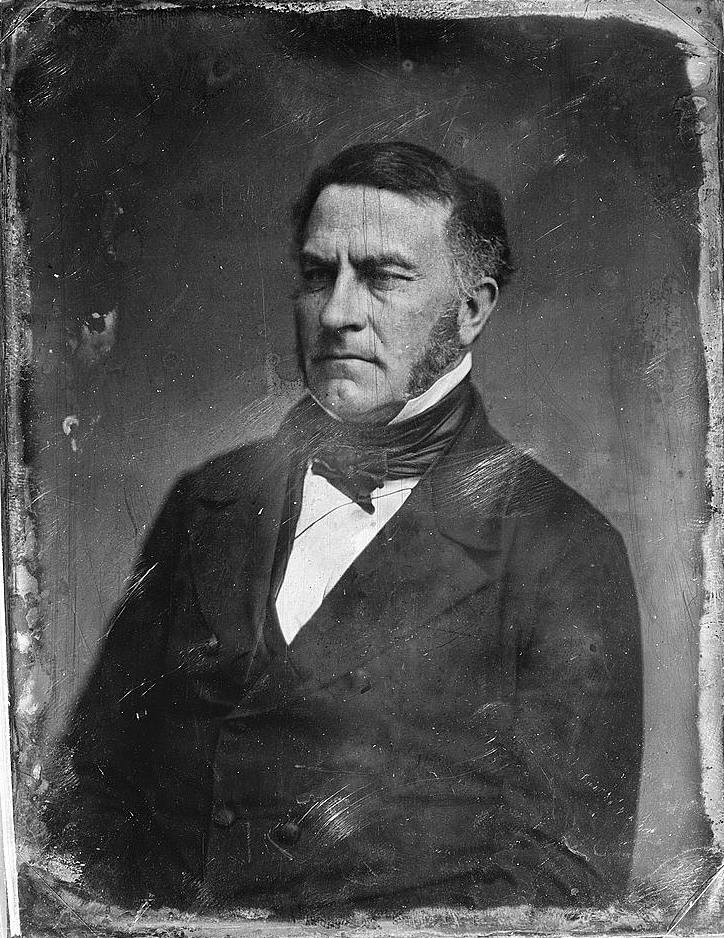
Historical · U.S. House · New York · District 8
Aaron Vanderpoel
Former U.S. Representative · New York District 8 · 1833–1841 · Democratic
Aaron Vanderpoel represented New York's District 8 in the United States House of Representatives (1833–1841) for the Democratic party. The page below collects sourced biographical facts, term history, committee roles, and provenance for Vanderpoel.
Bioguide ID: V000028
Key facts
- Full name
- Aaron Vanderpoel
- State
- New York
- District
- District 8
- Party
- Democratic
- House service
- 1833–1841
- First House term
- 1833
- Status
- Left office
- Current term ends
- —
- Born
- 1799
- Bioguide ID
- V000028
- Committee assignments
- —
- Dataset version
- 1.20260606
Biographical narrative
933 words · sourced from the Wikipedia REST extract
Aaron Vanderpoel was an American lawyer and politician who served as a U.S. Representative for New York's 8th congressional district. A member of the Democratic Party, Vanderpoel's congressional career spanned three terms, during which he was known for his oratorical skills and powerful voice. His political journey began in the early 1830s and concluded in the early 1840s, after which he continued to contribute to the legal field as a judge. Vanderpoel's life and career were marked by his connections to prominent political figures, including a close friendship with President Martin Van Buren.
Early life and career
Aaron Vanderpoel was born on February 5, 1799, in Kinderhook, New York, into a family with deep roots in the region. He was the youngest of six children born to Isaac Vanderpoel and Moyca Vanderpoel (née Huyck). His family lineage included notable ancestors, such as his paternal grandparents, Johannes "John" Van der Poel and Annatje Staats, and his maternal grandparents, Jacobus "James" Huyck and Elizabeth Huyck (née Van Dyck). Vanderpoel's upbringing was influenced by the historical context of his father's experiences during the American Revolutionary War. Isaac Vanderpoel initially served as adjutant of the 7th Regiment of New York Militia but later switched allegiance to the British forces, which resulted in the confiscation of his estate after the war due to his loyalty to the Crown. This tumultuous background likely shaped Aaron Vanderpoel's perspectives on governance and law.
Vanderpoel received his education at Kinderhook Academy and Lenox Academy, institutions that provided him with a solid foundation for his future endeavors. Following his academic pursuits, he studied law under the guidance of Peter van Schaack and later completed his legal education with the assistance of his brother, James Vanderpoel. In 1820, he was admitted to the bar and began practicing law in Kinderhook, establishing himself within the local legal community. His legal career was complemented by his involvement in politics; he served as a member of the New York State Assembly from 1826 to 1830, where he gained valuable experience in legislative processes and governance.
House tenure
Vanderpoel's entry into the U.S. Congress came as a result of his affiliation with the Jacksonian movement, which was characterized by its support for the common man and opposition to entrenched interests. He was elected to the Twenty-third Congress, serving from March 4, 1833, to March 3, 1837. During this time, he represented New York's 8th congressional district, which encompassed a diverse constituency. His tenure in the House was marked by his active participation in debates and discussions, where he earned the nickname "Kinderhook roarer" due to the strength and clarity of his voice.
After his first term, Vanderpoel sought reelection but was unsuccessful in his bid for the Twenty-fifth Congress in 1836. However, he returned to Congress after being elected as a Democrat to the Twenty-sixth Congress, where he served from March 4, 1839, until March 3, 1841. His political career in the House was characterized by his commitment to the principles of the Democratic Party and his efforts to address the needs of his constituents. Following the conclusion of his congressional service, Vanderpoel chose to retire from public office and relocated to New York City, where he continued to engage in legal work.
Legislative focus and committees
Throughout his congressional career, Vanderpoel was involved in various legislative matters that reflected the political climate of the time. While specific details regarding the bills he sponsored or the committees he served on are not extensively documented, his reputation as a skilled orator suggests that he was an active participant in legislative debates. His nickname, the "Kinderhook roarer," indicates that he was likely known for his ability to articulate his views passionately and effectively, which would have been an asset in the often-contentious environment of the House of Representatives.
Vanderpoel's alignment with the Jacksonian Democrats positioned him within a party that was focused on issues such as expanding suffrage, advocating for the rights of the common man, and promoting economic opportunities. His legislative priorities may have included matters related to these themes, as well as local concerns pertinent to his constituents in New York. The political landscape during his time in Congress was marked by significant events, including debates over tariffs, the role of the federal government, and the expansion of the United States westward.
After his departure from Congress, Vanderpoel transitioned into a judicial role, serving as a judge of the superior court from 1842 to 1850. This position allowed him to continue influencing legal matters and contribute to the judicial system in New York. His legal background and experience in the legislature likely informed his approach to judicial decision-making, as he navigated the complexities of law and governance.
In his personal life, Vanderpoel experienced both joy and loss. He was married twice, first to Harriet Baldwin, with whom he had a family until her passing in April 1837. He later married Ellen McBride in 1839, and together they had two children. Vanderpoel's family life, intertwined with his professional endeavors, reflected the challenges and triumphs of a public figure in the 19th century.
Aaron Vanderpoel passed away on July 18, 1870, at his residence in New York City. His funeral service was held at St. George's Church in Stuyvesant Square, and he was interred in Woodlawn Cemetery. Vanderpoel's life and career encapsulate the journey of a dedicated public servant who navigated the complexities of law and politics during a transformative period in American history. His contributions to the U.S. Congress and the legal field remain a part of the historical narrative of New York and the nation.
Notable legislation
Sponsored and co-sponsored legislation for Aaron Vanderpoel is pending operator curation. The biographical narrative above carries the same provenance trail until per-bill rows are written.
Sources
- [1]https://en.wikipedia.org/wiki/Aaron_VanderpoelWikipedia · retrieved 2026-06-06
Notable quotes
Sourced quotes for Aaron Vanderpoel are pending operator curation. Narrative-scope provenance remains attached below.
Sources
- [1]https://en.wikipedia.org/wiki/Aaron_VanderpoelWikipedia · retrieved 2026-06-06
Key positions
Curated policy positions for Aaron Vanderpoel are pending operator review. The biographical narrative above carries the same provenance trail until per-topic positions are written.
Sources
- [1]https://en.wikipedia.org/wiki/Aaron_VanderpoelWikipedia · retrieved 2026-06-06
Terms served
- 1833–1835U.S. House · Term 1 · Jackson
- 1835–1837U.S. House · Term 2 · Jackson
- 1839–1841U.S. House · Term 3 · Democratic
Sources & provenance
Every attributable claim above carries a per-section [N] marker that resolves to the corresponding URL below. Each entry records the upstream provider, the canonical URL, and the timestamp at which the source was retrieved by the ingest pipeline.
Key facts
- https://bioguide.congress.gov/search/bio/V000028bioguide · retrieved 2026-06-06
- https://www.govtrack.us/congress/members/411122govtrack · retrieved 2026-06-06
Biographical narrative
- https://en.wikipedia.org/wiki/Aaron_Vanderpoelwikipedia · retrieved 2026-06-06
Find your representative
Every U.S. state elects representatives by district. Browse New York’s delegation, the full former-representative roster, or explore the role and term length.
Related on The Candidate
- Preceded by John KingEarlier holder of the New York District 8 House seat · Jackson.Open
- Succeeded by Jacob Houck Jr.Later holder of the New York District 8 House seat · Democratic.Open
- Abel HuntingtonFormer U.S. Representative · New York District 1 · JacksonOpen
- Alfred ChapinFormer U.S. Representative · New York District 1 · DemocraticOpen
- Cadwallader ColdenFormer U.S. Representative · New York District 1 · FederalistOpen
- Charles FloydFormer U.S. Representative · New York District 1 · DemocraticOpen