
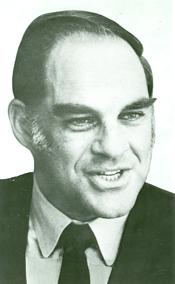
Historical · U.S. House · New York · District 8
James Scheuer
Former U.S. Representative · New York District 8 · 1965–1993 · Democratic
James Scheuer represented New York's District 8 in the United States House of Representatives (1965–1993) for the Democratic party. The page below collects sourced biographical facts, term history, committee roles, and provenance for Scheuer.
Bioguide ID: S000124
Key facts
- Full name
- James Scheuer
- State
- New York
- District
- District 8
- Party
- Democratic
- House service
- 1965–1993
- First House term
- 1965
- Status
- Left office
- Current term ends
- —
- Born
- 1920
- Bioguide ID
- S000124
- Committee assignments
- —
- Dataset version
- 1.20260605
Biographical narrative
908 words · sourced from the Wikipedia REST extract
James H. Scheuer was an American lawyer and politician who served as a member of the United States House of Representatives from New York. A member of the Democratic Party, Scheuer's congressional career spanned nearly three decades, during which he was known for his progressive stances on various social issues, including education, environmental protection, and civil rights. His tenure in Congress was marked by a commitment to liberal policies and advocacy for marginalized communities, including his support for Soviet Jews seeking to emigrate.
Early life and career
James H. Scheuer was born on February 6, 1920, in New York City. He was raised in an environment that emphasized education and social responsibility, attending the Ethical Culture Fieldston School. Scheuer pursued higher education at Swarthmore College, where he earned a bachelor's degree in 1942. He continued his studies at Harvard Business School, obtaining a master's degree in 1943, before completing his legal education at Columbia University Law School, where he received his law degree in 1948.
Scheuer's family background included notable figures in various fields. His brothers included Richard J. Scheuer, a scholar and philanthropist; Walter Scheuer, an investor and documentary filmmaker; and Steven H. Scheuer, a television and film critic. His sister, Amy Scheuer Cohen, resides in Larchmont, New York. In 1948, Scheuer married interior designer Emily Malino, with whom he had four children. During his honeymoon, he contracted polio, which necessitated a year of recuperation at the Warm Springs facility in Georgia, established by President Franklin D. Roosevelt. As a result of the illness, he walked with a cane for the remainder of his life.
Scheuer's public service began with his enlistment in the United States Army, where he served from 1943 to 1945. After his military service, he worked for the Foreign Economic Administration and later joined the Office of Price Stabilization in 1951. His early career laid the groundwork for his eventual entry into politics.
House tenure
Scheuer's political career began with an unsuccessful bid for the House of Representatives in 1962. However, he was elected to Congress in 1964, officially taking office on January 3, 1965. His initial term lasted until January 3, 1973. During this period, he also served as the head of the National Housing Conference, where he advocated for housing policies that aligned with his progressive values.
Throughout his time in Congress, Scheuer was known for his vocal opposition to the Vietnam War. He was an early critic of U.S. involvement in the conflict, reflecting a broader anti-war sentiment among many Democrats during the 1960s and early 1970s. In addition to his anti-war stance, Scheuer opposed government interference in private matters, including issues related to contraception and abortion, aligning himself with the liberal wing of the Democratic Party.
Scheuer's legislative efforts included support for the Head Start early education program, environmental protection initiatives, and automotive safety regulations. He was also a strong advocate for the State of Israel and worked to support Soviet Jews seeking to emigrate to the United States. Notably, he introduced legislation aimed at establishing a commission for a Negro History Museum, highlighting his commitment to civil rights and historical recognition.
In 1972, Scheuer made headlines when he became the first high-ranking American official to meet with refuseniks in the Soviet Union, individuals who were denied permission to emigrate. His visit resulted in his detention and subsequent expulsion from the country, underscoring his dedication to human rights issues.
Following his initial tenure in Congress, Scheuer faced challenges due to population loss in the Bronx and subsequent redistricting. In 1970, he successfully defeated incumbent Representative Jacob H. Gilbert, but two years later, he was defeated by Representative Jonathan Bingham. Despite these setbacks, Scheuer returned to Congress in 1974, moving to Neponsit, Queens, to succeed retiring Democrat Frank J. Brasco. He served his second term from January 3, 1975, until January 3, 1993. During this period, he navigated another round of redistricting after the 1980 Census, ultimately securing an open seat in Northeast Queens.
Legislative focus and committees
Throughout his congressional career, Scheuer was involved in various legislative initiatives and served on multiple committees that aligned with his interests and expertise. His focus on education, housing, and civil rights was evident in the policies he championed and the legislation he supported. He was particularly active in discussions surrounding early childhood education, advocating for programs that aimed to provide quality education to disadvantaged children.
Environmental issues were also a significant part of Scheuer's legislative agenda. He supported measures aimed at protecting natural resources and promoting sustainable practices, reflecting a growing concern for environmental issues during the latter half of the 20th century. His commitment to automotive safety demonstrated his broader interest in public welfare and consumer protection.
Scheuer's advocacy for civil rights extended beyond his legislative efforts. His engagement with the Jewish community and support for Soviet Jews highlighted his dedication to human rights and social justice. His actions in the Soviet Union, particularly his meeting with refuseniks, illustrated his willingness to confront international human rights abuses.
After retiring from Congress, Scheuer continued to serve in public roles, including his appointment as the United States Director of the European Bank for Reconstruction and Development from 1994 to 1996. He passed away on August 30, 2005, due to heart and kidney failure. His legacy includes a long record of public service and advocacy for progressive policies that aimed to improve the lives of his constituents and promote social justice.
Notable legislation
Sponsored and co-sponsored legislation for James Scheuer is pending operator curation. The biographical narrative above carries the same provenance trail until per-bill rows are written.
Sources
- [1]https://en.wikipedia.org/wiki/James_H._ScheuerWikipedia · retrieved 2026-06-05
Notable quotes
Sourced quotes for James Scheuer are pending operator curation. Narrative-scope provenance remains attached below.
Sources
- [1]https://en.wikipedia.org/wiki/James_H._ScheuerWikipedia · retrieved 2026-06-05
Key positions
Curated policy positions for James Scheuer are pending operator review. The biographical narrative above carries the same provenance trail until per-topic positions are written.
Sources
- [1]https://en.wikipedia.org/wiki/James_H._ScheuerWikipedia · retrieved 2026-06-05
Terms served
- 1965–1967U.S. House · Term 1 · Democratic
- 1967–1969U.S. House · Term 2 · Democratic
- 1969–1971U.S. House · Term 3 · Democratic
- 1971–1973U.S. House · Term 4 · Democratic
- 1975–1977U.S. House · Term 5 · Democratic
- 1977–1979U.S. House · Term 6 · Democratic
- 1979–1981U.S. House · Term 7 · Democratic
- 1981–1983U.S. House · Term 8 · Democratic
- 1983–1985U.S. House · Term 9 · Democratic
- 1985–1987U.S. House · Term 10 · Democratic
- 1987–1989U.S. House · Term 11 · Democratic
- 1989–1991U.S. House · Term 12 · Democratic
- 1991–1993U.S. House · Term 13 · Democratic
Sources & provenance
Every attributable claim above carries a per-section [N] marker that resolves to the corresponding URL below. Each entry records the upstream provider, the canonical URL, and the timestamp at which the source was retrieved by the ingest pipeline.
Key facts
- https://bioguide.congress.gov/search/bio/S000124bioguide · retrieved 2026-06-05
- https://www.govtrack.us/congress/members/409632govtrack · retrieved 2026-06-05
Biographical narrative
- https://en.wikipedia.org/wiki/James_H._Scheuerwikipedia · retrieved 2026-06-05
Find your representative
Every U.S. state elects representatives by district. Browse New York’s delegation, the full former-representative roster, or explore the role and term length.
Related on The Candidate
- Preceded by Victor AnfusoEarlier holder of the New York District 8 House seat · Democratic.Open
- Abel HuntingtonFormer U.S. Representative · New York District 1 · JacksonOpen
- Alfred ChapinFormer U.S. Representative · New York District 1 · DemocraticOpen
- Cadwallader ColdenFormer U.S. Representative · New York District 1 · FederalistOpen
- Charles FloydFormer U.S. Representative · New York District 1 · DemocraticOpen
- Democratic PartyFederal candidates and office holders on the Democratic line.Open