
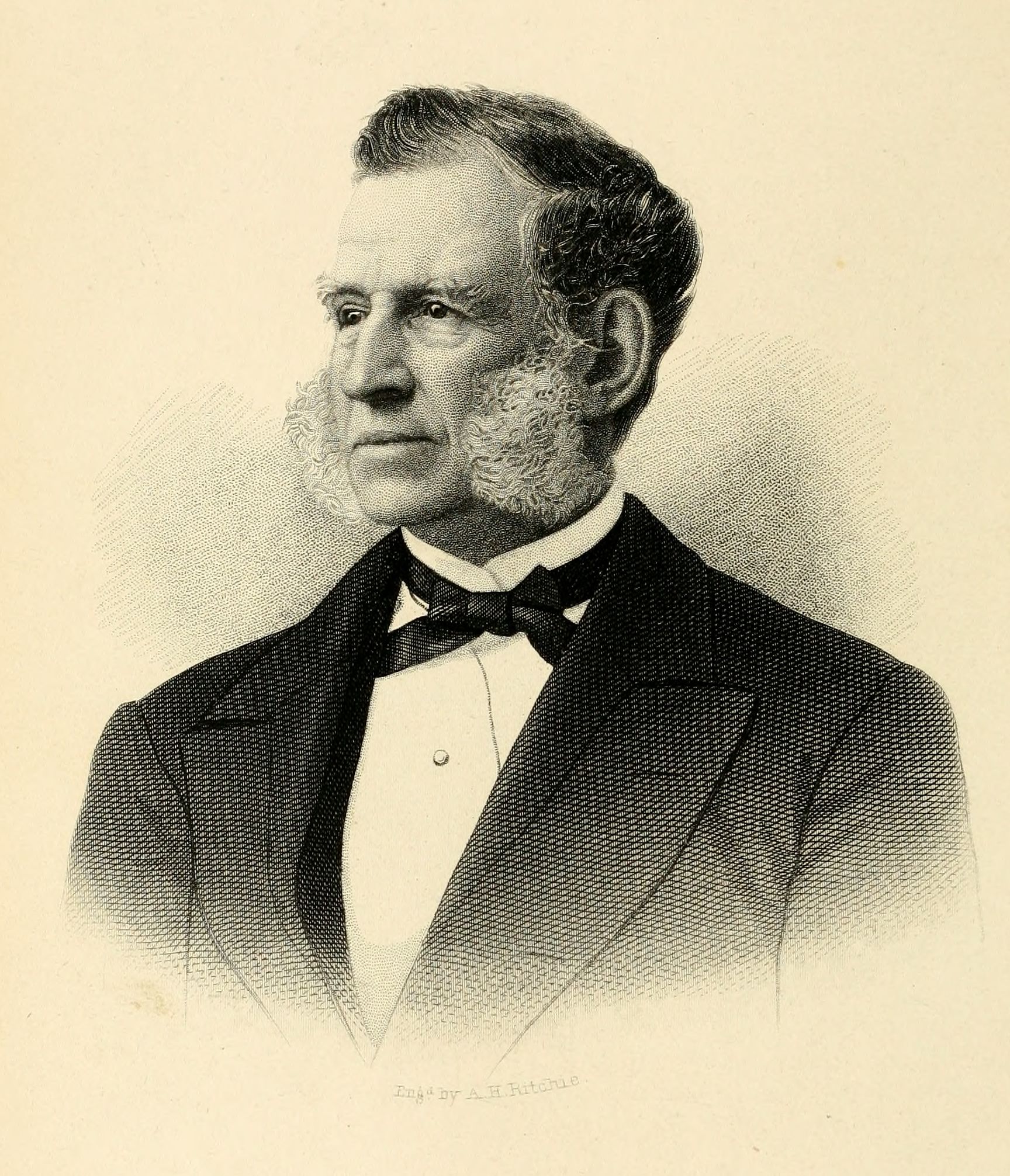
Historical · U.S. House · New York · District 8
William Dodge
Former U.S. Representative · New York District 8 · 1865–1867 · Republican
William Dodge represented New York's District 8 in the United States House of Representatives (1865–1867) for the Republican party. The page below collects sourced biographical facts, term history, committee roles, and provenance for Dodge.
Bioguide ID: D000397
Key facts
- Full name
- William Dodge
- State
- New York
- District
- District 8
- Party
- Republican
- House service
- 1865–1867
- First House term
- 1865
- Status
- Left office
- Current term ends
- —
- Born
- 1805
- Bioguide ID
- D000397
- Committee assignments
- —
- Dataset version
- 1.20260606
Biographical narrative
936 words · sourced from the Wikipedia REST extract
William Dodge was a prominent American businessman and politician who served as a U.S. Representative for New York's 8th congressional district during the 39th Congress. A member of the Republican Party, Dodge's congressional tenure spanned from 1865 until 1867. He was born on September 4, 1805, in Hartford, Connecticut, and became known for his involvement in various social and political causes, particularly in the areas of Native American rights and temperance. Dodge's legacy includes his contributions to business and politics, as well as his activism in social reform movements.
Early life and career
William Dodge was born into a family with a strong commitment to social issues. His father, David Low Dodge, was the founder of the New York Peace Society, which aimed to promote peace and resolve conflicts without resorting to violence. His mother, Sarah Cleveland, was the daughter of a minister, which likely influenced Dodge's moral and ethical outlook. Growing up in this environment, Dodge developed a keen interest in social reform and public service.
In 1833, Dodge established a trading firm, Phelps, Dodge and Company, in partnership with his father-in-law, Anson Green Phelps. This company would later grow to become one of America's largest mining corporations, known as Phelps Dodge Corporation. Dodge's business acumen and entrepreneurial spirit contributed significantly to the economic landscape of the time, particularly in the mining and railroad industries. He played a vital role in the development of the Macon and Brunswick Railroad, which connected Macon, Georgia, to more remote areas of the state, facilitating trade and transportation.
Dodge's business ventures were not without controversy. Following the Civil War, he and a group of businessmen acquired extensive tracts of timberland in Georgia, leading to the establishment of Dodge County. The land acquisition was marked by disputes over land deeds, resulting in prolonged legal battles that lasted nearly fifty years. Despite these challenges, Dodge's influence in the region was notable, and he is remembered as a significant figure in the area's development.
In addition to his business pursuits, Dodge was deeply involved in various social causes. He was a staunch advocate for Native American rights and worked towards reforming U.S. policies regarding Indigenous peoples. His commitment to social issues extended to his role as president of the National Temperance Society, a position he held from 1865 until his death in 1883. Dodge's activism reflected his belief in the importance of moral responsibility and social justice.
House tenure
William Dodge's political career culminated in his election to the United States House of Representatives, where he represented New York's 8th congressional district. His first term in Congress began in 1865, during a period marked by significant national upheaval following the Civil War. Dodge's tenure in the House lasted until March 3, 1867, when he completed his service in the 39th Congress.
During his time in office, Dodge was involved in various legislative discussions and initiatives, particularly those related to social reform and civil rights. His background in business and activism likely informed his approach to governance, as he sought to address the pressing issues of his time. Although he served only one term, his contributions to the legislative process were reflective of his broader commitment to public service and social change.
Dodge's political career was shaped by the tumultuous events of the era, including the Reconstruction period and the ongoing debates surrounding civil rights for formerly enslaved individuals and Native Americans. His experiences as a businessman and activist provided him with a unique perspective on the challenges facing the nation during this transformative time.
Legislative focus and committees
Throughout his congressional tenure, William Dodge focused on various issues that aligned with his interests in social reform and civil rights. His advocacy for Native American rights was particularly prominent, as he sought to address the injustices faced by Indigenous peoples in the United States. Dodge's involvement in the post-Civil War Native American policy reform movement included efforts to establish a cabinet-level Department for Indian Affairs, which he believed would better address the needs and rights of Native Americans.
Dodge was also a member of the government-sponsored Board of Indian Commissioners, where he participated in discussions about U.S. Indian policy. His commitment to improving the lives of Native Americans included lobbying for educational programs and reforms that would promote their integration into American society. He believed that education was a crucial factor in helping Native Americans adapt to the changing landscape of the United States, particularly in light of the encroachment of Euro-American settlers and the expansion of railroads.
In addition to his focus on Native American issues, Dodge's leadership in the National Temperance Society highlighted his dedication to promoting social welfare and moral responsibility. His efforts in this area reflected the broader temperance movement of the time, which sought to reduce alcohol consumption and its associated societal problems.
Dodge's legislative focus was characterized by a commitment to social justice and reform, as he sought to address the pressing issues of his time through his work in Congress. Although his time in office was relatively brief, his contributions to discussions surrounding civil rights and social reform left a lasting impact on the political landscape of the era.
In summary, William Dodge's life and career were marked by a dedication to business, social reform, and public service. His tenure in the U.S. House of Representatives, though limited to a single term, was characterized by his advocacy for Native American rights and his leadership in the temperance movement. Dodge's legacy continues to be remembered through his contributions to both business and social causes, reflecting the complexities of American society during the 19th century.
Notable legislation
Sponsored and co-sponsored legislation for William Dodge is pending operator curation. The biographical narrative above carries the same provenance trail until per-bill rows are written.
Sources
- [1]https://en.wikipedia.org/wiki/William_E._DodgeWikipedia · retrieved 2026-06-06
Notable quotes
Sourced quotes for William Dodge are pending operator curation. Narrative-scope provenance remains attached below.
Sources
- [1]https://en.wikipedia.org/wiki/William_E._DodgeWikipedia · retrieved 2026-06-06
Key positions
Curated policy positions for William Dodge are pending operator review. The biographical narrative above carries the same provenance trail until per-topic positions are written.
Sources
- [1]https://en.wikipedia.org/wiki/William_E._DodgeWikipedia · retrieved 2026-06-06
Terms served
- 1865–1867U.S. House · Term 1 · Republican
Sources & provenance
Every attributable claim above carries a per-section [N] marker that resolves to the corresponding URL below. Each entry records the upstream provider, the canonical URL, and the timestamp at which the source was retrieved by the ingest pipeline.
Key facts
- https://bioguide.congress.gov/search/bio/D000397bioguide · retrieved 2026-06-06
- https://www.govtrack.us/congress/members/403512govtrack · retrieved 2026-06-06
Biographical narrative
- https://en.wikipedia.org/wiki/William_E._Dodgewikipedia · retrieved 2026-06-06
Find your representative
Every U.S. state elects representatives by district. Browse New York’s delegation, the full former-representative roster, or explore the role and term length.
Related on The Candidate
- Preceded by Isaac DelaplaineEarlier holder of the New York District 8 House seat · Democratic.Open
- Succeeded by John LawsonLater holder of the New York District 8 House seat · Republican.Open
- Abel HuntingtonFormer U.S. Representative · New York District 1 · JacksonOpen
- Alfred ChapinFormer U.S. Representative · New York District 1 · DemocraticOpen
- Cadwallader ColdenFormer U.S. Representative · New York District 1 · FederalistOpen
- Charles FloydFormer U.S. Representative · New York District 1 · DemocraticOpen