
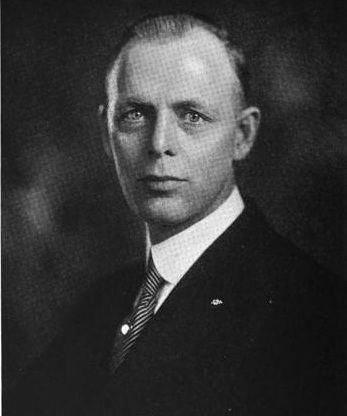
Historical · U.S. House · New York · District 9
Andrew Petersen
Former U.S. Representative · New York District 9 · 1921–1923 · Republican
Andrew Petersen represented New York's District 9 in the United States House of Representatives (1921–1923) for the Republican party. The page below collects sourced biographical facts, term history, committee roles, and provenance for Petersen.
Bioguide ID: P000257
Key facts
- Full name
- Andrew Petersen
- State
- New York
- District
- District 9
- Party
- Republican
- House service
- 1921–1923
- First House term
- 1921
- Status
- Left office
- Current term ends
- —
- Born
- 1870
- Bioguide ID
- P000257
- Committee assignments
- —
- Dataset version
- 1.20260606
Biographical narrative
923 words · sourced from the Wikipedia REST extract
Andrew Petersen was a U.S. Representative from New York, serving in the Sixty-seventh Congress from 1921 to 1923. A member of the Republican Party, Petersen was also a prominent figure in the metalworking industry, where he held various leadership roles, including president of the Brooklyn Foundry Company. Born in Denmark and immigrating to the United States as a child, Petersen's life was marked by his entrepreneurial spirit and his brief political career.
Early life and career
Andrew Petersen was born on March 10, 1870, near Thisted, Denmark. In 1873, he immigrated to the United States with his parents, Tyler and Hansine Petersen. The family initially settled in Boston but moved to New York City in 1879. Growing up in New York, Petersen attended public schools, where he developed an interest in craftsmanship. He learned the trade of patternmaking, which would later serve as a foundation for his career in the metalworking industry.
Petersen's professional journey began with his work as a patternmaker, which eventually led him to significant roles in the metalworking sector. He became an executive in this field, notably serving as president of Brooklyn's Whale Creek Iron Works. His contributions to the industry were substantial; he was also an officer and a member of the board of governors of the Employers' Association of Architectural Iron Workers. In addition to his work in metal fabrication, Petersen was involved in real estate through a company called Farragut Realty.
In 1897, he made a notable invention that contributed to urban living: an iron staircase designed for tenement houses, for which he received a patent. This invention reflected his understanding of the needs of city dwellers and his ability to innovate within his field. Petersen's leadership extended to the Brooklyn Foundry Company, where he served as president from 1900 until 1952. Under his guidance, the company engaged in various construction projects throughout the New York City area, fulfilling contracts for essential building components such as elevator fronts, staircases, railings, and columns.
House tenure
Petersen's political career began when he was elected as a Republican to the Sixty-seventh Congress, serving from March 4, 1921, to March 3, 1923. His election marked a significant transition from his business career to public service, as he sought to represent the interests of his constituents in New York's ninth congressional district. During his term, Petersen participated in the legislative process, contributing to discussions and decisions that would impact his district and the nation.
However, Petersen's tenure in Congress was relatively short-lived. He was unsuccessful in his bid for reelection to the Sixty-eighth Congress in 1922. Following this defeat, he attempted to regain his congressional seat in 1924 as the Republican nominee but was again unsuccessful. Despite these setbacks, his time in Congress was marked by his engagement with various issues of the day, reflecting the interests and concerns of his constituents.
Petersen's congressional career included a notable incident in 1923, when he was asked by President Warren G. Harding and Secretary of the Navy Edwin Denby to investigate living and working conditions for Navy sailors in the Panama Canal Zone. This request led Petersen and another former Congressman, Albert B. Rossdale, to undertake an undercover operation aboard the battleship USS New York. The intent was to gather firsthand observations and recommendations for improvements. However, the mission took an unexpected turn when they were arrested for violating naval regulations. The incident received media attention, which portrayed the situation in a humorous light, ultimately overshadowing the original purpose of their investigation.
Legislative focus and committees
During his time in the House of Representatives, Petersen's legislative focus was likely influenced by his background in business and industry. While specific details of the bills he supported or the committees he served on are not documented, it can be inferred that his experience in the metalworking and construction industries may have shaped his perspectives on economic and labor issues. As a businessman, he would have had a vested interest in policies that affected the manufacturing sector, labor relations, and urban development.
Petersen's engagement with issues related to infrastructure and construction was consistent with his professional background. His experience as an executive in the metalworking industry would have provided him with insights into the challenges and opportunities faced by businesses in that sector, as well as the broader economic landscape of the time. Although his congressional career was brief, it is likely that he sought to advocate for policies that would benefit his constituents and the industries he represented.
After leaving Congress, Petersen returned to his business pursuits and continued to be active in the metalworking industry. His leadership roles in various companies, including the Brooklyn Foundry Company, demonstrated his ongoing commitment to the field. Petersen's contributions to both the business world and his brief political career reflect a life dedicated to service and innovation.
Andrew Petersen passed away on September 28, 1953, in East Rockaway, New York. He was buried in Cypress Hills Abbey in Brooklyn, New York. Petersen's legacy includes not only his work in Congress but also his significant contributions to the metalworking industry and urban development in New York City. He is remembered as a figure who navigated both the worlds of business and politics, leaving an impact on the communities he served. He was married to Olga E. Holck in 1896, and together they had three children: a daughter, Shirley M., and two sons, Harry E. and Elliott I. Harry Petersen succeeded his father as president of the Brooklyn Foundry Company, continuing the family's legacy in the industry.
Notable legislation
Sponsored and co-sponsored legislation for Andrew Petersen is pending operator curation. The biographical narrative above carries the same provenance trail until per-bill rows are written.
Sources
- [1]https://en.wikipedia.org/wiki/Andrew_PetersenWikipedia · retrieved 2026-06-06
Notable quotes
Sourced quotes for Andrew Petersen are pending operator curation. Narrative-scope provenance remains attached below.
Sources
- [1]https://en.wikipedia.org/wiki/Andrew_PetersenWikipedia · retrieved 2026-06-06
Key positions
Curated policy positions for Andrew Petersen are pending operator review. The biographical narrative above carries the same provenance trail until per-topic positions are written.
Sources
- [1]https://en.wikipedia.org/wiki/Andrew_PetersenWikipedia · retrieved 2026-06-06
Terms served
- 1921–1923U.S. House · Term 1 · Republican
Sources & provenance
Every attributable claim above carries a per-section [N] marker that resolves to the corresponding URL below. Each entry records the upstream provider, the canonical URL, and the timestamp at which the source was retrieved by the ingest pipeline.
Key facts
- https://bioguide.congress.gov/search/bio/P000257bioguide · retrieved 2026-06-06
- https://www.govtrack.us/congress/members/408660govtrack · retrieved 2026-06-06
Biographical narrative
- https://en.wikipedia.org/wiki/Andrew_Petersenwikipedia · retrieved 2026-06-06
Find your representative
Every U.S. state elects representatives by district. Browse New York’s delegation, the full former-representative roster, or explore the role and term length.
Related on The Candidate
- Preceded by Oscar SwiftEarlier holder of the New York District 9 House seat · Republican.Open
- Succeeded by Stephen RuddLater holder of the New York District 9 House seat · Democratic.Open
- Abel HuntingtonFormer U.S. Representative · New York District 1 · JacksonOpen
- Alfred ChapinFormer U.S. Representative · New York District 1 · DemocraticOpen
- Cadwallader ColdenFormer U.S. Representative · New York District 1 · FederalistOpen
- Charles FloydFormer U.S. Representative · New York District 1 · DemocraticOpen