
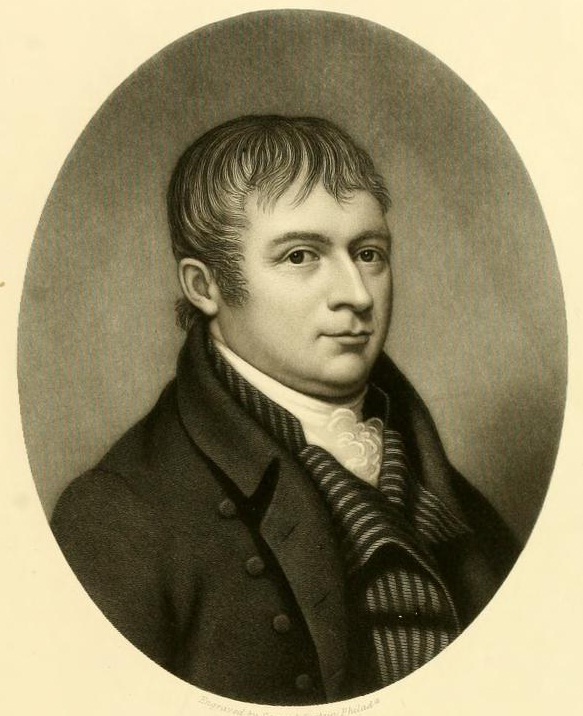
Historical · U.S. House · New York · District 9
John Williams
Former U.S. Representative · New York District 9 · 1795–1799 · Federalist
John Williams represented New York's District 9 in the United States House of Representatives (1795–1799) for the Federalist party. The page below collects sourced biographical facts, term history, committee roles, and provenance for Williams.
Bioguide ID: W000513
Key facts
- Full name
- John Williams
- State
- New York
- District
- District 9
- Party
- Federalist
- House service
- 1795–1799
- First House term
- 1795
- Status
- Left office
- Current term ends
- —
- Born
- —
- Bioguide ID
- W000513
- Committee assignments
- —
- Dataset version
- 1.20260606
Biographical narrative
982 words · sourced from the Wikipedia REST extract
John Williams was an American physician and politician who served as a U.S. Representative for New York's 9th congressional district from 1795 to 1799. A member of the Federalist Party, Williams had a multifaceted career that included military service during the American Revolutionary War, participation in state politics, and contributions to the early governance of New York State. His legislative career was marked by his involvement in significant political debates of the time, including the contentious discussions surrounding the ratification of the United States Constitution.
Early life and career
John Williams was born in September 1752 in Barnstaple, Devonshire, England. He received a comprehensive education and pursued studies in medicine and surgery at St. Thomas' Hospital in London. Following his medical training, he served for a year as a surgeon's mate on an English man-of-war, gaining valuable experience in the medical field. In 1773, Williams immigrated to America, settling in New Perth, Charlotte County, New York, which is present-day Salem in Washington County. There, he established a robust medical practice and became a prominent figure in his community.
Williams married Susanna (Thomas) Turner, with whom he had four children. After her passing, he married Mary Townley. His early involvement in politics began during the American Revolutionary War, where he played a significant role in local governance. In 1775, he became a member of the New York Provincial Congress, serving until its dissolution in 1777. His military career began in the same year when he was appointed as a surgeon for state militia forces. By 1776, he had risen to the rank of colonel of the Charlotte County militia regiment, a position he maintained throughout the Revolutionary War.
In addition to his military service, Williams was a member of the New York State Senate from 1777 to 1779. However, his tenure was marred by controversy, leading to his expulsion from the Senate due to allegations of fraud and theft. He faced accusations of submitting false muster and payrolls, which allowed him to draw government funds intended for soldiers. Furthermore, he was accused of conducting unauthorized courts-martial and fining soldiers, subsequently withholding their salaries to pay these fines. Despite these serious allegations, Williams was later exonerated and continued his political and military careers.
Williams returned to the New York State Assembly in 1781 and 1782, and he resumed his role in the State Senate from 1782 to 1794. His influence extended to education as well; in 1784, he was appointed to the first board of regents of the University of the State of New York. He also held the position of brigadier general of militia in 1786, further solidifying his status as a leader in both military and civic affairs.
During the critical period of 1788, when the ratification of the United States Constitution was a hotly debated issue, Williams identified as an Anti-Federalist, opposing the proposed Constitution. He is believed to have contributed to influential Anti-Federalist essays under the pseudonym "Brutus." Although the Anti-Federalists ultimately failed to prevent the ratification of the Constitution, they succeeded in securing commitments for the addition of a Bill of Rights. Williams was a delegate to the State ratification convention, where he played a role in these discussions.
House tenure
Williams's congressional career began when he was elected to the United States House of Representatives in December 1794 as a Democratic-Republican, representing New York's 4th District. He took office on March 4, 1795. His initial election marked the beginning of his two terms in Congress, during which he focused on various legislative matters pertinent to his constituents and the nation.
In December 1796, Williams was re-elected to the 5th United States Congress, serving until March 3, 1799. Throughout his time in the House, he navigated the political landscape of the late 18th century, which was characterized by the emergence of political parties and the establishment of federal governance. His affiliation with the Federalist Party during his second term reflected the shifting political dynamics of the era.
Despite his earlier success, Williams faced challenges in subsequent elections. In April 1798, he sought re-election in the newly re-districted 7th District but was defeated by Democratic-Republican John Thompson. He made another attempt to return to Congress in April 1802, running as a Federalist in the 12th District, but was again unsuccessful, this time losing to Democratic-Republican David Thomas. These electoral defeats marked the end of his congressional aspirations.
Legislative focus and committees
During his time in the House of Representatives, Williams participated in the early legislative processes that shaped the United States. Although specific details about the bills he supported or the committees he served on are not extensively documented, his role as a member of Congress during a formative period in American history placed him at the center of discussions regarding governance, federal authority, and the rights of states.
Williams's background as a physician likely influenced his perspectives on health and welfare issues, although the specifics of his legislative focus remain less clear. His involvement in the political landscape of New York and his earlier military and civic experiences contributed to his understanding of the complexities of governance during the early years of the republic.
In addition to his legislative duties, Williams was a significant landholder and was involved in various business ventures. He was a promoter and director of a company that aimed to construct the Erie Canal as a private enterprise, although this project was later taken over by the state. His engagement in such initiatives reflects the broader economic and infrastructural developments occurring in New York during this period.
Williams's life concluded in Salem, New York, where he passed away on July 22, 1806. His contributions to both medicine and politics left a lasting impact on his community. His legacy is remembered in part through the Salem chapter of the Daughters of the American Revolution, which bears his name alongside that of Israel Harris.
Notable legislation
Sponsored and co-sponsored legislation for John Williams is pending operator curation. The biographical narrative above carries the same provenance trail until per-bill rows are written.
Sources
- [1]https://en.wikipedia.org/wiki/John_Williams_(Salem%2C_New_York)Wikipedia · retrieved 2026-06-06
Notable quotes
Sourced quotes for John Williams are pending operator curation. Narrative-scope provenance remains attached below.
Sources
- [1]https://en.wikipedia.org/wiki/John_Williams_(Salem%2C_New_York)Wikipedia · retrieved 2026-06-06
Key positions
Curated policy positions for John Williams are pending operator review. The biographical narrative above carries the same provenance trail until per-topic positions are written.
Sources
- [1]https://en.wikipedia.org/wiki/John_Williams_(Salem%2C_New_York)Wikipedia · retrieved 2026-06-06
Terms served
- 1795–1797U.S. House · Term 1 · Federalist
- 1797–1799U.S. House · Term 2 · Federalist
Sources & provenance
Every attributable claim above carries a per-section [N] marker that resolves to the corresponding URL below. Each entry records the upstream provider, the canonical URL, and the timestamp at which the source was retrieved by the ingest pipeline.
Key facts
- https://bioguide.congress.gov/search/bio/W000513bioguide · retrieved 2026-06-06
- https://www.govtrack.us/congress/members/411671govtrack · retrieved 2026-06-06
Biographical narrative
- https://en.wikipedia.org/wiki/John_Williams_(Salem%2C_New_York)wikipedia · retrieved 2026-06-06
Find your representative
Every U.S. state elects representatives by district. Browse New York’s delegation, the full former-representative roster, or explore the role and term length.
Related on The Candidate
- Preceded by James GordonEarlier holder of the New York District 9 House seat.Open
- Succeeded by Jonas PlattLater holder of the New York District 9 House seat · Federalist.Open
- Abel HuntingtonFormer U.S. Representative · New York District 1 · JacksonOpen
- Alfred ChapinFormer U.S. Representative · New York District 1 · DemocraticOpen
- Cadwallader ColdenFormer U.S. Representative · New York District 1 · FederalistOpen
- Charles FloydFormer U.S. Representative · New York District 1 · DemocraticOpen