
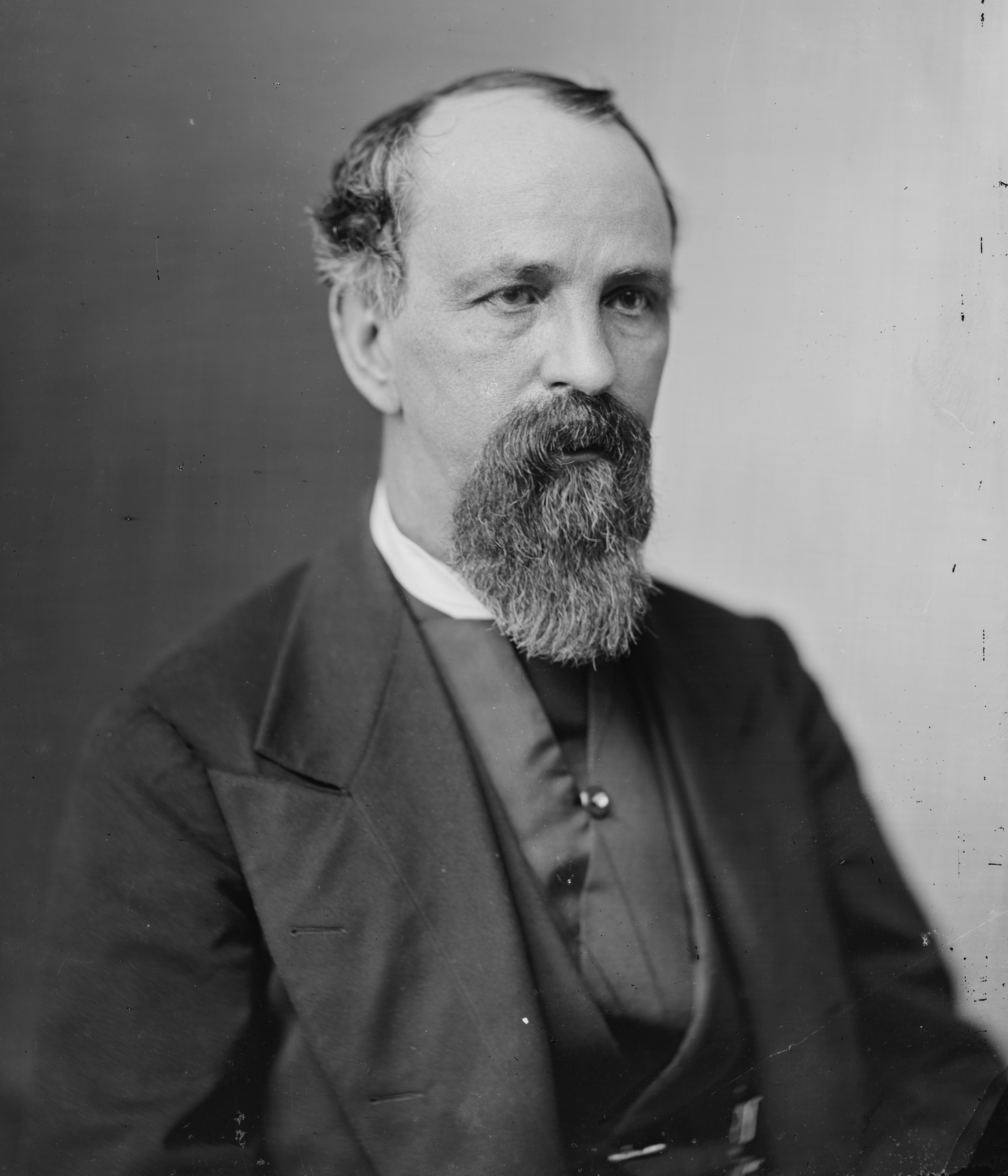
Historical · U.S. House · New York · District 9
Samuel Cox
Former U.S. Representative · New York District 9 · 1857–1891 · Democratic
Samuel Cox represented New York's District 9 in the United States House of Representatives (1857–1891) for the Democratic party. The page below collects sourced biographical facts, term history, committee roles, and provenance for Cox.
Bioguide ID: C000839
Key facts
- Full name
- Samuel Cox
- State
- New York
- District
- District 9
- Party
- Democratic
- House service
- 1857–1891
- First House term
- 1857
- Status
- Left office
- Current term ends
- —
- Born
- 1824
- Bioguide ID
- C000839
- Committee assignments
- —
- Dataset version
- 1.20260606
Biographical narrative
1,074 words · sourced from the Wikipedia REST extract
Samuel Cox was a prominent American politician and diplomat who served as a U.S. Representative for New York's 9th congressional district. A member of the Democratic Party, he held office for a total of 15 terms in the House of Representatives, beginning his congressional career in 1857 and concluding his service in 1891. Throughout his political journey, Cox was known for his moderate stances, particularly during the tumultuous period of the American Civil War, and he later focused on issues such as trade liberalization and civil service reform.
Early life and career
Samuel Sullivan Cox was born on September 30, 1824, in Zanesville, Ohio, to Ezekiel Taylor Cox and Maria Matilda Cox (née Sullivan). His father was a journalist and a politician, deeply rooted in the Democratic Party and known for his uncompromising Jacksonian principles. The Cox family had a notable lineage, with ancestors who played significant roles in early American history, including a Congressman who served in the Continental Army. Samuel was named after his maternal grandfather, who had also held a political office as Ohio Treasurer.
Cox's early education began in Zanesville, where he was recognized for his intelligence and charismatic personality. At the age of fourteen, he began assisting his father, who was then the clerk of the Ohio Supreme Court. His academic prowess was evident, and he was regarded as a bright and generous individual by his peers. He attended an academy in Zanesville, where he studied alongside future notable figures, including a Supreme Court Justice and a prominent geologist.
In 1842, Cox enrolled at Ohio University in Athens, Ohio, where he encountered a rivalry between the local townspeople and university students. His experiences during this time were marked by a desire to leave Athens, which he found unappealing. By 1844, he transferred to Brown University in Rhode Island, where he joined the Delta Phi fraternity and engaged in various debates on contemporary issues, including temperance and the abolition of slavery. His speeches often sparked controversy, reflecting his complex views on social and political matters. Cox graduated from Brown in 1846 and returned to Ohio to pursue a legal career.
Cox's legal education began in the offices of Judge C.W. Searle and continued under Judge Convers, where he studied alongside future Ohio Governor George Hoadly. After completing his studies, he was admitted to the Ohio bar and formed a partnership with George E. Pugh, who later became a U.S. Senator. However, Cox's career took a turn when he ventured into journalism. While honeymooning in Europe in 1851, he wrote a series of letters that were well-received, prompting him to abandon law for journalism. In 1853, he acquired a controlling interest in the Ohio Statesman, a Democratic newspaper, where he served as editor and engaged in political discourse.
Cox's entry into politics was marked by his appointment as chairman of the Ohio Democratic State Committee in 1853, where he successfully managed the gubernatorial campaign of William Medill. This victory positioned Cox as a rising figure in Ohio politics, leading to an invitation from President Franklin Pierce to join the diplomatic corps. Although he declined an offer to serve in England, he sought a position in Peru but fell ill and ultimately resigned.
House tenure
In 1856, Samuel Cox accepted the Democratic nomination to represent the Columbus region in the U.S. House of Representatives. He narrowly won the election against Republican candidate Samuel Galloway, marking the beginning of a lengthy congressional career. During his first term, he chaired the Committee on Revolutionary Claims and quickly established himself as a vocal advocate for the principles of popular sovereignty, particularly in relation to the contentious issue of slavery in the territories.
Cox delivered his maiden speech in the newly completed House chamber on December 16, 1857. His address was significant, as it positioned him in opposition to President James Buchanan and the proposed Lecompton constitution for Kansas. His arguments were influential in the eventual defeat of the Lecompton constitution, which sought to admit Kansas as a slave state. Despite his political successes, Cox faced challenges, including retaliation from Buchanan, who removed a close associate from a key postal position in Columbus.
Throughout his tenure in the House, Cox was re-elected multiple times, demonstrating his ability to maintain support among his constituents. He remained a steadfast opponent of the Buchanan administration and continued to advocate for policies that aligned with his beliefs, including trade liberalization and civil service reform. His political career was characterized by a commitment to addressing the needs of his constituents and navigating the complexities of national politics during a period of significant upheaval.
Legislative focus and committees
During his extensive time in the House of Representatives, Samuel Cox focused on a range of legislative issues that reflected his political beliefs and the interests of his constituents. His advocacy for trade liberalization was a key aspect of his platform, as he sought to promote economic growth and reduce barriers to commerce. This focus was particularly relevant during a time when the nation was grappling with the economic implications of the Civil War and its aftermath.
Cox also championed civil service reform, recognizing the need for a more efficient and accountable government. His commitment to reforming the civil service was indicative of a broader movement within the Democratic Party to address issues of corruption and inefficiency in government operations. Additionally, he was involved in railroad regulation, advocating for policies that would ensure fair practices and promote the development of infrastructure essential for economic progress.
Throughout his congressional career, Cox served on various committees, which allowed him to influence legislation and contribute to discussions on critical national issues. His positions on these committees provided him with a platform to advocate for his constituents and engage with fellow lawmakers on matters of importance. His legislative efforts were characterized by a pragmatic approach, seeking to balance the interests of his party with the needs of the nation.
Cox's lengthy tenure in the House concluded on March 3, 1891. His career was marked by a dedication to public service and a commitment to addressing the challenges facing the nation during a pivotal era in American history. After leaving Congress, he continued to be involved in public life, including a notable appointment as the United States Ambassador to the Ottoman Empire. Samuel Cox's legacy is reflected in his contributions to American politics and diplomacy, as well as his enduring impact on the communities he represented.
Notable legislation
Sponsored and co-sponsored legislation for Samuel Cox is pending operator curation. The biographical narrative above carries the same provenance trail until per-bill rows are written.
Sources
- [1]https://en.wikipedia.org/wiki/Samuel_S._CoxWikipedia · retrieved 2026-06-06
Notable quotes
Sourced quotes for Samuel Cox are pending operator curation. Narrative-scope provenance remains attached below.
Sources
- [1]https://en.wikipedia.org/wiki/Samuel_S._CoxWikipedia · retrieved 2026-06-06
Key positions
Curated policy positions for Samuel Cox are pending operator review. The biographical narrative above carries the same provenance trail until per-topic positions are written.
Sources
- [1]https://en.wikipedia.org/wiki/Samuel_S._CoxWikipedia · retrieved 2026-06-06
Terms served
- 1857–1859U.S. House · Term 1 · Democratic
- 1859–1861U.S. House · Term 2 · Democratic
- 1861–1863U.S. House · Term 3 · Democratic
- 1863–1865U.S. House · Term 4 · Democratic
- 1869–1871U.S. House · Term 5 · Democratic
- 1871–1873U.S. House · Term 6 · Democratic
- 1873–1875U.S. House · Term 7 · Democratic
- 1875–1877U.S. House · Term 8 · Democratic
- 1877–1879U.S. House · Term 9 · Democratic
- 1879–1881U.S. House · Term 10 · Democratic
- 1881–1883U.S. House · Term 11 · Democratic
- 1883–1885U.S. House · Term 12 · Democratic
- 1885–1887U.S. House · Term 13 · Democratic
- 1887–1889U.S. House · Term 14 · Democratic
- 1889–1891U.S. House · Term 15 · Democratic
Sources & provenance
Every attributable claim above carries a per-section [N] marker that resolves to the corresponding URL below. Each entry records the upstream provider, the canonical URL, and the timestamp at which the source was retrieved by the ingest pipeline.
Key facts
- https://bioguide.congress.gov/search/bio/C000839bioguide · retrieved 2026-06-06
- https://www.govtrack.us/congress/members/402956govtrack · retrieved 2026-06-06
Biographical narrative
- https://en.wikipedia.org/wiki/Samuel_S._Coxwikipedia · retrieved 2026-06-06
Find your representative
Every U.S. state elects representatives by district. Browse New York’s delegation, the full former-representative roster, or explore the role and term length.
Related on The Candidate
- Preceded by Bayard ClarkeEarlier holder of the New York District 9 House seat · Ind. Republican-Democrat.Open
- Succeeded by Henry MinerLater holder of the New York District 9 House seat · Democratic.Open
- Abel HuntingtonFormer U.S. Representative · New York District 1 · JacksonOpen
- Alfred ChapinFormer U.S. Representative · New York District 1 · DemocraticOpen
- Cadwallader ColdenFormer U.S. Representative · New York District 1 · FederalistOpen
- Charles FloydFormer U.S. Representative · New York District 1 · DemocraticOpen