
Historical · U.S. House · New York · At-Large
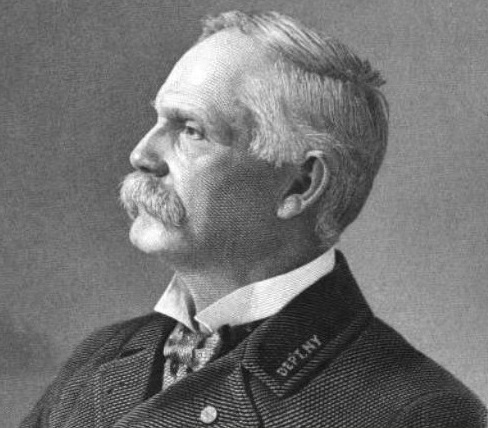
Albert Shaw
Former U.S. Representative · New York At-Large · 1899–1903 · Republican
Albert Shaw represented New York's At-Large in the United States House of Representatives (1899–1903) for the Republican party. The page below collects sourced biographical facts, term history, committee roles, and provenance for Shaw.
Bioguide ID: S000302
Key facts
- Full name
- Albert Shaw
- State
- New York
- District
- At-Large
- Party
- Republican
- House service
- 1899–1903
- First House term
- 1899
- Status
- Left office
- Current term ends
- —
- Born
- 1841
- Bioguide ID
- S000302
- Committee assignments
- —
- Dataset version
- 1.20260606
Biographical narrative
832 words · sourced from the Wikipedia REST extract
Albert Shaw was an American politician and government official who served as a U.S. Representative from New York. A member of the Republican Party, he was notable for his military service during the American Civil War and his leadership roles in various civic organizations, including the Grand Army of the Republic. Shaw's congressional career was brief, spanning from 1900 until his death in 1901, but he left a legacy through his contributions to both military and political spheres.
Early life and career
Albert Duane Shaw was born on December 21, 1841, in Lyme, New York, to Henry Shaw and Sally Ann Gardner Shaw. He grew up on his family's farm, where he received his early education in local schools. Shaw furthered his studies at Union Academy in Belleville and St. Lawrence University in Canton, although he did not complete his degree. His education was interrupted by the outbreak of the Civil War, which prompted him to enlist in the Union Army.
In June 1861, Shaw joined Company A of the 35th New York Volunteer Infantry Regiment as a private. His military service included significant engagements in Virginia and Maryland, where he participated in various battles and military operations. He was promoted to corporal during his service and remained with his regiment until it was mustered out in June 1863. After his discharge, Shaw continued his military involvement as a special agent for the Army provost marshal's office in Watertown, New York, where he was responsible for tracking military personnel and enforcing enlistment laws.
Following the Civil War, Shaw was commissioned as a colonel and took command of the 36th Infantry Regiment of the New York National Guard. He held this position until 1868 when he resigned to accept an appointment as a U.S. consul. His early political career began in 1866 when he was elected as a Republican to the New York State Assembly, representing the 2nd District of Jefferson County. He served in the 90th New York State Legislature in 1867.
Shaw's diplomatic career commenced in 1868 when he was appointed as the United States consul in Toronto, Canada. He served in this capacity until 1878, receiving commendations for his written reports from Hamilton Fish, the Secretary of State at the time. Following his tenure in Toronto, Shaw was appointed consul in Manchester, England, where he served until 1885, when a change in administration led to his replacement.
House tenure
Shaw's congressional career began in 1900 when he was elected as a Republican to fill a vacancy in the 56th Congress, which arose due to the death of Charles A. Chickering. His election marked a return to public service after several years in diplomatic roles and civic engagement. Shaw was subsequently reelected to the 57th Congress, although he did not live to see the start of this term. His time in the House of Representatives was brief, lasting from November 6, 1900, until his death on February 10, 1901. During this period, he was involved in the legislative processes of the House, although specific details of his contributions are not extensively documented.
Shaw's death occurred in Washington, D.C., shortly after attending a banquet honoring his successor as commander-in-chief of the Grand Army of the Republic. He was found deceased in his hotel room the following morning, with the cause attributed to apoplexy. His remains were interred at Brookside Cemetery in Watertown, New York.
Legislative focus and committees
During his time in Congress, Albert Shaw's legislative focus and committee assignments are not explicitly detailed in the available records. However, given his background in military service and civic leadership, it is likely that he was involved in issues pertinent to veterans, military affairs, and community development. His prior experience as a commander in the Grand Army of the Republic may have influenced his perspectives on legislation affecting veterans and their families.
Shaw's involvement in the Grand Army of the Republic, a fraternal organization of Union veterans, was significant throughout his life. He was elected department commander for New York in 1897 and served as commander-in-chief of the national organization from 1899 until 1900. This leadership role underscored his commitment to veterans' issues and his dedication to preserving the legacy of those who served in the Civil War.
In addition to his military and political engagements, Shaw was active in various civic organizations, including serving as president of the Young Men's Christian Association (YMCA) and the chamber of commerce in Watertown. His community involvement reflected a broader commitment to public service and civic responsibility, which likely informed his approach to legislative matters during his congressional tenure.
Although Albert Shaw's time in the U.S. House of Representatives was short-lived, his contributions to military service, civic leadership, and the Republican Party in New York left a lasting impact on his community and the state. His life exemplified a dedication to public service, both in times of war and peace, and his legacy continues to be recognized in the context of American political history.
Notable legislation
Sponsored and co-sponsored legislation for Albert Shaw is pending operator curation. The biographical narrative above carries the same provenance trail until per-bill rows are written.
Sources
- [1]https://en.wikipedia.org/wiki/Albert_D._ShawWikipedia · retrieved 2026-06-06
Notable quotes
Sourced quotes for Albert Shaw are pending operator curation. Narrative-scope provenance remains attached below.
Sources
- [1]https://en.wikipedia.org/wiki/Albert_D._ShawWikipedia · retrieved 2026-06-06
Key positions
Curated policy positions for Albert Shaw are pending operator review. The biographical narrative above carries the same provenance trail until per-topic positions are written.
Sources
- [1]https://en.wikipedia.org/wiki/Albert_D._ShawWikipedia · retrieved 2026-06-06
Terms served
- 1899–1901U.S. House · Term 1 · Republican
- 1901–1903U.S. House · Term 2 · Republican
Sources & provenance
Every attributable claim above carries a per-section [N] marker that resolves to the corresponding URL below. Each entry records the upstream provider, the canonical URL, and the timestamp at which the source was retrieved by the ingest pipeline.
Key facts
- https://bioguide.congress.gov/search/bio/S000302bioguide · retrieved 2026-06-06
- https://www.govtrack.us/congress/members/409801govtrack · retrieved 2026-06-06
Biographical narrative
- https://en.wikipedia.org/wiki/Albert_D._Shawwikipedia · retrieved 2026-06-06
Find your representative
Every U.S. state elects representatives by district. Browse New York’s delegation, the full former-representative roster, or explore the role and term length.
Related on The Candidate
- Preceded by Henry SlocumEarlier holder of the New York At-Large House seat · Democratic.Open
- Succeeded by Michael ConryLater holder of the New York At-Large House seat · Democratic.Open
- Abel HuntingtonFormer U.S. Representative · New York District 1 · JacksonOpen
- Alfred ChapinFormer U.S. Representative · New York District 1 · DemocraticOpen
- Cadwallader ColdenFormer U.S. Representative · New York District 1 · FederalistOpen
- Charles FloydFormer U.S. Representative · New York District 1 · DemocraticOpen