
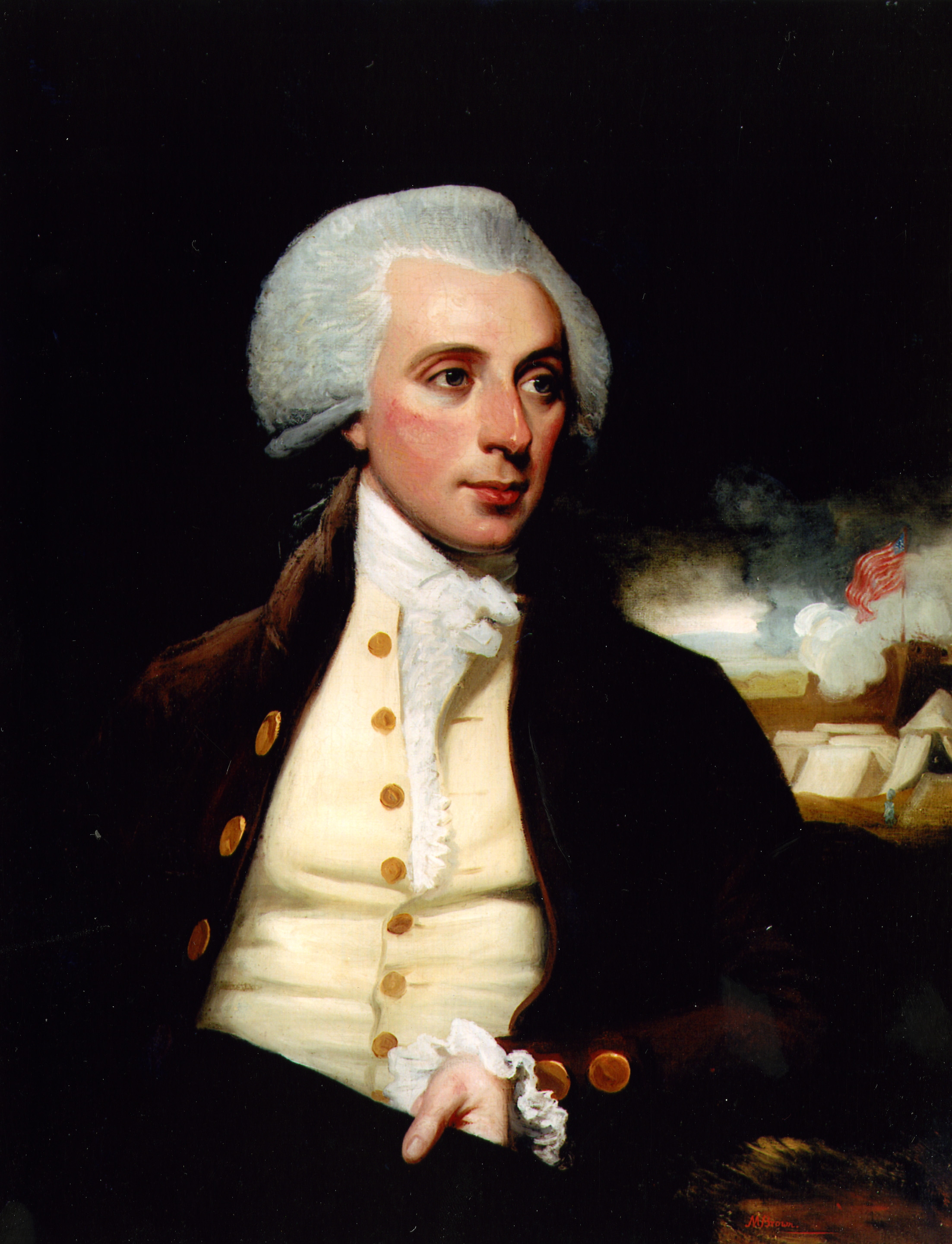
Historical · U.S. House · New York · At-Large
William Smith
Former U.S. Representative · New York At-Large · 1813–1817 · Federalist
William Smith represented New York's At-Large in the United States House of Representatives (1813–1817) for the Federalist party. The page below collects sourced biographical facts, term history, committee roles, and provenance for Smith.
Bioguide ID: S000638
Key facts
- Full name
- William Smith
- State
- New York
- District
- At-Large
- Party
- Federalist
- House service
- 1813–1817
- First House term
- 1813
- Status
- Left office
- Current term ends
- —
- Born
- 1755
- Bioguide ID
- S000638
- Committee assignments
- —
- Dataset version
- 1.20260606
Biographical narrative
901 words · sourced from the Wikipedia REST extract
William Smith was a United States Representative from New York who served in the early 19th century as a member of the Federalist Party. His political career in the U.S. House of Representatives spanned two terms from 1813 to 1817. Smith's life was marked by significant events, including his involvement in the American Revolutionary War, his marriage to Abigail Adams, the daughter of President John Adams, and his later political endeavors.
Early life and career
William Smith was born on November 8, 1755, in Suffolk County, New York, located on Long Island. He pursued his education at the College of New Jersey, which is now known as Princeton University, graduating in 1774. Following his graduation, he briefly studied law, laying the groundwork for a future career in public service and politics.
During the American Revolutionary War, Smith served with distinction in the Continental Army. He began his military career as an aide-de-camp to General John Sullivan in 1776. Throughout the war, he participated in several key battles, including the Battle of Long Island and the Battle of Harlem Heights, where he sustained injuries. His military service continued as he fought in the Battle of White Plains and was promoted to lieutenant colonel at the Battle of Trenton. Smith also took part in significant engagements such as the Battle of Monmouth and the Battle of Newport, showcasing his commitment to the revolutionary cause. In 1780 and 1781, he served on the staff of General Lafayette and later transferred to the staff of General George Washington, further solidifying his military credentials.
After the war, Smith transitioned into diplomatic and governmental roles. In 1784, he was appointed secretary of the Legation in London, where he met Abigail "Nabby" Adams, the daughter of John Adams. They married in 1786, and upon returning to America in 1788, Smith continued to build his career in public service. In 1789, President George Washington appointed him as the first U.S. Marshal for the District of New York, a role that marked his entry into federal law enforcement. He later served as a supervisor of revenue and was appointed by President John Adams as the Surveyor of the Port of New York in 1800.
In addition to his governmental roles, Smith was involved in various civic initiatives. He was one of the founders of the Society of the Cincinnati, an organization established to promote the ideals of the American Revolution, and served as its president from 1795 to 1797. His life during this period also included efforts to establish an estate named Mount Vernon, inspired by President Washington, although he and his family never resided there.
House tenure
William Smith's political career in the U.S. House of Representatives began when he was elected as a Federalist to the 13th Congress, serving from March 4, 1813, to March 3, 1815. His election to Congress came during a tumultuous period in American history, as the nation faced challenges related to the War of 1812. Smith's tenure in the House was characterized by the Federalist Party's struggle to maintain influence as the Democratic-Republican Party gained prominence.
Following his first term, Smith sought re-election for the 14th Congress in 1814. Initially, it appeared that he had won the election against Westel Willoughby Jr. However, complications arose regarding the election results. Some ballots were returned with discrepancies in naming, leading to confusion over the legitimacy of the votes. Despite the initial indication of victory, Smith ultimately chose not to contest the results. On December 15, 1815, the House of Representatives voted that Willoughby was entitled to the seat, concluding Smith's congressional career.
Legislative focus and committees
During his time in the House of Representatives, William Smith's legislative focus reflected the priorities of the Federalist Party, which emphasized strong federal governance, economic development, and national security. The context of his service was shaped by the ongoing War of 1812, which influenced many of the legislative discussions and decisions made during his tenure.
While specific details about the committees Smith served on are not documented, it can be inferred that as a member of the Federalist Party, he would have been involved in discussions related to military appropriations, trade policies, and other matters pertinent to the war effort. The Federalists were known for their support of a robust military and a strong national economy, which would have been critical during the conflict with Britain.
Smith's legislative contributions occurred during a time when the Federalist Party was facing significant challenges, including declining popularity and internal divisions. His decision not to contest the election results in 1815 may reflect the broader struggles of the party during this period, as it began to lose its foothold in American politics.
After leaving Congress, Smith's life continued in New York, where he remained active in local affairs until his death on June 10, 1816, in Smith Valley, Lebanon, New York. He was laid to rest in West Hill Cemetery in Sherburne, New York. Smith's legacy is intertwined with his family connections, particularly his marriage to Abigail Adams and their descendants, who continued to play roles in American society.
William Smith's life and career exemplify the complexities of early American politics and the interplay between military service, public office, and family connections in shaping the nation's history. His contributions as a soldier, diplomat, and legislator reflect the diverse experiences of those who helped lay the foundation for the United States.
Notable legislation
Sponsored and co-sponsored legislation for William Smith is pending operator curation. The biographical narrative above carries the same provenance trail until per-bill rows are written.
Sources
- [1]https://en.wikipedia.org/wiki/William_Stephens_SmithWikipedia · retrieved 2026-06-06
Notable quotes
Sourced quotes for William Smith are pending operator curation. Narrative-scope provenance remains attached below.
Sources
- [1]https://en.wikipedia.org/wiki/William_Stephens_SmithWikipedia · retrieved 2026-06-06
Key positions
Curated policy positions for William Smith are pending operator review. The biographical narrative above carries the same provenance trail until per-topic positions are written.
Sources
- [1]https://en.wikipedia.org/wiki/William_Stephens_SmithWikipedia · retrieved 2026-06-06
Terms served
- 1813–1815U.S. House · Term 1 · Federalist
- 1815–1817U.S. House · Term 2 · Federalist
Sources & provenance
Every attributable claim above carries a per-section [N] marker that resolves to the corresponding URL below. Each entry records the upstream provider, the canonical URL, and the timestamp at which the source was retrieved by the ingest pipeline.
Key facts
- https://bioguide.congress.gov/search/bio/S000638bioguide · retrieved 2026-06-06
- https://www.govtrack.us/congress/members/410112govtrack · retrieved 2026-06-06
Biographical narrative
- https://en.wikipedia.org/wiki/William_Stephens_Smithwikipedia · retrieved 2026-06-06
Find your representative
Every U.S. state elects representatives by district. Browse New York’s delegation, the full former-representative roster, or explore the role and term length.
Related on The Candidate
- Preceded by William DenningEarlier holder of the New York At-Large House seat.Open
- Succeeded by Selah TuthillLater holder of the New York At-Large House seat.Open
- Abel HuntingtonFormer U.S. Representative · New York District 1 · JacksonOpen
- Alfred ChapinFormer U.S. Representative · New York District 1 · DemocraticOpen
- Cadwallader ColdenFormer U.S. Representative · New York District 1 · FederalistOpen
- Charles FloydFormer U.S. Representative · New York District 1 · DemocraticOpen