
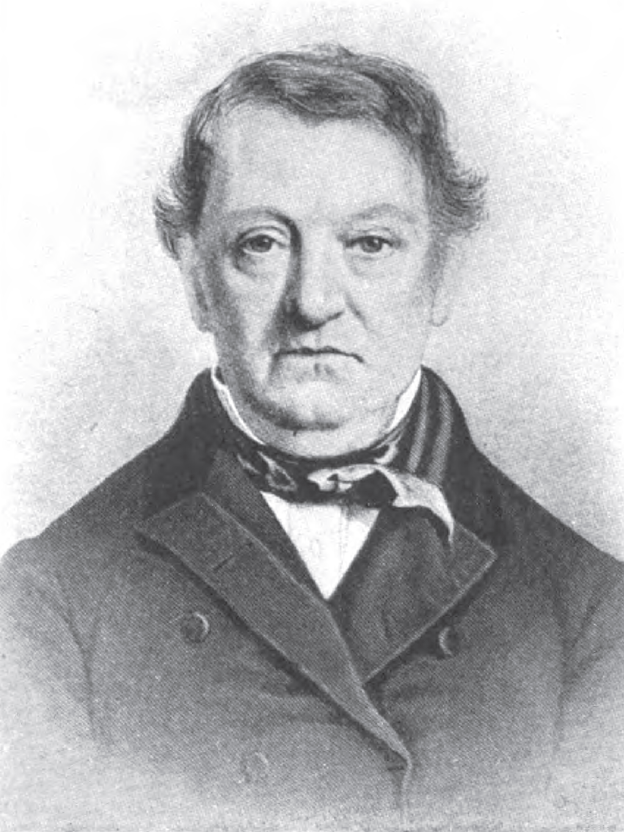
Historical · U.S. House · Ohio · District 1
Bellamy Storer
Former U.S. Representative · Ohio District 1 · 1835–1837 · Whig
Bellamy Storer represented Ohio's District 1 in the United States House of Representatives (1835–1837) for the Whig party. The page below collects sourced biographical facts, term history, committee roles, and provenance for Storer.
Bioguide ID: S000971
Key facts
- Full name
- Bellamy Storer
- State
- Ohio
- District
- District 1
- Party
- Whig
- House service
- 1835–1837
- First House term
- 1835
- Status
- Left office
- Current term ends
- —
- Born
- 1796
- Bioguide ID
- S000971
- Committee assignments
- —
- Dataset version
- 1.20260606
Biographical narrative
1,044 words · sourced from the Wikipedia REST extract
Bellamy Storer was a notable figure in American politics during the early 19th century, serving as a U.S. Representative from Ohio. He was a member of the Whig Party and represented Ohio's 1st congressional district. Storer's political career was marked by his election to the Twenty-fourth Congress, where he served from 1835 until 1837. Following his congressional tenure, he continued to contribute to the legal and educational fields until his death in 1875.
Early life and career
Bellamy Storer was born on March 26, 1796, in Portland, which was part of the District of Maine in Massachusetts at the time. His early education took place in private schools within his hometown, where he developed a foundation for his future academic pursuits. In 1809, Storer enrolled at Bowdoin College in Brunswick, Maine, where he furthered his education. His time at Bowdoin College would have exposed him to a range of intellectual ideas and discussions, which were characteristic of higher education during that era.
After completing his studies, Storer moved to Boston to study law, a decision that would shape his professional trajectory. He was admitted to the bar in 1817, marking the beginning of his legal career. Shortly thereafter, he relocated to Cincinnati, Ohio, where he commenced his practice. The move to Cincinnati was significant, as it was a growing city at the time, providing ample opportunities for a young lawyer to establish himself. Storer's legal practice in Cincinnati would later serve as a foundation for his involvement in local and state politics.
Storer's early career was characterized by his engagement in the legal community and his growing reputation as a lawyer. His legal expertise and connections within the community likely played a role in his eventual entry into politics. As a member of the Anti-Jacksonian faction, which opposed the policies of President Andrew Jackson, Storer aligned himself with a group that was gaining traction in the political landscape of the time. This alignment would eventually lead to his election to the U.S. House of Representatives.
House tenure
Storer's political career reached a significant milestone when he was elected to the Twenty-fourth Congress as an Anti-Jacksonian representative. His term in the House of Representatives began on March 4, 1835, and concluded on March 3, 1837. During this period, he represented Ohio's 1st congressional district, which included the city of Cincinnati and its surrounding areas. His election to Congress was indicative of the shifting political dynamics of the era, as the Whig Party was emerging as a formidable force in American politics.
While in Congress, Storer participated in the legislative process during a time of considerable national debate over issues such as economic policy, states' rights, and the role of the federal government. His tenure coincided with a period of significant political realignment, as the Whig Party sought to consolidate its influence in opposition to the Democratic Party led by Jackson. Storer's role in Congress would have involved engaging in discussions and debates on various legislative matters, contributing to the shaping of national policy.
Despite his involvement in national politics, Storer chose not to seek renomination for a second term in the Twenty-fifth Congress in 1836. This decision marked a turning point in his career, as he opted to transition away from the political arena and focus on other pursuits. Following his congressional service, he took on a position as a professor at the Cincinnati Law School, where he would teach and mentor future generations of lawyers. His decision to leave Congress reflects a common trend among politicians of the time, who often moved between public service and private endeavors.
Legislative focus and committees
During his time in the House of Representatives, Bellamy Storer's legislative focus and committee assignments are not extensively documented. However, as a member of the Anti-Jacksonian faction and subsequently the Whig Party, it can be inferred that his interests aligned with the party's platform, which emphasized economic modernization, infrastructure development, and a cautious approach to expansionism. The Whigs were known for advocating for policies that supported internal improvements, such as transportation infrastructure, which were crucial for the growing economy of the United States during this period.
Storer's involvement in the Whig Party also positioned him within a broader political context that sought to address the challenges facing the nation in the wake of Jacksonian democracy. The Whigs often criticized the concentration of power in the executive branch and advocated for a more balanced government structure. This ideological framework likely influenced Storer's legislative priorities and the issues he championed during his time in Congress.
In addition to his legislative work, Storer's post-congressional career included significant contributions to the legal field. After leaving Congress, he continued to practice law and took on the role of a professor at the Cincinnati Law School from 1855 to 1874. His commitment to legal education and the development of the legal profession in Ohio underscored his dedication to public service and the advancement of knowledge in the field of law.
Storer's legal career also included a notable tenure as a judge of the superior court of Cincinnati, a position he held from the court's establishment in 1854 until his resignation in 1872. This role further solidified his influence within the legal community and demonstrated his ongoing commitment to public service. His contributions to the judiciary and legal education were significant, as they helped shape the legal landscape in Ohio during a transformative period in American history.
In addition to his legal and political endeavors, Storer was involved in various civic activities. He served as a trustee of Ohio University beginning in 1866, reflecting his commitment to education and community development. His engagement in educational institutions highlights the importance he placed on fostering knowledge and supporting the next generation of leaders.
Bellamy Storer passed away on June 1, 1875, in Cincinnati, Ohio. His legacy is preserved not only through his political and legal contributions but also through his family, including his son, who followed in his footsteps in public service. Storer was interred in Spring Grove Cemetery in Cincinnati, where his contributions to the community and the nation are remembered. His life and career exemplify the complexities of American politics in the early 19th century and the evolving role of public service in a growing nation.
Notable legislation
Sponsored and co-sponsored legislation for Bellamy Storer is pending operator curation. The biographical narrative above carries the same provenance trail until per-bill rows are written.
Sources
- [1]https://en.wikipedia.org/wiki/Bellamy_Storer_(Ohio_politician)Wikipedia · retrieved 2026-06-06
Notable quotes
Sourced quotes for Bellamy Storer are pending operator curation. Narrative-scope provenance remains attached below.
Sources
- [1]https://en.wikipedia.org/wiki/Bellamy_Storer_(Ohio_politician)Wikipedia · retrieved 2026-06-06
Key positions
Curated policy positions for Bellamy Storer are pending operator review. The biographical narrative above carries the same provenance trail until per-topic positions are written.
Sources
- [1]https://en.wikipedia.org/wiki/Bellamy_Storer_(Ohio_politician)Wikipedia · retrieved 2026-06-06
Terms served
- 1835–1837U.S. House · Term 1 · Whig
Sources & provenance
Every attributable claim above carries a per-section [N] marker that resolves to the corresponding URL below. Each entry records the upstream provider, the canonical URL, and the timestamp at which the source was retrieved by the ingest pipeline.
Key facts
- https://bioguide.congress.gov/search/bio/S000971bioguide · retrieved 2026-06-06
- https://www.govtrack.us/congress/members/410429govtrack · retrieved 2026-06-06
Biographical narrative
- https://en.wikipedia.org/wiki/Bellamy_Storer_(Ohio_politician)wikipedia · retrieved 2026-06-06
Find your representative
Every U.S. state elects representatives by district. Browse Ohio’s delegation, the full former-representative roster, or explore the role and term length.
Related on The Candidate
- Preceded by Robert LytleEarlier holder of the Ohio District 1 House seat · Jackson.Open
- Succeeded by Alexander DuncanLater holder of the Ohio District 1 House seat · Democratic.Open
- Aaron PerryFormer U.S. Representative · Ohio District 1 · RepublicanOpen
- Bellamy StorerFormer U.S. Representative · Ohio District 1 · RepublicanOpen
- Benjamin ButterworthFormer U.S. Representative · Ohio District 1 · RepublicanOpen
- Representatives from OhioEvery former U.S. Representative who has represented Ohio.Open