
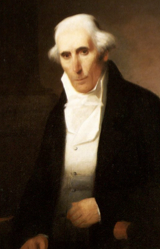
Historical · U.S. House · OL · At-Large
Julien Poydras
Former U.S. Representative · OL At-Large · 1809–1811
Julien Poydras represented OL's At-Large in the United States House of Representatives (1809–1811). The page below collects sourced biographical facts, term history, committee roles, and provenance for Poydras.
Bioguide ID: P000493
Key facts
- Full name
- Julien Poydras
- State
- OL
- District
- At-Large
- Party
- —
- House service
- 1809–1811
- First House term
- 1809
- Status
- Left office
- Current term ends
- —
- Born
- 1740
- Bioguide ID
- P000493
- Committee assignments
- —
- Dataset version
- 1.20260606
Biographical narrative
924 words · sourced from the Wikipedia REST extract
Julien Poydras was a prominent figure in early American politics and society, serving as a U.S. Representative for the at-large district of the Territory of Orleans from 1809 until 1811. Born on April 3, 1740, in Rezé, France, Poydras was a multifaceted individual whose career spanned various roles, including merchant, planter, financier, poet, educator, and political leader. His contributions to Louisiana's early governance and his philanthropic endeavors have left a lasting legacy in the state.
Early life and career
Julien Poydras was born in the French province of Brittany, in a town near Nantes. His early life was marked by significant events, including service in the French Navy. In 1760, he was captured by the British during a naval conflict and subsequently taken to England. Demonstrating resilience, Poydras managed to escape captivity by boarding a West Indian merchant ship, which eventually brought him to Saint-Domingue. In 1768, he emigrated to Spanish Louisiana, where he began to establish his life and career.
Upon settling in Louisiana, Poydras initially worked as an itinerant merchant before transitioning to a more stable business model by opening stores in Pointe Coupee Parish. His entrepreneurial spirit led him to invest in real estate, where he engaged in buying and selling plantations. He focused on the cultivation of cash crops such as cotton and sugar cane, which were vital to the region's economy. Poydras was known for constructing several significant buildings during the late 18th and early 19th centuries, including the North Bend plantation house, which he completed in 1835.
In addition to his business pursuits, Poydras was also a poet. He is credited with writing the first poetry published in Louisiana in 1779, which honored the Spanish governor Don Bernardo de Gálvez's victory over British forces at the Battle of Baton Rouge. This battle is notable for being one of the few engagements of the American Revolutionary War fought outside the Thirteen Colonies.
Poydras's life in Louisiana was not without its complexities. He was known to be an indulgent slaveholder, and his plantation was involved in a significant slave conspiracy in 1795, which was quickly suppressed. Despite his position as a slaveholder, Poydras made provisions in his will to free his slaves and their descendants 25 years after his death, along with financial support for their well-being until that time. However, his intentions were complicated by legislative actions that ultimately delayed the manumission of his slaves.
House tenure
Julien Poydras served as a Delegate from the Territory of Orleans to the U.S. House of Representatives from 1809 until 1811. His election to this position marked a significant step in the political evolution of Louisiana, as he was among the first representatives from the territory following its acquisition by the United States. During his time in Congress, Poydras was involved in discussions and legislative efforts aimed at promoting Louisiana's statehood, which was a critical issue for the region as it transitioned from a territory to a state.
Poydras's tenure in the House was characterized by his commitment to the interests of his constituents and the broader goals of the territory. He played a role in shaping the political landscape of Louisiana during a formative period in its history. His efforts contributed to the eventual admission of Louisiana into the Union as the 18th state in 1812.
After completing his term in the House, Poydras continued to be active in public service. He served as the first president of the Louisiana State Senate from 1812 to 1813, further solidifying his influence in the state's political framework. His experiences in both the U.S. Congress and the state legislature positioned him as a key figure in Louisiana's early governance.
Legislative focus and committees
During his time in the House of Representatives, Julien Poydras focused on issues pertinent to the Territory of Orleans and its transition to statehood. Although specific details about the committees he served on or the exact legislative measures he supported are not documented, it is clear that his role was significant in advocating for the needs and interests of his constituents.
Poydras's legislative priorities likely included economic development, land policies, and the establishment of a stable governance structure for the territory. His background as a businessman and planter would have informed his perspectives on the economic needs of Louisiana, particularly in relation to agriculture and trade.
In addition to his legislative work, Poydras was involved in various community roles within Pointe Coupee Parish. He held positions such as civil commandant under Spanish rule, justice of the peace, and church warden, demonstrating his commitment to local governance and community service. These roles allowed him to engage directly with the needs of his community and contribute to its development.
Poydras's legacy extends beyond his political career. He was known for his philanthropic efforts, particularly in education and social welfare. He founded the Poydras Asylum in New Orleans, originally established as a home for female orphans, which has since evolved into a continuing care retirement community. His will included provisions for educational initiatives and support for impoverished brides, reflecting his dedication to improving the lives of those in his community.
Julien Poydras passed away on June 23, 1824, at his plantation near Pointe Coupee, Louisiana. His contributions to the state, both as a political leader and philanthropist, have left an enduring mark on Louisiana's history. His remains were initially interred in Old St. Francis Cemetery but were later reinterred at the Poydras School in New Roads, Louisiana, ensuring that his legacy continues to be recognized in the region he helped shape.
Notable legislation
Sponsored and co-sponsored legislation for Julien Poydras is pending operator curation. The biographical narrative above carries the same provenance trail until per-bill rows are written.
Sources
- [1]https://en.wikipedia.org/wiki/Julien_de_Lallande_PoydrasWikipedia · retrieved 2026-06-06
Notable quotes
Sourced quotes for Julien Poydras are pending operator curation. Narrative-scope provenance remains attached below.
Sources
- [1]https://en.wikipedia.org/wiki/Julien_de_Lallande_PoydrasWikipedia · retrieved 2026-06-06
Key positions
Curated policy positions for Julien Poydras are pending operator review. The biographical narrative above carries the same provenance trail until per-topic positions are written.
Sources
- [1]https://en.wikipedia.org/wiki/Julien_de_Lallande_PoydrasWikipedia · retrieved 2026-06-06
Terms served
- 1809–1811U.S. House · Term 1
Sources & provenance
Every attributable claim above carries a per-section [N] marker that resolves to the corresponding URL below. Each entry records the upstream provider, the canonical URL, and the timestamp at which the source was retrieved by the ingest pipeline.
Key facts
- https://bioguide.congress.gov/search/bio/P000493bioguide · retrieved 2026-06-06
- https://www.govtrack.us/congress/members/408878govtrack · retrieved 2026-06-06
Biographical narrative
- https://en.wikipedia.org/wiki/Julien_de_Lallande_Poydraswikipedia · retrieved 2026-06-06
Find your representative
Every U.S. state elects representatives by district. Browse OL’s delegation, the full former-representative roster, or explore the role and term length.
Related on The Candidate
- Preceded by Daniel ClarkEarlier holder of the OL At-Large House seat.Open
- Representatives from OLEvery former U.S. Representative who has represented OL.Open
- All former U.S. RepresentativesEvery individual who has served in the U.S. House and since left office.Open
- U.S. House of RepresentativesRole, term length, qualifications, and the full House candidate directory.Open